99% Identical
“All humans are genetically 99.9 per cent identical.”
—Roger Highfield, Science Editor

.
“something there is that doesn’t love a wall,”
a poet said imagining friendly neighbors
working their way along that which stood between
resetting fallen gneiss and granite loaves and balls
fallen to each to keep their wall intact
while one questioned the irony of friendly walls
and the other made a prima facie case
for an inherent friendliness
in their practicality
so we’ve had walls and walls remain
not of stone but of blood and bone,
walls built of double helixes
spiraling through time,
hydrogen-mortared pairs of
adenine guanine cytosine thymine,
walls smaller than any past poet’s wall-builder
might imagine, but centuries stronger
than Hadrian’s real or Alexander’s
mythic wall which locked the Gogs
and Magogs of alien tribes
behind stone or iron blocks
to keep the builders safe from
differences that barely exist
in the protein hieroglyphics
of nature-made chemical bonds
of a double helix making us Gogs
and Magogs of each other
as we spiral through worlds
hurting and killing to uphold
our imagination’s chronic
belief in quixotic walls
and spurious distinctions
which heap between us
grudges and grief
Jim Culleny
12/13/16
Enjoying the content on 3QD? Help keep us going by donating now.

 Death has stalked me of late, claiming those whom I was once close to, or who remained closest to those who are closest to me.
 Sometimes, when you least expect to, you learn something about your country and the toll it has imposed on certain of its citizens. In ancient times these learnings weren’t so serendipitous. During WWII, for example, you would have known folks on your block who served and came back. And some who didn’t come back.



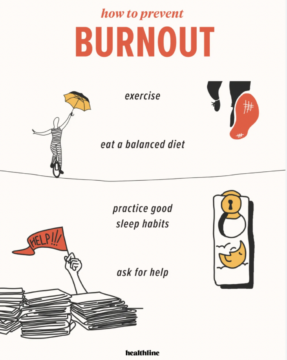 I started reading about burnout when I walked away from teaching earlier than expected. Suddenly, I couldn’t bring myself to open that door after over thirty years of bounding to work. A series of events wiped away any sense of agency, fairness, or shared values. Their wellness lunch-and-learns didn’t help me, and I soon discovered I’m not alone.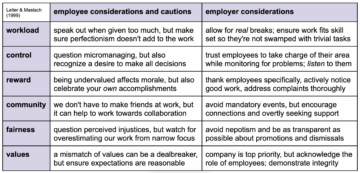
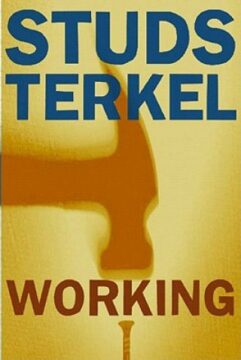 Eugene Russell, a piano tuner interviewed by
 Sughra Raza. Untitled. June, 2014.

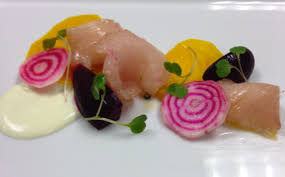 In philosophical debates about the aesthetic potential of cuisine, one central topic has been the degree to which smell and taste give us rich and structured information about the nature of reality. Aesthetic appreciation involves reflection on the meaning and significance of an aesthetic object such as a painting or musical work. Part of that appreciation is the apprehension of the work’s form or structure—it is often the form of the object that we find beautiful or otherwise compelling. Although we get pleasure from consuming good food and drink, if smell and taste give us no structured representation of reality there is no form to apprehend or meaning to analyze, so the argument goes. The enjoyment of cuisine then would be akin to that of basking in the sun. It is pleasant to be sure but there is nothing to apprehend or analyze beyond an immediate sensation.