
A macchiato I had in Brixen, South Tyrol. Just thought I’d post a somewhat soothing photo.
Enjoying the content on 3QD? Help keep us going by donating now.

A macchiato I had in Brixen, South Tyrol. Just thought I’d post a somewhat soothing photo.
Enjoying the content on 3QD? Help keep us going by donating now.
by Mary Hrovat

When I was a child, one of my favorite colors in the box of 64 crayons was midnight blue. I thought the deep blue color was beautiful, but I was also drawn to the word midnight. One of my favorite things was to stay up late at night. It seemed to me that something interesting happened to time after everyone else was asleep.
I’ve always been fascinated by the passage of time. When I was a child, it seemed mysterious to me somehow. It’s hard to describe, but let me try. (My earliest memories have been overlain by decades of interpretation and other memories, so I’m feeling my way here.) As best I remember, I felt immersed in a flow of events that varied without accumulating noticeably. Experience added up only very slowly to something larger or more abstract than the moment. It was (it still is) hard for me to hover above the flood of details that surrounded me and see that the flow of time is a river, carrying me to someplace new. Life often surprised (and surprises) me.
It is always now, for everyone. For me, somehow the constant nowness of life dominates my consciousness to the point that I tend to think about things such as how today becomes yesterday. Midnight is when a new day officially begins, but there’s something about the appearance of a new day that the movement of the second hand on a clock can’t capture.
As a consequence of the way I experience time, I’m also fascinated by transitions. I especially enjoy observing nature’s slow gradual changes. As a child, I loved to watch all the signs of evening’s approach: sunset, twilight, street lights and lights in houses coming on. When I was maybe 12 or 13, I drew maps of the neighborhood as I could see it from various rooms in the house, and I noted the times at which various lights were turned on. If I was up late enough, I wrote down the times at which some of the lights were turned off. I couldn’t tell you now why the clock times mattered that much to me. Read more »
by Mike Bendzela

Back when our local university still believed that a survey of English literature was a prerequisite for a “higher” education; before a drop in enrollments triggered a huge budget crisis culminating in hiring freezes, “retrenchments,” and amputated departments; I still taught an Introduction to Literature course that allowed me the freedom to construct a syllabus of my choosing (a boon for an adjunct like me). Just before the ax fell, I added Yeats’ famous visionary poem “The Second Coming” to the poetry list, which turned out to be a mistake I would never get an opportunity to repeat.
Things start explosively in the poem. I don’t know that any poet has ever created such a stark, terse, quotable abstract of his dire times as Yeats does in that first stanza. Many of the lines are so often quoted and interpreted that they can go unremarked here. The stanza is a compendium and summary of Europe flattened by the First War, bloody revolutions, and the Great Influenza epidemic of 1918. Writers reach in here for commensurate phrasing whenever things ain’t going so well. The closing lines of the stanza are so apt that I’m getting tired of hearing commenters in the US quoting them these days: Yes, the “best” people do seem demoralized and hapless; yes, the “worst” idiots are yapping and animated.
Yeats’ eye so far, as it sweeps over his contemporary landscape, is accurate and scathing. Then he turns that eye inward . . . and begins hallucinating. The results are not so laudable. Quotable, yes. Memorable, yes. But crazy, even full-on bonkers. It is only much later that I am able to articulate what irks me about that second stanza: Yeats indulges in such tawdry mysticism, trafficks in so many moth-eaten biblical tropes, and heaves such breathless portentousness, that he alienates my modern, agnostic sensibilities. Why cavort with that crank, John of Patmos, rather than with someone more relevant to the times, like Charles Darwin? But such phrasing! . . . “moving its slow thighs” . . . “twenty centuries of stony sleep” . . . “Slouches towards Bethlehem”!
Engagement with students becomes problematic at this point, especially with believing Christians in class. Read more »
by John Allen Paulos

Voters are lazy and often pay little or no attention to numbers and facts presumably relevant to their concerns.
I remember initiating a discussion of the housing crisis in the US. I mentioned a headline I claimed to have just read, which stated “Experts Fear Annual Housing Costs in the U.S. – Rent and Mortgage Payments – Might Top $3 Billion.” I expressed my concern with, “Imagine that – more than 3 billion dollars per year.”
People to whom I related the number responded by bemoaning the mortgage crisis, foreclosures, Wall Street, immigrants, and a host of other issues. Only a couple ever really thought about the headline and noticed that 3 billion is a ludicrously low number. A population of 350 million translates to about 100 million households. Dividing 100 million into $3 billion results in about $30 per person in rent or mortgage paid annually by the average household. Just $30 a year! I’d probably run into the same numerical slothfulness and incomprehension if I initially said $3 trillion was the annual cost for housing in the US. I can imagine that if these numbers arose naturally and were not so obviously crazy, partisan differences between groups would inevitably develop.
This anecdote is not without relevance for larger issues such as Social Security, Medicaid, Health Care, immigration, climate change, and so on.
Regarding the latter and what now passes for the EPA, I note that terminating measures designed to limit climate change and replacing them with measures that encourage drilling and fracking constitute a sort of Ponzi scheme. The early investors and proponents (and everyone else) would see lower oil and gas prices for a while. Not much later, however, these same investors and proponents (and everyone else) would live in a much less pleasant and habitable world. Some of the proponents of “drill, baby, drill” have even signed on to the common, but absurd assertion that global warming is a hoax. One needn’t be able to graph y = x + sin(x) to realize that a generally upward movement of average temperatures doesn’t preclude occasional local dips. Likewise, someone with terminal cancer will feel pretty good on some days without doctors revising their prognosis. In any case the business/environmental schism is as hard as ever.
The effects of ignorance and innumeracy are ubiquitous, so I’ll just mention one more salient issue. Read more »
by Mike O’Brien

This is a conversation I recently had with Dr. Larry Busk, a professor of philosophy who focuses on democracy and climate change, particularly within the sub-fields of critical theory and radical democratic theory. I trust it is not too opaque to an audience that is not familiar with these fields, or with Busk’s work in particular. For those who wish to have some more context in hand while reading/listening, I recommend the following freely accessible works. (Links to more of Busk’s work are included below the transcript).
– Climate X or Climate Jacobin? (with Russell Duvernoy), Radical Philosophy Review 23 (2): 175-200. 2020. (Regarding Mann and Wainwright’s book “Climate Leviathan”)
– Power to the (Right) People: Reply to Critics, Critical Review: A Journal of Politics and Society 36 (1-2): 92-118. 2024. (Regarding Busk’s book “Democracy in Spite of the Demos”)
– What Is “Totalitarian” Today?, Philosophy Today 67 (1): 35-49. 2023. (Regarding Arendt)
– Schmitt’s democratic dialectic: On the limits of democracy as a value, Philosophy and Social Criticism 47 (6): 681-701. 2021. (Regarding Schmitt)
-Beginning of transcript-
MO: So, if you want to just briefly introduce yourself, your role, your position, where you’re at in your research…
LB: Sure. I’m Larry Busk, I’m visiting assistant professor at Eckerd College in St. Petersburg, Florida.
MO: Great. So, I first came across your work in a paper that you co-authored, that was criticizing Mann and Wainwright’s book “Climate Leviathan”, and I went on to read a bunch of the rest of your work, and it largely circulates around this theme of criticizing the use of “democracy” as a critical concept in radical democratic theory, critical theory… How did you arrive at this area of research, this viewpoint, in your research? I mean, you’re still quite early on in your academic career, so I gather this is something that has carried on quite directly from your doctoral studies…
LB: Yeah, it absolutely has. My first book is really about the most sustained discussion of this theme that you’re talking about. The first book was actually, pretty much, almost verbatim my dissertation project, so you’re quite right that it started during my graduate studies. This idea, it really emerged out of my reading a lot of material, both in more popular forums and in more academic literature, that wanted to, in various ways and to varying degrees, point to popular movements, popular movements like Occupy Wall Street or Black Lives Matter or things like this, as exemplifying the normative and descriptive essence of “the political”- should I explain those terms, “normative” and “descriptive”? Read more »
by Alizah Holstein
 How are we to live, to work, when the house we live in is being dismantled? When, day by day, we learn that programs and initiatives, organizations and institutions that have defined and, in some cases, enriched our lives, or provided livelihoods to our communities, are being axed by the dozen? Can one, should one, sit at the desk and write while the beams of one’s home are crashing to the floor? Or more accurately: while the place is being plundered? There have been moments of late when I’ve feared that anything other than political power is frivolous, or worse, useless. In those moments, I myself feel frivolous and useless. And worse than that is the fear that art itself is useless. Not to mention the humanities, which right now in this country is everywhere holding its chin just above the water line to avoid death by drowning. It can take some time to remember that these things are worth our while, not because they’ll save us today, but because they’ll save us tomorrow.
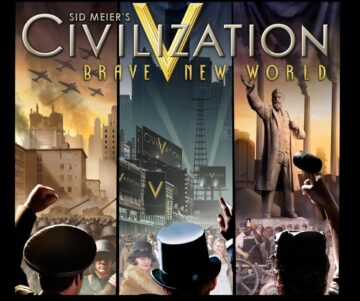
In my previous essay for 3 Quarks Daily, I wrote about how the acronym for the Department of Government Efficiency—DOGE—is possibly an allusion to the Venetian doge. For most of the Middle Ages, the doge was the city republic’s chief magistrate and its highest-ranking oligarch. The connection linking DOGE and doge, I suggested, was the video game Civilization V: Brave New World. In this game, players can choose to play the blind Doge Enrico Dandolo, who at ninety years old led the Venetian and crusader troops on the Fourth Crusade, ultimately diverting the crusade from its initial objective of Egypt and instead attacking two Christian cities, first Zadar on the Dalmatian coast, and then, more famously, Constantinople. Someone who has spoken publicly about playing this game is Elon Musk, and if I had to hazard a guess, I’d say he learned some of his history from it.
What does the Fourth Crusade look like in a video game? A Civilization V wiki supplies us with historical background and a summary sketch of Doge Enrico Dandolo: “He took control,” it explains, “of a mercantile power in decline, riven by corruption and inefficiency, challenged by great and small powers across the region. Trade had declined, and its military was moribund. By his death he had ended all outside threats to its influence, and made it the dominant power in Mediterranean trade again.” Corruption and inefficiency: those words ring a bell. Declining trade and complaints about a feeble military? Those too.
And yet there is much history that the wiki omits. Importantly, it neglects to mention that Doge Dandolo defied Pope Innocent III’s explicit prohibition against attacking allied lands. The pope excommunicated him for it, though in the two and a half years that Dandolo lived before dying on the crusade, the pope’s condemnation never appears to have made much of a difference. And another thing the wiki neglects to mention is the shocking violence of the plundering of Constantinople. Read more »
by Richard Farr

I read somewhere that Mexico City has more museums and art galleries than any city in the world except London. Seems plausible: two weeks wasn’t enough, and would not have been enough even without all the hours spent wandering the boulevards, exploring labyrinthine food markets, and drinking tall glasses of maracuya juice chased by marginally smaller quantities of pulque and mescal. The problem is, you can only gulp down so many cool historically significant artifacts before you cease to be able to see clearly, a fact that a single institution was enough to illustrate.
You get to the Museo Nacional de Antropología through Bosque de Chapultepec, nearly 2,000 acres of lakes and flowering trees that includes both the ruins of Moctezuma II’s private hot tub and so many lesser museums that they outnumber the squirrels. Built in 1964, the national cultural flagship is “only” a third the size of the Louvre but seems at least as big.
I’ve long assumed I’ll be on the shortlist if there’s ever a Nobel Prize for Loathing Brutalist Architecture, but I’m here to withdraw my nomination: Pedro Ramírez Vázquez’s design is clever, appropriate, imaginative, and (strange word amid all that concrete, but I’ll use it) lovely. And once you’ve absorbed the improbable grandeur of the monopole-canopied courtyard, everything inside seems monumental too, not just the twenty-ton carvings.
The rooms devoted to “Introduction to Anthropology” looked fascinating but not all that specific to the story of digging up Mexico. So we skipped through it, were also pretty cavalier about the acres of modern ethnography upstairs, and instead concentrated our minds on the Toltecs. The Oaxacans. The Maya. The Olmecs. The Zapotecs. The Mixtecs. The Aztec/Mexica…
It’s a brilliant assemblage beautifully displayed. Among many other thoughtful features, the main rooms open out into a series of gardens that are continuous with the indoor collection. But after four or five hours you reach historical-cultural overload – and the evidence for this is that you’re standing in front of something exquisite and realize guiltily that you’ve yet again confused Teotihuacán with Tenochtitlán. You’ve also started to hallucinate about the possibility of staring into space for half an hour over a plate of chilaquiles. Read more »
The Tao that can be thought of is not the real Tao;
therefore, the Tao that can be spoken is not real either;
so, the Tao that can be named is likewise no thing too.
………. —Lao Tzu, sort of
I was Catholic,
but was not universal enough
when I was.
I was Protestant,
but did not protest enough
when I was.
I was a Trancendental Meditationist,
but was not transcendent enough
when I was.
I was a dilettante Buddhist.
but unlike the lotus I failed to bud
when I was.
Now as a Taoist
in an inscrutable plan
I’m most content, because
it’s nothing I can really talk about
if I am.
by Jim Culleny,
from Odder Still,
Leana’s Basement Press, 2015
Enjoying the content on 3QD? Help keep us going by donating now.
by Muhammad Aurangzeb Ahmad
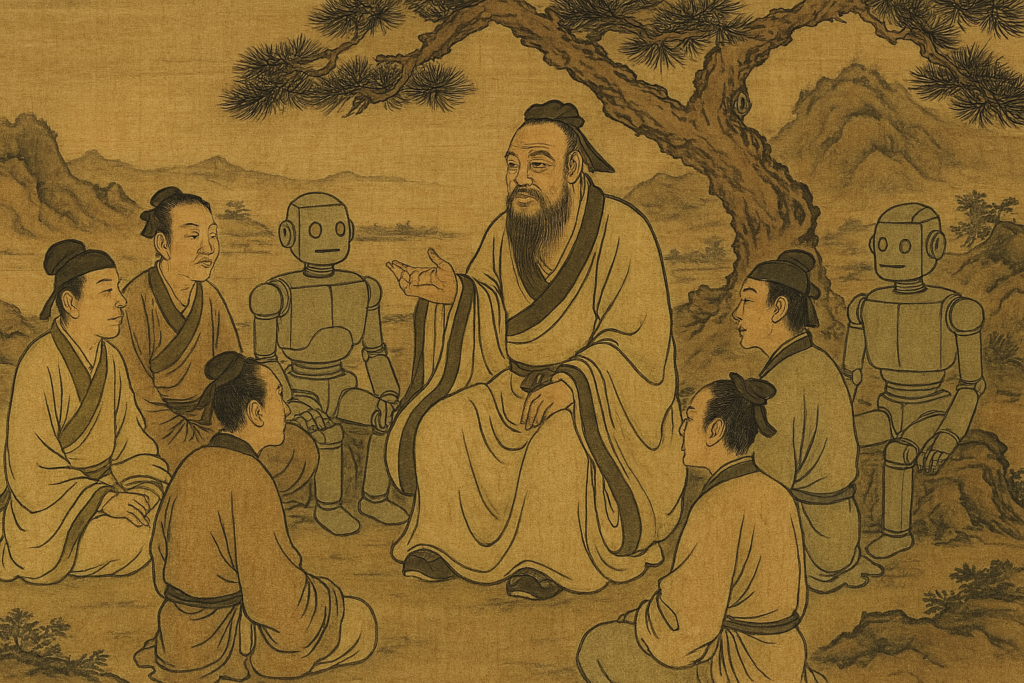
The arrival of DeepSeek’s large language model sent shockwaves through Silicon Valley, signaling that—for the first time—a Chinese AI company might rival its American counterparts in technological sophistication. Some researchers even suggest that the loosening of AI regulation in the West is, in part, a response to the competitive pressure DeepSeek has created. One need not invoke Terminator-style doomsday scenarios to recognize how AI is already exacerbating real-world issues, such as racial profiling in facial recognition systems and exacerbating health inequities. While concerns about responsible AI development arise globally, the Western and Chinese approaches to AI governance diverge in subtle but significant ways. Comparative studies of Chinese and European AI guidelines have shown near-identical lists of ethical concerns—transparency, fairness, accountability—but scholars argue that these shared terms often mask philosophical differences. In the context of pluralistic ethics, Confucian ethics offers a valuable perspective by foregrounding relational responsibility, moral self-cultivation, and social harmony—complementing and enriching dominant individualistic and utilitarian frameworks in global AI ethics. In Geography of Thought Nisbett argues that moral reasoning is approached differently in Eastern societies, where context, relationships, and collective well-being are emphasized.
To illustrate such differences, consider fairness. In East Asian contexts may be interpreted relationally – focused on harmony and social roles rather than procedurally. This suggests that AI systems evaluated as “fair” in the Western context may be perceived as unjust or inappropriate in another cultural settings. Similarly, privacy in the Western context is rooted in individual autonomy, rights, and personal boundaries. It could even be framed as a negative liberty i.e., the right to be left alone. Thus, Western approaches to privacy in AI (like GDPR) emphasize explicit consent, control over personal data, and transparency, often through individual-centric legal frameworks. In contrast, Confucian ethics views the self as relational and embedded in social roles—not as an isolated, autonomous unit. Privacy, therefore, is not an absolute right but a context-dependent value balanced with responsibilities to family, community, and social harmony. From a Confucian perspective, the ethical use of personal data might depend more on the intent, relational trust, and social benefit, rather than solely on individual consent or formal rights. If data use contributes to collective well-being or aligns with relational obligations, it may be seen as ethically acceptable—even in cases where Western frameworks would call it a privacy violation.
Consider elder care robots: a Confucian ethicist might ask whether such systems can genuinely reinforce familial bonds and facilitate emotionally meaningful interactions—such as encouraging virtual family visits or supporting the sharing of life stories. While Western ethical frameworks may also address these concerns, they often place greater emphasis on individual autonomy and the protection of privacy. In contrast, a Confucian approach would center on whether the AI fosters relational obligations and emotional reciprocity, thereby fulfilling moral duties that extend beyond the individual to the family and broader community. Read more »
by Kevin Lively
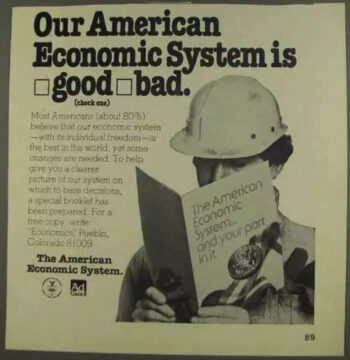
“-isms” are dangerous things. Weighty ideologies with wide sweeping narratives packed into a neat little bundle, whose slogans are repeated ad-nauseam until the word itself becomes the message and any empirical weight the narrative may have had recedes into the background. Capitalism, Marxism, Constitutional Originalism, Fascism, Liberalism, Socialism, Anarchism, Statism or Nihilism. Thinking in such terms, or worse self-identifying with them, is often the death knell of actual thought. Much more ominously: action in defense of the ideology gains a higher moral prerogative than the consequences of the action itself. The only reasonable course in drawing inspiration from such streams of thought is to choose to consciously grapple with the inherent messiness of the fact that no fixed system of beliefs will ever offer permanent solutions in a human society living on an exponential technological slope. Looking at population growth from a Malthusian perspective, an English lord who died almost a hundred years before the discovery of penicillin, seems almost as daft as criticizing labor relations in China for being Communist, where it doesn’t seem like the workers have much control over the means of production.
A striking aspect of very strong “-ism” people is how they tend to consciously or unconsciously mirror their supposed ideological rivals. For example, one of the best sources of quantitative Marxist analysis on wealth and power in society is the leading business newspaper the Financial Times (FT); with the caveat that all the values are reversed. This point is repeatedly brought up by the hosts of the alternative media outlet Novara Media who alternate between self-identifying as either Socialist or Communist, yet whose diverse roster of guests on their Downstream podcast from across the political spectrum almost all concur that FT is the world’s leading source of news. For college students, maybe these “-isms” are not so dangerous, unless they happen to hold green-cards and their “-isms” run afoul of the present US administration. The real danger to society at large is when people wielding inordinate amounts of power and influence and who, crucially, are unaccountable to the public, are true believers in one “-ism” or another. Read more »
by Eric Schenck
 I love public transportation. As an American, I know that makes me weird. Over the years, from both family and friends, I’ve heard many complaints about it:
These are all perfectly valid but I’m still convinced that public transportation is something everybody should try. And in this article – I’d like to show you why. What follows are six different modes of “public transportation” I’ve enjoyed, what they’ve taught me, and why maybe, just maybe, you should give public transportation a go yourself.
My first real experience with public transportation is taxis in Egypt. It starts weird. I don’t know that you’re supposed to tell the driver where you want to go before you hop in (in Egypt, they can and often do refuse). This leads to a few awkward conversations.
I learn fast though. Within just a few weeks I’ve got it down, and like many Egyptians, taking a taxi simply becomes a routine.
Living in Cairo and regularly flagging down taxi drivers makes me feel like I’m some banker in New York. But instead of banking, I’m going back and forth between English lessons. And instead of the bright lights of New York, I’m surrounded by women in burqas and giant mosques.
Taxi rides are forever intertwined with my time in Egypt. I lived in Cairo for three years. About 1,000 days. Probably something closer to 2,000 taxi rides.
Almost always a man. Recitings of the Koran playing over the radio. Looking at the Nile go by. Seat belts that either don’t work, or don’t exist. These are the things that will forever define Egyptian taxis for me. Read more »
by Thomas R. Wells

There is no good reason for small countries to exist, and we should stop making more of them.
The World Bank classifies 40 countries as ‘small states’ on the basis of having a population smaller than 1.5 million. Some are as small as 11,000 (Tuvalu), and the total population of all of them put together is only 20 million. Nevertheless, each of these countries has ‘sovereignty’ – meaning that the organisations that rule over the populations within these territories has special and equal rights under international law – to exploit the resources that fall within their exclusive economic zone, for example, or to vote on matters of global importance at the United Nations, or to make up their own regulations about corporation tax and secrecy.
This is absurd, but also far from harmless.
Small countries do not make economic sense in their own right because their populations are too small to sustain the large scale markets required for specialisation and economies of scale and hence the economic productivity required for real prosperity. The lack of real economic opportunities leads many of their citizens to want to leave. Hence most of these countries are very poor, simply because the borders have been drawn around too small a population.
It is true that some small states manage to prosper despite their singular disadvantage. But the ways in which they do so provide no general justification for the existence of small states.
Most of the small states who prosper do so by exploiting the only thing they have in abundance: the legal sovereignty gifted by the international order. Most obviously, they use their right to make their own laws to convert crimes into opportunities for money laundering and tax avoidance for international companies and wealthy individuals. This is economic parasitism because it contributes nothing of economic value to the world. Read more »
by Steven Gimbel
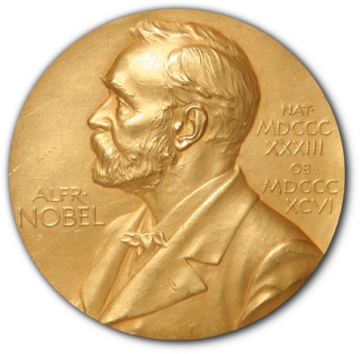 The list of Nobel laureates in physics, chemistry, and medicine includes men and women, Jews, Christians, Muslims, Hindus, Buddhists, and atheists, gay men, lesbians, and cis-scientists, people from Europe, Asia, Africa, North America, South America, and Australia. So, is the ultimate example of meritocracy also the epitome of Diversity, Equity, and Inclusion?
Absolutely not. All of these figures who form the zenith of human intellectual achievement come from the same small group. One and all, they are nerds. The irony of our times is that the people leading the charge to have government agencies wipe away remembrance of the achievements of people of color, women, gay and trans heroes in the name of anti-DEI not only harbor animosity for people of color, women, and members of the LGBTQ+ community, they really hate nerds.
I know this because I am a white nerd. My heritage traces back to Eastern Europe and I teach logic and critical thinking at the collegiate level, I hold a Ph.D. for a dissertation on the philosophical ramifications of Einstein’s general theory of relativity, I am the occupant of an endowed named professorship, and I was bullied in elementary school and middle school by people who probably applaud the white supremacy that is trying to use the progress made by other nerds who happened to be white as evidence of their superiority. They tried to copy off my test in sixth grade and now they are trying to do it again on a grander scale.
My doctoral work was undertaken at Johns Hopkins University, an institution that has been hit excessively hard by cuts to science and other intellectual pursuits, a school that raises the ire of anti-DEI power mongers because, like the rest of the locations where high-powered research is done, it looks like the United Nations. Control for any property—skin color, gender, hair color, sexual orientation, favorite ice cream flavor—and a small percentage will be nerds. We come in every size, shape, and color and as a white nerd, I have more in common with them than I do with those trying to usurp nerd-created intellectual successes for their own bigoted purposes. Read more »
by Jochen Szangolies

In 1950, during a lunch conversation with colleagues at the Los Alamos National Laboratory, Enrico Fermi asked the wrong question. Famously, after a discussion on the subject of recent UFO sightings, extra-terrestrial life, and the possibility of faster-than-light travel, Fermi blurted out: “But where are they?”
In that context, it was a sensible question: even given the magnitude of interstellar distances and the difficulties of bridging them, the vastness of cosmic time provides ample opportunity for an enterprising civilization to have visited any star within the galaxy several times over (for a brief recapitulation of the reasoning behind this assertion, see this previous essay). Certainly, it has been a stimulating one: it has spawned volumes of discussion, with potential solutions ranging from the optimistic to the dismal, from us inhabiting a carefully curated cosmic ‘zoo’ to every civilization self-destructing shortly after developing nuclear weapons.
But, as fruitful as this discourse has been, I want to suggest that there is a more interesting question that Fermi could have asked, one that might end up telling us much more about our place and future in the universe: “Why aren’t we them?”
Under seemingly reasonable assumptions, almost every sentient being in the universe should expect to find themselves as part of a galaxy-wide, ancient and prosperous civilization (the galactic metropolis); or, should interstellar space travel be fundamentally impossible, find whatever maximal niche they occupy (their ancestral home planet, the worlds of their solar system, a Dyson swarm around their star) filled nearly to capacity, for a time that’s of the order of magnitude of how long that niche can accommodate such a population. The argument for this is simply that for the vast majority of beings to ever exist, it will be true that they find themselves in such a situation, given ‘business as usual’—essentially, if life continues to ‘be fruitful and multiply’.
If it makes sense to apply such reasoning to our own situation (and I will argue that it does), the fact that we find ourselves very far from such a scenario demands explanation. Broadly, there are two possible answers. Read more »

A pedestrian bridge hangs over the river Eisack in Franzensfeste, South Tyrol, suspended from two of these cables which are anchored to these concrete abutments on the two sides of the river. It is a somewhat odd bridge in that the cables from which it hangs are mostly lower than the top parts of the bridge, which is also arched for greater strength. See photo below to understand what I mean.

Enjoying the content on 3QD? Help keep us going by donating now.
by Derek Neal
 Some weeks ago I made a note to myself on my phone:
Describe the artistic encounter—the aesthetic experience, its effect on the reader
I made this note because I wanted to try something different in my writing. In most of my essays, without ever articulating this idea to myself, I’ve attempted to understand and interpret a text or a film, and I’ve tried to present this to the reader. Here is what the text means, I say. Here is what the movie means. I have figured it out and now I am showing it to you as evidence of my intellect. This is the correct reading of the novel, the proper explanation. I am right; other people are probably wrong. When I write in this way, I often efface myself linguistically, giving my writing the semblance of objectivity while also positioning myself as an authority on a given subject—but I’m not sure I want to write like this anymore.
In describing the artistic encounter or the aesthetic experience, which I’m contrasting with the above description, the text or the film is no longer understood as a whole, autonomous object but as one unfinished half that must be completed by the reader or the viewer. Rather than a dead thing it becomes a living being animated by the recipient. The film that I watch is not the film that you watch because I am not you and you are not me. In my previous understanding, the art object was a sort of safe that needed to be unlocked through a series of interpretative moves, allowing its secrets to be revealed. In this new understanding, the safe is more like one of those little libraries you see on people’s lawns; it’s always open and you can find treasures inside, but you can and should also put your own things inside to help create the library. If you don’t, something is missing. The art object is incomplete without the reader or the viewer.
I’m not sure how I came to this new idea, although I have some vague notions. It may partly be a result of engaging with art that is impossible to interpret. I’m thinking in particular of the films of Andrei Tarkovsky, which I’ve attempted to write about here and here. Read more »
by Barbara Fischkin

Part One: Before Mari Saved Us
This is the back story: Maria Angeles Garcia, known to us as “Mari,” was a godsend to our family. In part two, which I plan to publish in May, readers will find out more about how this young, single mother from a small village in northern Mexico moved with us to, of all places, Hong Kong.
That move was in 1989. A few years earlier Mari had left her children with relatives with plans to earn money as a domestic worker in la capital, Mexico City—and then return home to give her family a better life. Eventually she came to work for us. Within a year, my husband was notified he would be transferred to Hong Kong. We asked Mari if she would come with us for a short while. We never expected her to say yes. But she did.
Mari grew up hearing both Spanish and an indigenous language. In Hong Kong, most people speak English and Cantonese. Regardless of geography, the underlying job wouldn’t change. When I was working as a journalist, from a home office or out doing interviews, I needed a nanny to take my first-born toddler son on small excursions. I didn’t want him locked behind the walls of our palatial home. I wanted him out and about, playing with neighborhood kids and savoring the bright colored flowers. I wanted him to suck oranges Mari picked right off the tree and to enjoy the aroma of elote— corn—roasting on sidewalk barbeques.
Mari knew that in Hong Kong, things would change. She mustered the courage, the fortitude and a free-range sensibility to spend a few months with us in Asia. She could have easily found another position in Mexico City. But she was intent on doing her job and frankly wanted to make sure our family, especially the child, transitioned safely.
After watching Mari in action, I knew so much more about assessing and hiring good household help. Typically, I did a good job. This chapter, though, is about the ones who came before Mari. Some had their moments of glory. Most get lost in her shadow. Read more »
by Barry Goldman
One day many years ago my wife got stuck in the shower. She doesn’t  know exactly how it happened, but that’s the gist. She finished taking a shower, pushed on the door to get out, and it wouldn’t open. She jiggled the door, and she banged on the door, and she pushed on the door, and she wiggled the door, and the door would not open.
So she stopped and thought about it. She couldn’t climb over the door. She couldn’t go around the door, and she couldn’t go through the door. She was standing in the shower naked and wet, and she couldn’t get out. Now what?
So she started over. She jiggled and shook and banged. No result. Could she dismantle the door? She didn’t have any tools. She had a washcloth, a bar of soap and a bottle of shampoo, nothing she could use to dismantle a shower door. Could she get help? She could yell, but it’s not likely anyone would hear her. She could call someone if she had a phone, but she didn’t have a phone. She was in the shower.
Okay, this is getting serious. She pushed the door some more. She shook the door. She banged on the door. This is not amusing anymore. Pretty soon she’s going to have to take some serious measures. But what would those be?
She could launch herself at the door and try to smash through it. Maybe that would work. It’s not generally a good idea to crash through a glass door naked, but if it’s necessary it’s necessary. Even then, they probably make those doors so they’re not easy to break. Susan only goes about 100 pounds. It’s not clear she could bust through a glass shower door even if she tried.
Okay, now she’s getting cold. She could warm up by turning the shower back on, but then what? She is beginning to run out of options. Pretty soon the situation is going to turn desperate. And when it turns desperate, then what? Read more »