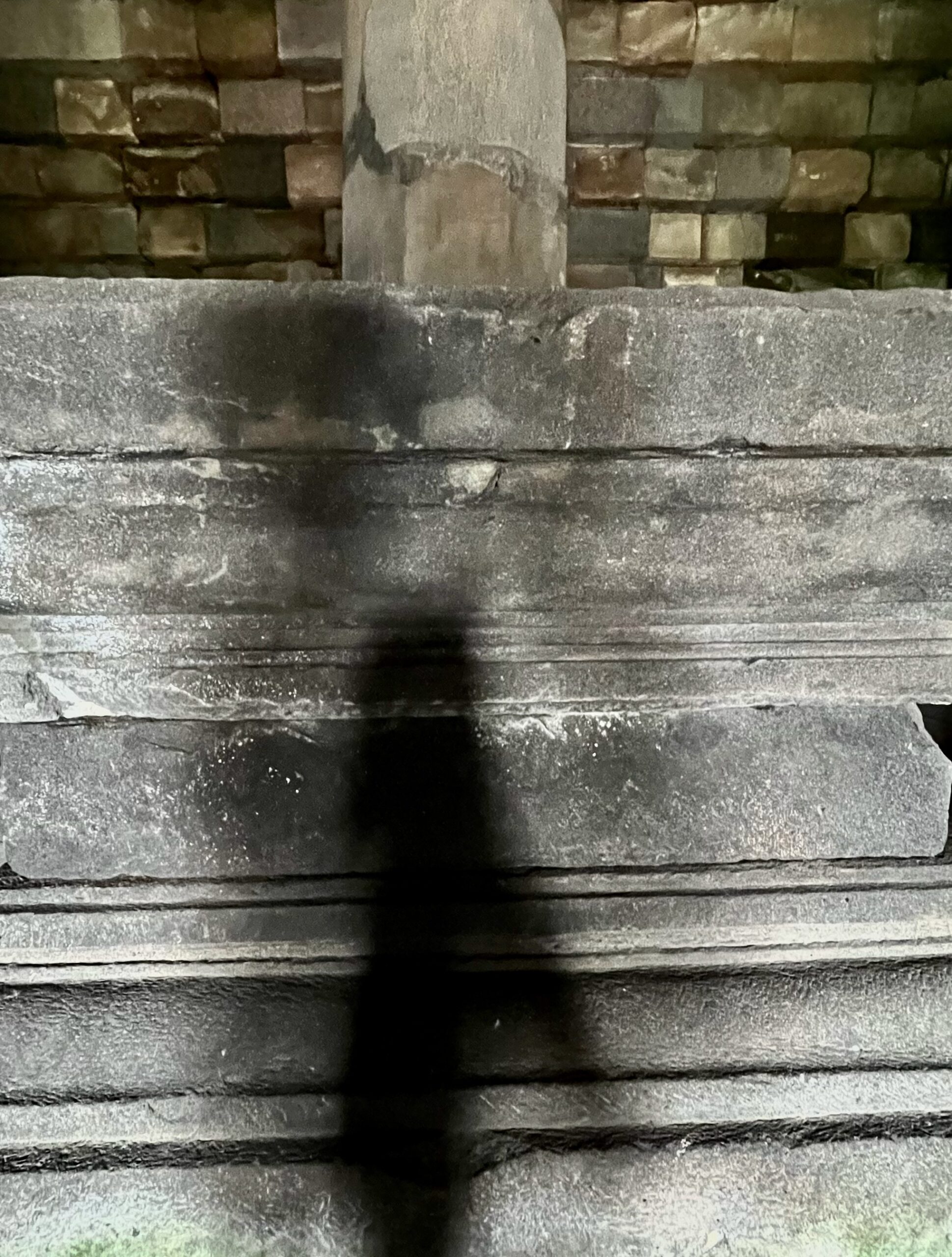
 Sughra Raza. Self-portrait in Temple, Jogjakarta, Indonesia, October 2025.
Digital photograph.
Enjoying the content on 3QD? Help keep us going by donating now.

Sughra Raza. Self-portrait in Temple, Jogjakarta, Indonesia, October 2025.
Digital photograph.
Enjoying the content on 3QD? Help keep us going by donating now.
by Leanne Ogasawara
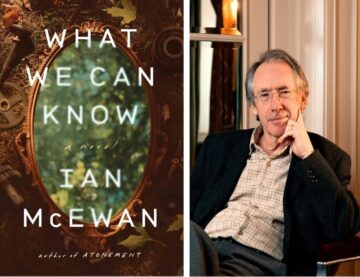
Which do you think is worse: a scenario in which every single email you ever wrote, (including all the drafts) and every last photo and video you ever took, are stored on the cloud for eternity. This is made publicly available, and is used to construct a book about your life.
OR
You destroy all trace of yourself in the digital record, and still a novelist uses your life as fodder for material, attributing thoughts and experiences to you, using your real name in the story, relating things that never happened.
1.
Set one hundred years in the future, the world depicted in Ian McEwen’s new novel, What We Can Know, is a very different one from our own. War and climate disaster have reshaped everything (surprise, surprise). The oceans have risen, and England is now an archipelago. Meanwhile, North America is ravaged by warlords and gangs, and China’s thirty-year experiment with democracy is collapsing amidst the people’s growing desire to wage war on Nigeria, a country which is now the sole remaining superpower and the only place which has managed to keep the lights on.
In England, people mainly eat protein bars and drink acorn coffee. The population has been halved. It’s not such a dire place when the story opens. It’s just harsher, with daily life more constrained. And not surprisingly people look back with longing—and also fury—to the people of our day.
We had so much. Oceans filled with fish and all those vineyards producing delectable wines. In the Age of Derangement, a term borrowed from Amitav Ghosh, why was our relentless avarice allowed to ravage the world unchecked?
One thing that has not changed over the hundred years separating our time with theirs is the human predilection for love and obsession.
Take the novel’s protagonist. Thomas Metcalfe is an academic in the Humanities—a field which has somehow survived to the year 2119, but only barely. Professors are sharing seven to a bathroom and there is no money. And yet, that does not stop Metcalfe from devoting himself to unraveling a certain poem by the poet Francis Blundy. Despite not having access to the work itself, he knows from the massive amounts of data that it did once exist and that it was read aloud by the poet at a legendary dinner party that occurred in 2014, when Blundy, one of the most renowned writers of the time, recited from memory what was a love poem for his wife.
McEwan says he was inspired to write this novel after his own reading of a John Fuller poem called “Marston Meadows: A Corona for Prue,” saying he knew he had to write a novel about it as soon as he read it. Read more »
by Barry Goldman

It was more than 50 years ago that Mike and I invented Corn Mush Latke Pie. We were living in a flat on Margaret Street near 7 Mile and Woodward in Detroit. We paid 110 bucks a month for the place. It had white walls, white drapes, red carpeting and the kind of bathroom sink that has the hot water coming out of one faucet and the cold out of another. For furniture we had two lawn chairs and a big brass ashtray. We were “in school.”
One night it got to be time to eat and neither of us had any money so we had to look in the cupboard. Naturally, there was nothing in there you could just eat. Stuff you could just eat we had long since eaten. The stuff that was still in the cupboard you had to cook. It was left over from the first week we moved in when we said we would stop eating in restaurants all the time and save money.
What we came up with was some potatoes with giant tubers growing out of them and some Jiffy Corn Muffin Mix. We snapped off the tubers and grated the potatoes, mixed the corn muffin mix with some water and garlic powder and hot pepper flakes, and put the whole thing in a cast iron skillet and put it in the oven. We called it Corn Mush Latke Pie because we didn’t know what else to call it and because latke is Yiddish for potato pancake and potato pancakes are traditional on Hanukkah and it was roughly Hanukkah as near as we could figure.
It was awful, as you might have guessed. Read more »
In reflection, the world’s not just a shifty place,
but odd really, the unexpectedness of it, it’s
sudden winds & wild humans shifting as I’ve aged,
sliding from simply familiar to things with
torn edges, never fully knowable, open-ended,
dangerous, yet held together tentatively by
threads of love and unexpected revelations
of beauty until, in entirety, it’s become
not just odd, but
odder still.
Jim Culleny, 11/9/25
Enjoying the content on 3QD? Help keep us going by donating now.
by David Kordahl
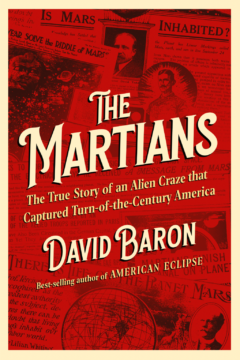
This article is a lightly edited transcript of a conversation with David Baron about his new book, The Martians: The True Story of an Alien Craze that Captured Turn-of-the-Century America. A video of this conversation is embedded below.
Intro and Percival Lowell Background (0:00)
Origins of the Canal Craze (6:39)
Gathering Evidence for the Canals (10:41)
Scientific Debate with Astronomers (14:02)
Thinking about “Outsider Scientists” (23:35)
Influence of Canals on Culture (27:45)
Reflections on Mars and the Future (32:33)
Today I’m speaking with David Baron, a seasoned science writer who has contributed to many major American journalism outlets, including the New York Times, the Washington Post, and the Wall Street Journal. He was a longtime science correspondent for NPR, and his TED Talk on the experience of solar eclipses has been viewed millions of times. His last book, American Eclipse, won the American Institute of Physics Science Writing Award in 2018. Today we’ll be discussing his new book, The Martians: The True Story of an Alien Craze that Captured Turn-of-the-Century America.
The “alien craze” in the subtitle of your book is the story of how, for about a decade at the beginning of the twentieth century, many people came to believe that the planet Mars held not only life, but a complex civilization. The person most responsible for popularizing this view as an established scientific fact was Percival Lowell. Lowell functions as a main character in your book.
I want to thank you for joining me today. At what point in your reporting for this book did it become clear that Lowell would function as a central figure in your story?
Oh, pretty much I knew that from the start. I first learned about the so-called “canals on Mars” from Carl Sagan, when I was in high school and watched the Cosmos series on PBS. On an episode about Mars, Sagan talked about this astronomer, Percival Lowell, who at the turn of the last century saw these weird lines on Mars that he believed were irrigation canals. It’s remembered as one of the great blunders in science, because it was an idea that really took off.
What actually surprised me was not that Lowell was my main character, but just how many other people got swept up in this craze—some of them quite prominent, famous scientists and inventors who totally believed that in fact there was the civilization on Mars. It was not just Percival Lowell. It was quite a collection of interesting characters. Read more »
by Eric Feigenbaum

From a corner room in Singapore’s Peninsula hotel, I spent many nights staring out the windows, watch sparks fly silently from the nearby construction sites. Up on the 18th or 14th or 20th floors, Singapore looked still and calm at midnight or 1am. Unlike many big metropolitans, Singapore streets – even in the city center – become quiet at night, especially a weeknight. There was an other-worldly quality watching Singapore’s downtown sleep at night.

My very first visit to Singapore was in February 2004. As business had it, by the end of the year, I was going frequently and for increasingly long stretches – sometimes for seven to ten days at a time, until I rented a condo in March 2025.
But 2004 was filled with nights looking out at the big, fast-moving clouds, giant sky, ships anchored offshore and ever-growing skyline. And sparks. Always sparks coming from below.
It took me a visit or two to realize the new National Library building being built just a couple of blocks away was under construction seemingly 24 hours a day. Which meant from visit to visit – even if it was just a few weeks between – the building grew rapidly. In fact, the 16-story, 338 foot tall, 121,675 square foot site with a gross floor area of 632,918 square feet was completed in less than 18 months. An amazing accomplishment.
As a comparison point, a recently very similar sized project in San Francisco – the 5M Office Tower at 415 Natoma Street took began in mid-2019, taking two years and nine months. Its cost – $158 million – is only $3 million more than the National Library’s – and ironically, the building received a development loan of $393 million from Singapore’s United Overseas Bank.
In a similar time-period as the construction of the Singapore National Library, my alma mater, the University of Washington, built a new Business School building – PACCAR Hall – on nice flat land in exactly two years from 2008 to 2010. Despite it being five stories and 133,000 square feet of total floor area – almost one fifth of the National Library’s – it still took six months longer to construct.
Obviously, 24-hour a day construction gives Singapore an advantage in construction time. But doesn’t that create around-the-clock noise that disturbs the city? Isn’t it inordinately expensive? Aren’t labor unions protesting? Read more »
by Charles Siegel
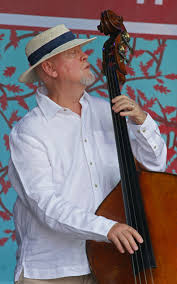 There can have been very few musicians who played such key roles, in so many different bands in so many different genres, as Danny Thompson. When he died at 86 in September, music lost one of its great connectors.
I first learned of Thompson as a freshman in college, when my roommate introduced me to Pentangle. There had never been a band like Pentangle, and there really hasn’t been one quite like them since either. They were an utterly unique melding of folk and jazz. The band’s guitarists, Bert Jansch and John Renbourn, were two of the leading English folk guitarists of the day when Pentangle was founded in 1967. Terry Cox was an established jazz drummer, and Jacqui McShee was an up-and-coming folk singer.
At the center of it all was Danny Thompson on bass. By 1967 he’d already had a wide variety of musical experience, not to mention a turbulent life.
Born in Devon, he never knew his father, a miner who joined the Royal Navy at the start of World War II and was killed in a U-boat attack. His sister died not long after, and he and his mother moved to Battersea, then a rough area of London yet to be gentrified.
He was a good soccer player — good enough to play for Chelsea’s youth teams. And he was a good boxer, winning 22 of 23 fights. But already, music was becoming his consuming passion. By the time he was a young teenager he had tried guitar, mandolin, trumpet and trombone. He told an interviewer that one reason he gave up trombone was his boxing, “because a smack in the chops is not very good for that.”
After all of those instruments, he settled on the double bass. Like pretty much every young musician in England in the 1950s, he started out playing in skiffle bands, and like everyone from Paul McCartney to Jimmy Page, he was inspired by Lonnie Donegan.
From there, he played in strip clubs in Soho and on American military bases. In keeping with his already ornery personality, in 1957 he was arrested for failure to report for national service. Three days before he was sent to prison, he married his girlfriend, and then was posted to Malaysia for two years, where he took up the trombone again in an army band. Read more »
by Akim Reinahrdt
 Language: Ooh, a talkie!
Strong Language: No shit
Disturbing Images: Worse than a mirror?
Nudity: Promises, promises
Sexual Content: Awkward birds & bees talk?
Sex: That’s not sex
Substance Abuse: That’s not abuse
Alcohol Use: Shots!
Smoking: With what cigarettes cost nowadays?
Product Placement: Good reminder not to buy any of it
Violence: You talkin’ to me?
Child Abuse References: I could use a good spanking
Birth: The horror!
Graphic Medical Procedures: Democracy’s autopsy?
Flashing Lights: Bamp-Bamp-Bamp da-da-da-da
Suicide: Spoilers, people!
Gore: Lesley, Frank or Vidal, I’m good. Al or Tipper I’d like a heads up.
[SCENE]
There’s a voice that says The following is intended for mature audiences only. Viewer discretion is advised and I want to slit its throat so that all the blood drains from its veins, for only then can I be sure it will never chide me again.
There is something wrong with me, to be sure. But there is also something wrong with the show or movie I’m about to watch. That’s what the voice is telling me. Be discreet. Think twice before letting others know you have watched it. Will you watch it? Are watching it. Are you watching it? Be careful.
What is wrong with you? Why would you watch this show we made for you? We’ve warned you. There’s something wrong with it.
Maturity is required. Are you mature enough to hear the alkaline truth? There’s something wrong with you. You’re trying to hide away what everyone else already sees. You’re thin skinned and have a fragile ego.
It was a simple advisement, not a searing admonishment, but you couldn’t handle it. You turned the objective into the subjective. You were lacking in discretion. Read more »
by Marie Snyder
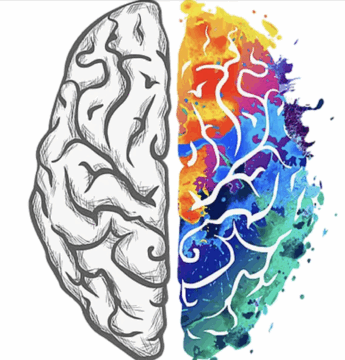 There are contradicting views and explanations of what dopamine is and does and how much we can intentionally affect it. However, the commonly heard notions of scrolling for dopamine hits, detoxing from dopamine, dopamine drains, and craving dopamine, appear to be more like a story we’ve constructed to understand our actions than a scientific explanation, and I’m not convinced it’s the best narrative to help us change our behaviours, particularly around tech-based habits.
As a hormone, it’s released by the adrenal glands (above the kidneys) into the bloodstream for slower, more general communications where it primarily helps to regulate our immune system. As a neurotransmitter, it provides fast, local comms between neurons in the brain where it does a lot of different things including affecting movement, memory, motivation, mood, and mornings (waking up). It makes up 80% of the “catecholamine content” in our brain, the ingredients that prepare us for action. Our levels fluctuate throughout each day, so you don’t have to try to cram all your work into the early hours of the morning.
It’s largely discussed as the heart of our quest for pleasure, yet for decades studies have concluded that dopamine doesn’t affect pleasure, since we get a dopamine release before a rewarding activity, not after we’ve completed it. Instead, it affects how the brain decides if an action is worth the effort. A 2020 study found that increasing it with meds like Ritalin can motivate people to perform harder physical tasks. People with higher levels of dopamine are more likely to choose a harder task with a higher reward than an easier, low-reward task. Low dopamine doesn’t reduce focus, but it’s believed it provokes giving more weight to the perceived cost of an activity instead of the potential reward. Lower levels lead us to save energy.
So why do we think we crave it or, paradoxically, need to try to intentionally deplete it? Read more »
by Michael Liss
No Congress of the United States ever assembled, on surveying the state of the Union, has met with a more pleasing prospect than that which appears at the present time. In the domestic field there is tranquility and contentment, harmonious relations between management and wage earner, freedom from industrial strife, and the highest record of years of prosperity. —Calvin Coolidge’s “Annual Address,” December 4, 1928
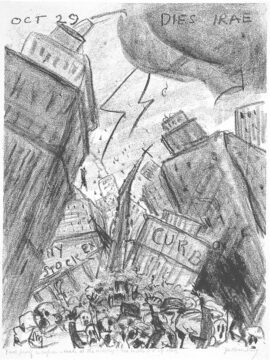
“Silent” Calvin Coolidge was a man of few words, but he might have uttered those particular few with a sense of satisfaction. Times were good in America in 1928—not for everyone, not for every industry, but, in the main, there were more jobs that paid a living wage, new industries that had great promise, and less rancor both politically and between the classes.
The Roaring Twenties had begun with a political earthquake—an electoral realignment. America wanted something different from the status quo, and the status quo was Woodrow Wilson. Wilson’s second term was dominated by America’s late entry into the war, debates over the League of Nations (as the country was growing more isolationist), and general domestic unrest. He was a man of great intellect and serious talent, but, if there was a sunny, optimistic side to Wilson, he hid it well. This was even more so after the serious stroke he suffered in October of 1919, a time in which he essentially sequestered himself from the public and even from most of his Cabinet. It is perhaps a measure of his monumental ego that, post-stroke, he still saw himself as a potent political force, not merely able to discipline his own party, but to convince the public to give him a third term.
Any rational viewer would have seen that as completely impossible, and a third Wilson campaign never got off the ground, but it was not merely his dyspeptic temperament, but also his policies which more and more of the country doubted or outright rejected. The forces that had given him the White House in the first place now inverted themselves. In 1912, Teddy Roosevelt had sought to reclaim the Presidency from his former VP pick, now turned President, William Howard Taft. TR wanted a continuation of his Progressive policies, and Taft was by nature and ideological preference a conservative. Losing the White House to a Democrat (and a Southern one at that) convinced many in the GOP to move further away from the Progressive wing and Progressive values. That shift was echoed by a smaller (but decisive) transition in the views of the electorate. Read more »
by Mark R. DeLong

Regular snowmobile trails bored us kids in the closing years of the 1960s. They wound through the woods, dipping here and there just enough to stall my uncle’s boxy old Evinrude machine with its odd orange and too smooth track. My cousins and I wanted slopes—frozen white waves—to test our snow jets as if we had exchanged whining two-cycle engines for surfboards and were scaling waves on Hawaii’s North Shore. The slopes we chose in winter were man-made and, now that I look at them, rather tame. Before winter idled roadbuilding, earthmovers had cut paths for a new “Interstate” outside of town, pushing the hills into the valleys and leaving steeper cut-off grades to bound highway lanes; the earthmovers leveled the roadway through the landscape. For a winter in the 1960s, the highway’s deer fence still lacked, so we could sneak through and leap our snowmobiles over the edge of the snowy wave. We carved track parabolas up to its crest.
That was the story of I-35 near Moose Lake, Minnesota, where I was a child—at least before the wide interstate pavement opened to cars. I’m certain Moose Lake’s town council didn’t have as much fun with the interstate as I did with my cousins that winter. They knew what would happen to town traffic and businesses once the highway opened. It would dwindle and the town with it. The same story played out wherever a “superhighway” cut through the landscape.
They tried to avoid having their town turn into another small place where a gas station or two near the highway ramps would become the only retail businesses, and they had a plan. One could say they hijacked highway traffic to run through the town’s center on two-lane US Highway 61. You couldn’t exit and re-enter the new highway at the same interchange; whoever would get off I-35 would have to run through town to re-enter the interstate on an on-ramp at the opposite end.
It was a cunning plan. It didn’t work. Read more »
by Daniel Gauss
 When you walk through the gates to enter the B-52 Victory Museum in Hanoi, you immediately find the wreckage of what has been one of the most terrifying machines ever built: an American Boeing B-52 Stratofortress. Apparently, this wreckage largely came from Nixon and Kissinger’s “Christmas Bombings” of 1972.
The museum has the wreckage laid out to show the rough outline of a B-52, to give visitors some idea of how massive the plane was. It looks like a slain dragon lying there with gaping wounds. My friend Trang, a professor in Vietnam, marveled at the twisted gargantuan structure, wondering out loud what kind of country had the resources and will to make so many airplanes that were so large and destructive.
I witnessed visiting groups of Vietnamese who silently gathered around areas of the wreckage as there was an odd tranquility surrounding the dead beast. It had been dead for over 50 years and folks realized it would never rise again. Yet what lay mangled before us had once represented the apex of American power, when America unquestioningly thought it could win wars through sheer force and technological domination. This was the embodiment of what Theodore Roosevelt once called the “big stick” that we might sometimes use in our foreign policy.
The B-52 was never simply an airplane. It was a political instrument and a psychological weapon. Its very existence, capable of carrying nuclear weapons halfway across the world while being refueled in the air, gave the United States a terrifying aura during the Cold War.
Indeed, from 1961 to 1968, the U.S. Strategic Air Command (SAC) kept nuclear-armed B-52 bombers continuously airborne as part of Operation Chrome Dome. The B-52s flew routes over the Arctic, Atlantic and Mediterranean, staying within striking distance of Soviet targets. Crews flew 24-hour missions, with new crews taking over as others landed. Read more »

Rowan tree, also known as the mountain ash and its bright treasure of berries. With its yellow-orange leaves, it looks particularly striking at this time of year. Photo taken during a walk last week through Franzensfeste, South Tyrol, on a sunny day with beautiful light.
Enjoying the content on 3QD? Help keep us going by donating now.
by Herbert Harris

Is mathematics created or discovered? For over two thousand years, that question has puzzled philosophers and mathematicians alike. In Plato’s Meno, Socrates encourages an uneducated boy to “discover” a geometrical truth simply by answering a series of guided questions. To Plato, this demonstrated that mathematical knowledge is innate, that the soul recalls truths it has always known. The intuitionists of the early twentieth century, however, rejected this idea of eternal forms. For thinkers like Poincaré and Brouwer, mathematics was not revelation but construction: an activity of the human mind unfolding in time.
The debate continues today in an unexpected new arena. As artificial intelligences start to generate proofs, conjectures, and even entire branches of formal reasoning, we are prompted to ask again: what does it mean to do mathematics? Current systems excel at symbol manipulation and pattern matching, but are they truly thinking in any meaningful way, or just rearranging signs? The deeper question is how humans do mathematics. What happens in the brain when a mathematician recognizes a pattern, intuitively sees a relation, or invents a new kind of number?
In what follows, I’ll trace that question from ancient philosophy to modern neuroscience and then to the newest foundations of mathematics. We’ll see that mathematical invention may be the natural expression of the brain’s recursive, embodied intelligence, and that this perspective could transform how we think about both mathematics and AI. Read more »
by Paul Braterman
 Throughout most of the UK (Northern Ireland is a partial exception) evolution is regarded as established science, and no politician would make belief in separate creation part of their platform, for fear of ridicule. In the US, this is far from being the case. Although evolution has become more widely accepted over time, one third of Americans still believe that God created humans in their present form. Here I discuss the enormous influence of creationism in US politics and analyse the arguments put forward in its favour, as set out for example by Charlie Kirk, the recently slain leader of Turning Point USA.
Mike Pence, Vice President during Trump’s first term in office, had argued in Congress for creationism, while creationists have been prominent in the various faith councils supporting Trump. At least three members of his present cabinet (Pete Hegseth, Scott Turner at HUD, pastor at Prestonwood Baptist Church, Doug Collins at the VA, one-time pastor at Chicopee Baptist Church) are committed creationists, as is Mike Huckabee, another former Southern Baptist pastor, now ambassador to Israel. So is Mike Johnson, Speaker of the US House of Representatives, who has done pro bono work for Answers in Genesis, now the leading creationist organization. Russell Vought, co-author of Project 2025, whose role at the Office of Management and Budget is pivotal role in the distribution of federal funds, is an elder of a church that explicitly rejects evolution, and sees Satan as “the unholy god of this age.” Vought is also acting director of the Consumer Financial Protection Bureau, and on 28 October 2025, in this capacity, rescinded the rule that, in some States, prevents medical debt from showing up on credit reports.
We can understand the link between creationism and US right-wing politics in terms of the appeal to US conservatives of loyalty, respect for authority, and sanctity. These all favour absolutist theology, which demands submission to divine authority, loyalty to the community of believers, and the preservation of pure doctrine. With this in mind, we can understand the appeal of Christian Nationalism and Trumpism to creationists. Thus as early as 2015, Answers in Genesis praised Trump, not for any specific policies, but because he spoke, just as Jesus spoke to the Pharisees, as one with authority. Read more »
by Rafaël Newman
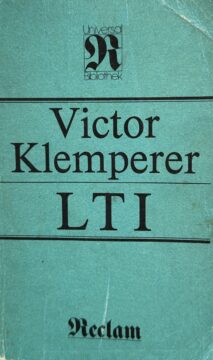 In June 1932, half a year before Adolf Hitler was sworn in as German Chancellor, Victor Klemperer watched Nazis on a newsreel marching through the Brandenburg Gate in Berlin. A professor of Romance languages at the Technical University of Dresden, whose area of specialization was the 18th century and the French Enlightenment, Klemperer (1881-1960) was unpleasantly gripped by this first encounter with what he termed “fanaticism in its specifically National Socialist form,” and by the “expression of religious ecstasy” he discerned in the eyes of a young spectator as the drum major passed by, balanced precariously on goose-stepping legs while he robotically beat time.
This initial morbid fascination—with National Socialist martial aesthetics, and eventually with Nazi ideology as expressed linguistically—was to prove a lifesaver after 1933 when Klemperer, although a convert to Christianity, was systematically deprived of his academic privileges, and then of his civil rights, by the Nazis now in power, who regarded him as an unalterably “biological” Jew. Klemperer’s marriage to an “Aryan” woman saved him from the deadly fate reserved for millions of others, but he nevertheless suffered as a form of torture his exclusion from libraries, his confinement with his wife to a Judenhaus, and the mindless industrial work he was forced to perform:
In my hours of revulsion and hopelessness, during the endless drudgery of sheerly mechanical factory labor, by the side of the sick and dying, at gravesites, when I myself was in distress, at moments of the greatest agony, as my heart was failing in my body—the demand I made of myself came faithfully to my aid: to observe, to study, to remember what has occurred—tomorrow things will look different again, tomorrow you will feel different again; set down the way this moment announces itself, record its impact. And very soon, this call to elevate myself above the situation and to preserve my inner liberty had been condensed into a secret formula, one with reliable effect: LTI, LTI!
“LTI,” Klemperer’s “secret formula,” was his shorthand for the project that sustained him: documenting the language used by the National Socialists as they gradually exerted totalitarian control over German minds (and “non-German” bodies). “LTI” stands for Lingua Tertii Imperii, Klemperer’s own taxonomy for “The Language of the Third Reich”. Read more »
by Angela Starita
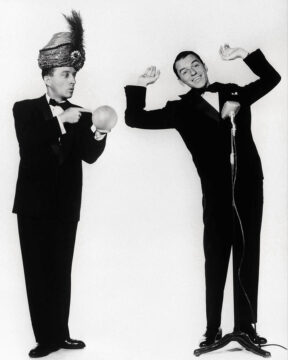 When my mother was a teenager in the early 1940s, a NY-area radio station ran a weekly contest, asking listeners to vote for their favorite singer among two: Crosby or Sinatra? How people made this preference known remains unclear to me: did you need a phone in your house to make a call to the station or was sending a postcard enough? Whatever the method, the winner would be announced each Sunday afternoon. While Sinatra often took the prize, Crosby occasionally outpaced the Jersey boy who grew up two towns south of Cliffside Park, my mother’s hometown. On those occasions, she told me, she’d stamp around my grandparents’ railroad apartment, enraged at the abject stupidity of her fellow listeners. When she’d tell this story, my mother would marvel at her parents’ forbearance, the way they’d accept these outbursts without comment, though they were highly disciplined, gloomy people for whom the idea of having an “idol,” or caring about his fate on a weekly radio show was surely alien. I like this insight into them, a softer side that I myself had only witnessed a few times.
What I like even more about the story is what it says about my mother’s taste—excellent—and that her knowledge and passion for the American songbook went way back. I suppose you could say that last statement was true for almost anyone young in those years, but I doubt there were many casual listeners who, years later, could pick out the pop standard undergirding the inventive tangents of Cecil Taylor or Milt Jackson recordings. But none of this was an identity for my mother or something she talked about or was even aware of as somehow unusual: she liked the music, knew it deeply, and there was no more to it. Her tastes were definite and clean, like the beautiful seams of well-made clothing that don’t depend on distracting accessories or patterns. She dismissed the likes of Judy Garland and Sammy Davis Jr.—too needy—and championed Johnny Mathis, Jo Stafford, and Sinatra for their understated elegance. Despite her own performance as an irate teenager, she was her parents’ daughter in prizing reserve on stage. No big gestures or frenetic moves across the stage. Read more »
 Anushka Rostomji. Waq Waq Tree, 2023, of the Flesh and Foliage Series.
Charcoal and pencil on paper.
Enjoying the content on 3QD? Help keep us going by donating now.
by Katalin Balog
“…eventually he regained his balance and dismissed all thought of resistance from his mind, and concentrated on accepting the dizzy state of the world that was spinning round him as a perfectly natural state of affairs…” —László Krasznahorkai, The Melancholy of Resistance (trans. George Szirtes)

I grew up in communist Hungary, the country that is the original source of the bitterness of Krasznahorkai, winner of this year’s Nobel prize in literature. During my upbringing there, and before, for generations, politics had been a constant presence in everyday life, and history, too, with still fresh memories of fascism all around. I am not saying that politics dominated everything; there was life beyond it, but still, it was unavoidable. It provided the oppressive, at times humiliating, at times ridiculous mise en scène of our lives. During my youth spent in dissolute opposition to the tired version of communism in the 1980s, I knew that there was an alternative: the democracies of the West, which struck me, on my visits as an impoverished tourist from Eastern Europe, as obviously, vastly, and exhilaratingly superior to the places on my side of the Iron Curtain.
When I moved to New York in 1989, illusory as some of my expectations turned out to be, I reasonably concluded that I escaped history’s clutches. Like a good enough mother, guarding inconspicuously the safety of her children, American democracy turned out to be, from my vantage point in any case, the constantly humming background of a normal life unmarred by the intrusions of a power-hungry political regime. The newspapers, by and large, reported the facts instead of the tendentious, strangely formulated distortions and outright lies I grew up on, and there seemed to be a certain, minimal level of decorum in public affairs. I didn’t feel the need to be constantly on alert; I didn’t even need to know much about politics at all.
But now it looks like history has caught up with me again. So I started wondering if the Eastern European experience can shed any light on the present predicament of the US. If it can teach something about the meaning of resistance. Read more »