by Barry Goldman
Somebody screwed up. That much was clear. A batch of parts that was supposed to go through process A was instead sent through process B. The parts had to be scrapped. The job was delayed by several days. The customer was furious. The boss called in the manager who was in charge of the plant at the time of the mix-up. The manager appeared at the meeting along with a representative. The boss asked for an explanation. The manager and his representative made their arguments. The boss determined the manager was at fault and imposed a two-week suspension without pay. The manager appealed the suspension, and the case went to arbitration.
At the hearing, the manager’s lawyer argued that the plant rules require an employee to be given 24 hours written notice before an investigative interview. Here, there was no written notice. The boss merely called the manager and told him to come to his office. Since the company failed to comply with the notice requirement, the lawyer argued, the investigative interview was improper, and the discipline was invalid.
The company argued that the manager had effectively waived the notice requirement. By appearing at the investigative interview with a representative and participating in the meeting, and by failing to request an adjournment or to raise the issue of notice, the manager had tacitly agreed to proceed without the notice required by the plant rules.
The purpose of the notice requirement, after all, is to ensure the employee has an opportunity to appear and present his case. The idea is simply to get everyone in the same room at the same time with the same agenda. Since the employee did appear and did present his case, the purpose of the rule was served. To invalidate the discipline on the grounds that the notice provision was violated would elevate form over substance. Read more »

 Every neighborhood seems to have at least one. You know him, the walking guy. No matter the time of day, you seem to see him out strolling through the neighborhood. You might not know his name or where exactly he lives, but all your neighbors know exactly who you mean when you say “that walking guy.” This summer, that became me.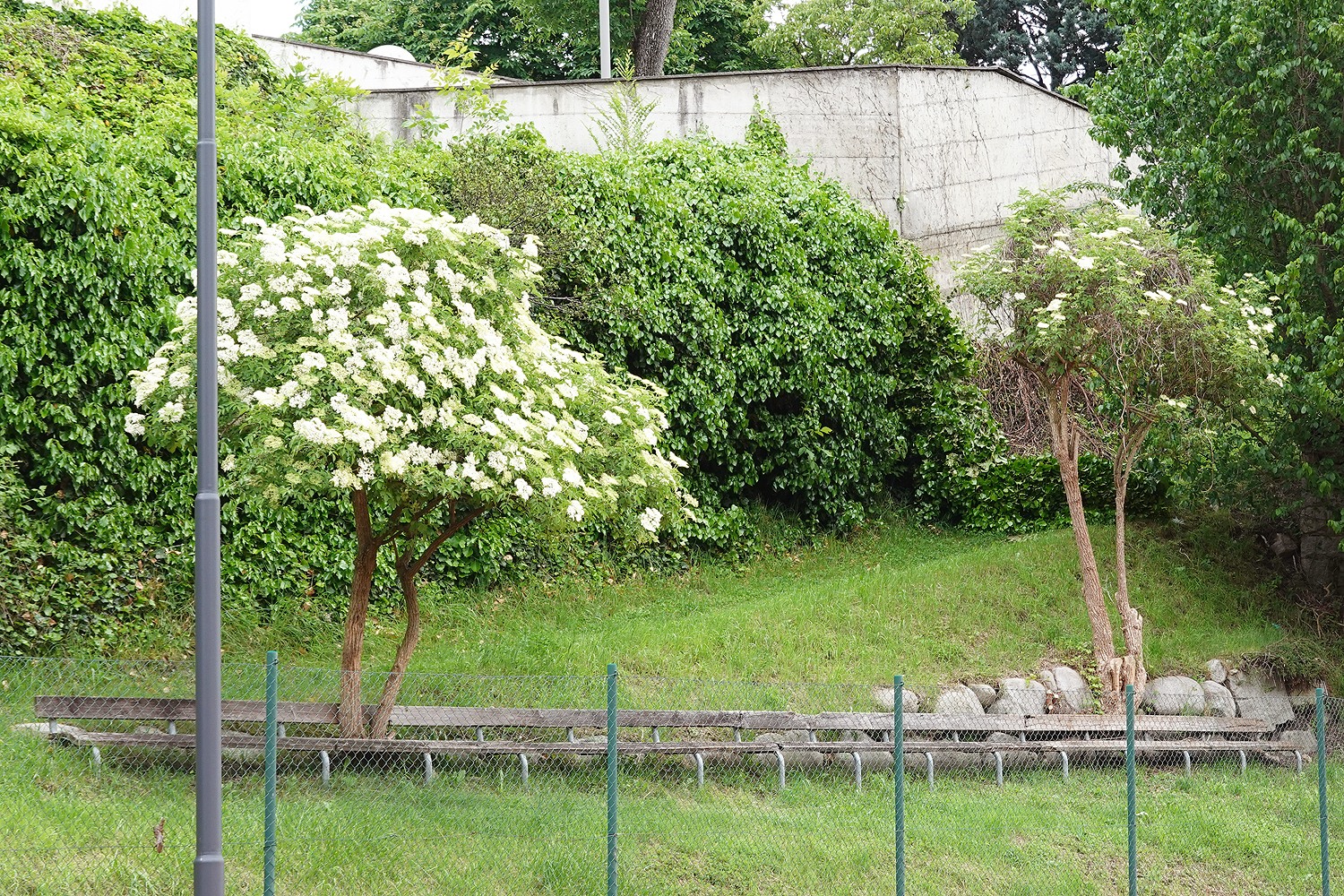
 For some time there’s been a common complaint that western societies have suffered a loss of community. We’ve become far too individualistic, the argument goes, too concerned with the ‘I’ rather than the ‘we’. Many have made the case for this change. Published in 2000, Robert Putnam’s classic ‘Bowling Alone: the collapse and revival of American community’, meticulously lays out the empirical data for the decline in community and what is known as ‘social capital.’ He also makes suggestions for its revival. Although this book is a quarter of a century old, it would be difficult to argue that it is no longer relevant. More recently the best-selling book by the former Chief Rabbi Jonathan Sacks, ‘Morality: Restoring the Common Good in Divided Times’, presents the problem as one of moral failure.
 Sughra Raza. Nightstreet Barcode, Kowloon, January 2019.
 At a recent conference in Las Vegas, Geoffrey Hinton—sometimes called the “Godfather of AI”—offered a stark choice. If artificial intelligence surpasses us, he said, it must have something like a maternal instinct toward humanity. Otherwise, “If it’s not going to parent me, it’s going to replace me.” The image is vivid: a more powerful mind caring for us as a mother cares for her child, rather than sweeping us aside. It is also, in its way, reassuring. The binary is clean. Maternal or destructive. Nurture or neglect.
 With In the New Century: An Anthology of Pakistani Literature in English, Muneeza Shamsie, the time‑tested chronicler of Pakistani writing in English, presents what is arguably the definitive anthology in this genre. Across her collections, criticism, and commentary, Shamsie has chronicled, championed, and clarified the growth of a literary tradition that is vast but, in many ways, still nascent. If there is one single volume to read in order to grasp the breadth, complexity, and sheer inventiveness of Pakistani Anglophone writing, it would be this one.
 In my last