by Nils Peterson
I thought to myself that one day I’ll have to write an essay entitled “Goodbye Dorothy Parker, Apologies Edgar Guest.” It would have as its epigraph a quotation from Flaubert in a letter to Louise Colet, “But wit is of little use in the arts. To inhibit enthusiasm and to discredit genius, that is about all. What a paltry occupation, being a critic…. Music, music, music is what we want! Turning to the rhythm, swaying to the syntax, descending further into the cellars of the heart.” Yes, “swaying to the syntax,” poetry and music swaying in a dance – lovers really. This morning I thought this might be the day.
Poetry used to be popular. People read it all the time. Many newspapers had a daily poem. My mother wrote poems in both Swedish and English that appeared in a Swedish-American newspaper. Edgar Guest’s 1916 collection “A Heap o’ Livin” sold more than a million copies. But then in 1922 came the catastrophe of “The Wasteland,” and “real” poetry became the possession of the elite. Consequently, it gradually disappeared from newspapers and other general publications.
The title of Guest’s book came from a line in the title poem – “it takes a heap o’ livin’/ To make a house a home.” Some wit wrote “It takes a heap o’ heaping to make a heap a heap.” Well yes, funny. Dorothy Parker wrote “I’d rather flunk my Wasserman test/Than read a poem by Edgar Guest.” Witty, yes. Funny, no. Think how that attitude wants to separate those of us who love “The Wasteland” from the rest of the world who love a different kind of poetry.
A friend told me this story about his father: “My dad [at] a discussion in the big room at the Minnesota Men’s Conference.… (Once my brother and I coaxed our dad to come up for three days….) Robert Bly was asked about the meaning of a line in one of his poems… as he frequently was. In this instance… My dad leaned forward to listen… And Robert said ‘I have no idea what that means.’ That sealed the deal for my dad. He would much rather read Edgar Guest than some poet that doesn’t know what he means.”
Yes, sometimes it really is hard to say what a line means. Sometimes you don’t quite know yourself. Sometimes it would take too long to explain. Sometimes the place is not the right place for explanation. So, I sympathize with Robert, but I sympathize with my friend’s dad too. Read more »



 A good weather colloquialism can be quite suggestive. Take





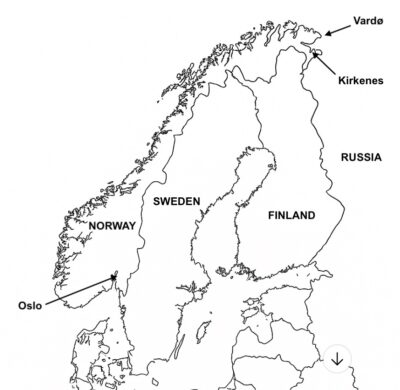 It’s different in the Arctic. Norwegians who live here make their lives amid long cold winters, seasons of all daylight and then all-day darkness, and with a neighbor to the east now an implacable foe.