
by Jerry Cayford
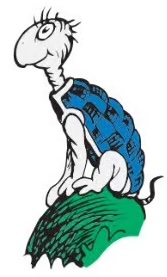
“Yertle the Turtle,” by Dr. Seuss, is a parable for our times. That statement may seem banal to some, maybe even insultingly obvious. But I think the elements that make it so relevant are not the obvious ones. Like any great parable, it suggests more than it says, and its adaptability to fresh perspectives is what keep its so-so-simple surface interesting.
The obvious current analogy to Yertle is, of course, President Trump: the greedy, arrogant Turtle King—“I’m Yertle the Turtle! Oh, marvelous me! For I am the ruler of all that I see!”— lusting to expand his kingdom by annexing Greenland and the Panama Canal. This fits with conventional readings of the story, which focus on questions of morality and treat the righteousness of Mack’s resistance to injustice as the heart of the story. (It is even used in classrooms to introduce children to thinking about moral issues, for example here). The story is then a children’s tale of good triumphing over evil.
I would change the focus in interpreting “Yertle the Turtle” from questions of morality to questions of power. To me, the plain little turtle named Mack represents resistance to authority. So, I see Mack in the plain little turtle who killed that healthcare executive on the streets of New York. I also see Mack in a powerful judge who is quite the opposite of a desperate killer. We’ll look in some detail at the judge who stopped President Yertle’s assault on the birthright citizenship of babies born to immigrant parents. There are many other Macks in between the killer and the judge on the social scale, all connected by the concept of resistance to authority.
The key question is how Mack gets power. In the story, he gets power almost accidentally, a by-product of a fanciful depiction of society. Totally unrealistic, we say. But my examination of how society’s rules are made and by whom will reveal a picture in which ordinary people do indeed, like Mack, make up the structure itself on which everything rides. Read more »