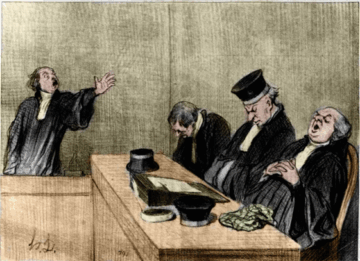
by Mike Bendzela
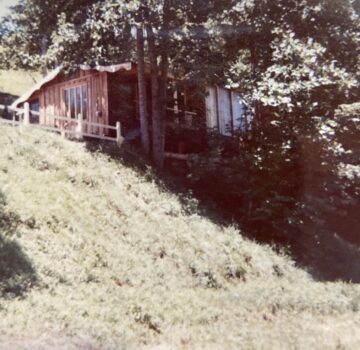
You could tell we were on the last leg of our journey to Kentucky when, after we had crossed the Ohio River at Portsmouth and entered the curvaceous roads of the Appalachian Plateau, the puking began. At the time, we were a family of six crammed inside Dad’s 1963 white Ford Fairlane two-door sedan. Mom had one toddler brother up front, and Sis and I watched the other little brother in the backseat. It was exciting to go from the Great Plains cornfields ambience of the highway south of Toledo to the seemingly endless rugged hills below Columbus, but that excitement turned to horror once the back-and-forth, up-and-down, start-and-stop driving commenced on the back roads of Carter County, Kentucky. Mom had brought along a Hefty trash bag for just such an emergency, and as we kids went pale and cold in the backseat one by one, we took turns passing the bag among ourselves and heaving our roadside stop dinners into it.
Thus begins the story of this northern city-slicker’s romance with the American South, a halting, stop-and-go affair that has lasted decades and should, I hope, continue to the end of this life. It was during these trips to Eastern Kentucky in my boyhood that I realized I have a throbbing mass of neurons in my brain that pines for a long lost, agrarian past. This is a self-generated illusion, of course, and I’ve always known that, but it hasn’t stopped me (nor should it stop anyone) from trying to revive, recreate, and reconstruct this remote and vital aspect of North American history. Read more »

 Today an electrician came to visit. He was tall and broad-shouldered and had arms like sausage links that were fairly covered in tattoos. One of the tattoos was a date: January something-or-other. I tried to read it as he walked through my front door, but he looked me in the eyes and so I glanced away quickly without having absorbed any of the details. He had come to inspect my attic wiring, for which he had to get on his hands and knees and crawl around the attic floorboards. It was a short but dirty job. When he came downstairs his palms were blackened and so he asked if he could wash up somewhere. I pointed him to my kitchen sink and to a small bar of soap on one side of it. While he was washing his hands (very thoroughly, I noted), he turned to me and starting cheerfully recounting how important it was to him to be clean. He had a pink, friendly face, sort of like a big baby. He had shaved blond hair that had grown out ever so slightly and a twinge of orange in his beard stubble. I told him I was accustomed to dirt, having two sons and a male dog, although upon saying that I realized I wasn’t sure whether my dog’s sex was much of a factor in how dirty or clean he tended to be. The electrician nodded when I spoke but seemed eager to get back to his own story. He went on to tell me that he had a child but that he was no longer together with the mother. It’s not like me to have a one-night stand though, he said, it’s not a hygienic thing to do. And anyway, he went on, I could never have stayed with her—she was a slob, an unbel-IEV-able slob. She couldn’t focus, couldn’t pay attention to me or anyone else, and certainly not her surroundings. Keep your eye on the ball, I told her, but she didn’t know what I meant. Believe me, he said, that girl and all her stuff was all over the place.
 The Hanle Dark Sky Reserve is a spectacular spot in Ladakh, in the north of India. It’s surrounded by snow-capped mountains, and at 14000 feet, it’s well above the treeline. So the mountains and the surroundings are utterly barren. Yet that barrenness seems only to enhance the beauty of the Reserve.
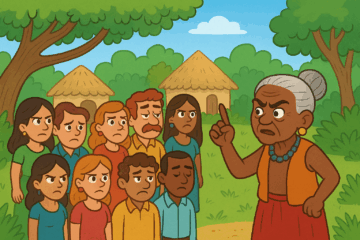 A bit of information is common knowledge among a group of people if all parties know it, know that the others know it, know that the others know they know it, and so on. It is much more than “mutual knowledge,” which requires only that the parties know a particular bit of information, not that they be aware of others’ knowledge of it. This distinction between mutual and common knowledge has a long philosophical history and has long been well-understood by gossips and inside traders. In modern times the notion of common knowledge has been formalized by David Lewis, Robert Aumann, and others in various ways and its relevance to everyday life has been explored, most recently by Steven Pinker in his book When Everyone Knows That Everyone Knows.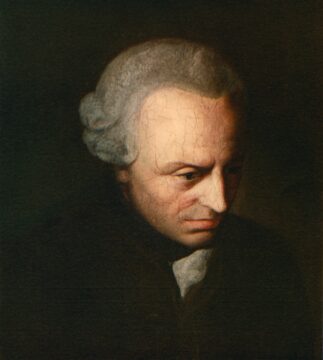
 Sughra Raza. Departure. December 2024.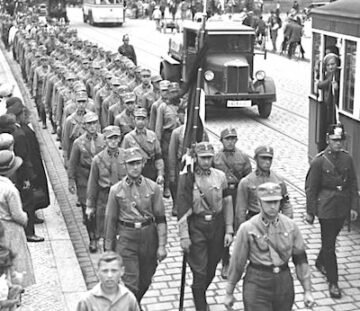


 In recent years chatbots powered by large language models have been slowing moving to the pulpit. Tools like