by Brooks Riley


by Brooks Riley
by Nils Peterson
Charles Simic says, “[I] suspect that a richer and less predictable account of our lives would eschew chronology and any attempt to fit a lifetime into a coherent narrative and instead be made up of a series of fragments, spur-of-the-moment reminiscences occasioned by whatever gets our imagination working.”
I was reading an article yesterday on translation of Proust and the author mentions Proust’s decision to build “a whole long novel on an involuntary memory.” You’ll remember the moment. He has a madeleine cookie with his tea and all of a sudden “An exquisite pleasure had invaded my senses, something isolated, detached, with no suggestion of its origin…. Whence did it come? What did it mean? How could I seize and apprehend it? … And suddenly the memory revealed itself. The taste was that of the little piece of madeleine which on Sunday mornings at Combray.” He is transported back to his childhood.
I got caught up in the idea of an involuntary memory. Michael Wood, the author of the Proust article, goes on to explain ‘Involuntary here means not only unintended but barred from the realm of intention. Whatever it is, it won’t happen if you try to make it happen.” A philosopher of language would have a ball playing with what is going on in those last two sentences, but I’m not interested this morning in going down that road because I had on Tuesday an involuntary memory. I saw the floor of the bedroom my brother and I shared in the chauffeur’s apartment above the garage in the late 30’s. I think I was eight the last time I saw that floor. It was covered in linoleum and the linoleum was divided into squares and each square had a nursery rhyme with an illustration. Mind settles for a moment on Miss Muffet and her tuffet. Part of my learning to read may have come from hearing my mother recite the rhyme and my finding it on the floor and understanding and parsing out the words. This last is a forced memory and it may not even be a true one. How different a making from the involuntary appearance in my memory of the linoleum.
There was a path to there. I was walking back from poetry salon I lead here at my old people’s home. People bring poems they want to read. Tuesday we got everything from Casey at the Bat to some lovely Robert Frost. When a person comes who didn’t know he or she was supposed to bring a poem to share, I ask for a song lyric or nursery rhyme and usually they can come up with something. The younger they are, the less likely they are to come up with a nursery rhyme. I think they’re on the endangered species list.
The subject of Memory interests me and I have written a couple of attempts to understand it. Here’s one. Read more »
by Ed Simon
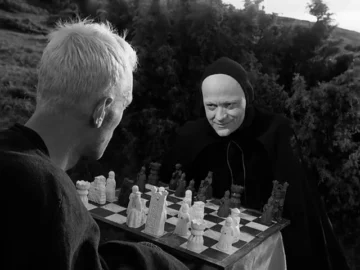
In Renaissance Europe, a Wunderkammer was literally a “Wonder Cabinet,” that is a collection of fascinating objects, be they rare gems and minerals, resplendent feathers, ancient artifacts, exquisite fossils. Forerunners to the modern museum, a Wunderkammer didn’t claim comprehensiveness, but it rather served to suggest the multiplicity of our existence on this earth, the nature of possibility. Wunderkammers developed alongside that literary form which Michelle de Montaigne called “essays,” literally an “attempt.” Essays, like Wunderkammers, at their most potent are also not comprehensive; rather their purposes is to experiment, to riff, to play. In that spirt, half of my columns at 3QuarksDaily will be dedicated to what I call a “Word Cabinet,” a room dedicated to literature, neither as theory nor even as reading, but to do what both wonder cabinets and essays do, and that is to hopefully provide intimations of possibility. All essays will take the form of “On X and Literature,” where the algebraic cipher indicates some broad, general subject (fire and labyrinths, trees and infinity, etc.). As always, feel free to suggest topics.
* * *
Behind the gleaming, modernist, smooth sandstone façade of Edinburgh’s National Museum of Scotland, a temple to all things Hibernian from the Covenanters to the Jacobite Rebellion, the Highland Clearances to James Watt’s steam-engine, there is a small thirteenth-century walrus tusk ivory carving of a Medieval Nordic soldier. Discovered in a simple stone ossuary buried in a sand dune on the foggy, rain-lashed Bay of Uig on the Outer Hebridean Isle of Lewis in 1831, the little sculpture is just a bit over an inch tall, yet it’s easy to make out the distinctive Scandinavian designs on his pointed helmet, his comical bulging eyes, and his teeth over the top of the shield that he clutches and bites. His is clearly a pose of frenzied, martial wrath. A berserker – the feared caste of Viking warriors who in an enraged fugue state (possibly aided by hallucinogens) terrorized people from Novgorod to Newfoundland, including the Scotts who lived on Lewis where this small figurine would be entombed for six centuries, alongside ninety two other pieces. Not just berserkers, but a mitered bishop of the recently converted Norseman; a tired looking queen with her eyes wide, resting her face upon her balm; a bearded, wise old king.
The berserker isn’t just a tiny statue of a Norse combatant, he’s a warder; what is more commonly known as a rook. This tiny berserker was a chess piece, who even nine centuries ago had the responsibility of charting that distinctive L-shaped course across checkered boards. From India into Persia, than the Arabic world into Europe, chess had already been played for half-a-millennia by the time whatever Norse craftsman took chisel and scorper to a walrus tusk. The rules would be recognizable to contemporary players, though the sterling craftsmanship of the Isle of Lewis chessman – with enough pieces to constitute three complete sets – is rather different than the boring black-and-white pieces used by players today, whether the prodigies competing against paying tourists in view of Washington Square Park’s triumphal arch or the celebrated 1972 match in Reykjavik between Fischer and Spassky. Read more »
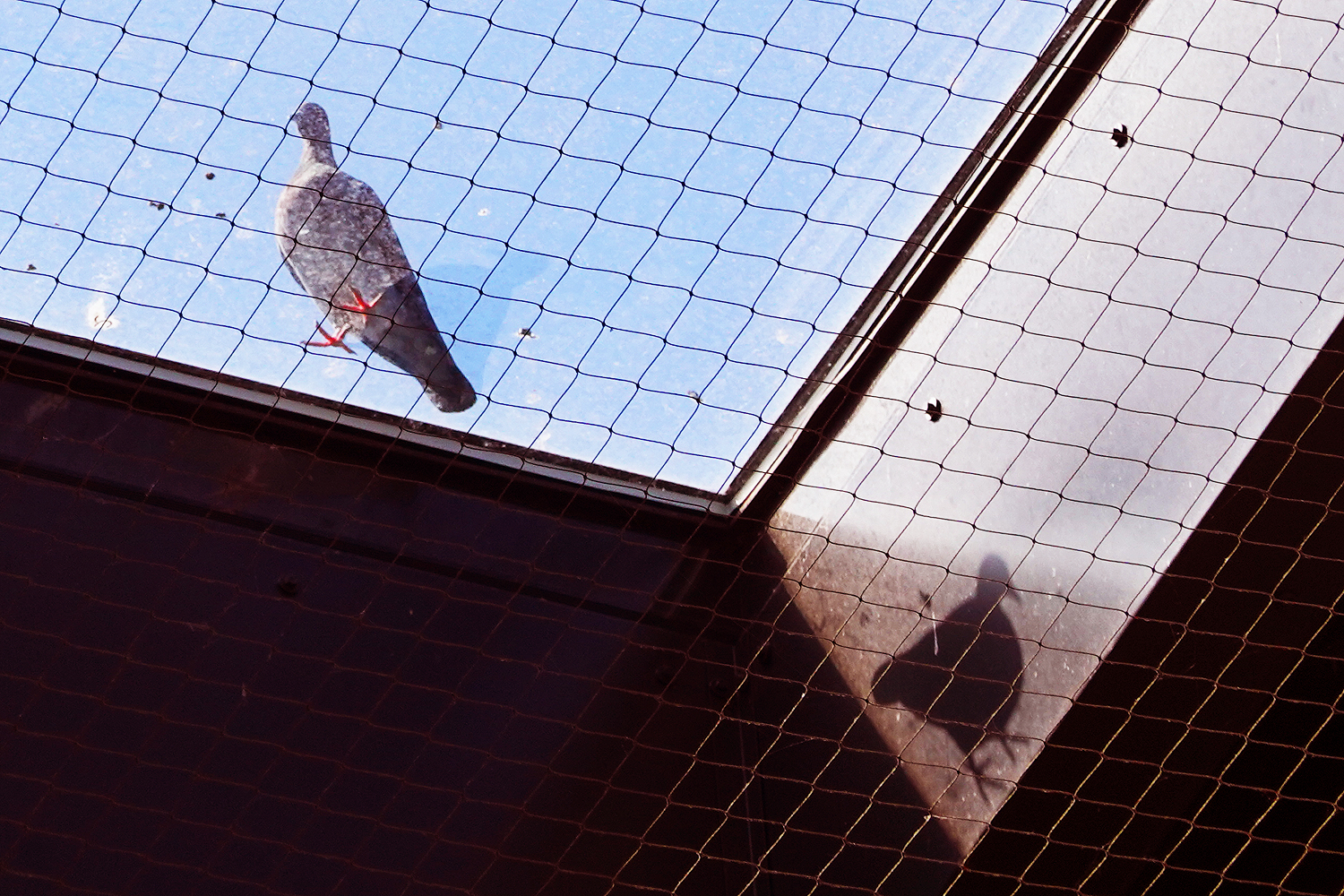
Pigeon sitting on a skylight at the Berlin airport. And its shadow.
by Olivier Del Fabbro
 No matter where you go, Aristotle believes, the rich will be few and the poor many. Yet, to be an oligarch means more than to simply be part of the few, it means to govern as rich. Oligarchs claim political power precisely because of their wealth.
Rightfully then, we associate oligarchy with the few individuals, who enrich themselves in Eastern Europe after the downfall of the Soviet Union, in order to take part in political governance. Alexander Smolensky, Yuri Lushkov, Anatoly Chubais, Boris Berezovsky, Vladimir Gusinsky, and most famously Mikhail Khodorkovsky, are the protagonists of David E. Hoffman’s The Oligarchs, who are right on the spot, when the Soviet planned economy turns into a wild privatization of profitable industries and resources.
But the economic situation in the 1990’s in Eastern Europe is by no means comparable to the market economy of a liberal democracy. What is missing, according to Timothy Snyder in The Road to Unfreedom, is the rule of law. In other words: oligarchs wish to manage Russian “democracy” in favor of their own interests.
Later on, when Vladimir Putin succeeds Boris Yeltsin, oligarchy in Russia continues. Putin keeps those he likes in his inner circle and gets rid of others, who are critical or not playing along: e.g. the case of Khodorkovsky. It is time for Putin’s KGB friends to come to power, as Catherine Belton shows in her book, Putin’s People. Yet, Putin’s Russia becomes at the same time, as Mark Galeotti highlights in his podcast In Moscow’s Shadows, more and more an authoritarian regime, in which many different types of individuals desire a piece of the cake: mega-oligarchs, mini-oligarchs, corrupt politicians and officials, warlords, generals and what not. Russia has never been democratic – not under the Tsars, the Soviet Union, Yeltsin nor Putin. Its path is one from imperialism to communism to oligarchy to authoritarianism – not to freedom.
Ukraine, similarly to Russia, falls under the grip of its very own oligarchs after the Soviet Union vanishes from the world map. Read more »
by Christopher Horner
Become That which You Are —Nietzsche.
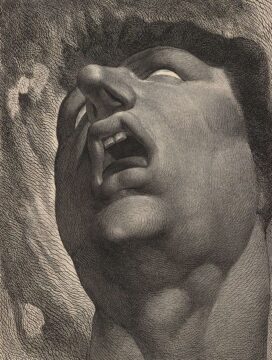
What is it to lead a free life? Perhaps it is doing what we want with the minimum of external constraints, so we can follow our desires. Also to be free from anything within us that would prevent us from choosing wisely and acting effectively. I don’t want to bungle an action, I don’t want to get things wrong that might lead me to misread a situation, and I don’t want to be knocked off track by some outburst of the irrational, blind anger or a neurotic compulsion that reaches me from my past. The ideal of a free life includes in it the notion that I can to identify with my actions as my own, to stand by them, as it were.
We picture the rational self that wills, as somehow brightly lit in the conscious mind: I know, I choose, I act, and I say: I did that. The darkness is in the unconscious, and we need the light to choose freely. However, this image of the free self is at best incomplete. [1] We know that we are being pushed in all sorts of ways, even – perhaps especially – when we think we are making a free choice. I choose A over B: to marry or not; to go on holiday here and not there; to go for a walk; to buy that laptop. Are these free, independent choices? How did I come to have just these desires, here and now? My desire for A over B was conditioned by who I came to to be, and my goals are embedded in my biology and in my place and time in history. Since desires aren’t simple and basic can I say I am free when I act on them? If not it would appear that responsibility, and the praise or blame that goes with it, are just empty words.
‘Ought implies can’
The phrase comes from is Immanuel Kant, who was much exercised by the question, as he saw that morality implies freedom. Since my reasons for doing something are also causes, and are the outcomes of the push and pull of social life, it looks like my inclinations are anything but free, if we imagine that to mean that I could have chosen to do something else. We may feel free, but that isn’t proof that we are free. Read more »
by Mike Bendzela

Funny how an object that weighs 8.1 x 10¹⁹ tons manages to elude our attention most of the time. But it can be very shy, sometimes crouching on the evening horizon, thin as a filament of copper; sometimes disappearing from view for whole days at a time. Then, one bright afternoon, you’ll glance up into the broad blue sky, and there it is! a ghostly, waxen presence, “staring from her hood of bone,” as Sylvia Plath memorably put it. You forget the days spinning by and miss its fullness; or clouds move in and secrete it from your view.
Recently, though, it lumbered its fat ass right in our faces. Narcissist of the moment, it imposed its presence onto legions of us and dared blot out everything for whole minutes at a time. I drove over one hundred miles due north into Maine’s backwoods country, along with multitudes of others, to see it happen.
Thousands of generations of our hominin ancestors trembled and vomited at the sight of the midday light going out. They thought the gods had abandoned them.
Not us, though. We know better. We know our orbital paths and our diamond ring effects and our giant leaps for mankind. We consult the Internet for coordinates and blithely emit a million tons of carbon into the atmosphere in order to go gawk for a few minutes directly into the maw of the beast.
Guilty as charged. Read more »
by John Allen Paulos
 An abstract paradox discussed by Yale economist Martin Shubik has a logical skeleton that can, perhaps surprisingly, be shrouded in human flesh in various ways. First Shubik’s seductive theoretical game: We imagine an auctioneer with plans to auction off a dollar bill subject to a rule that bidders must adhere to. As would be the case in any standard auction, the dollar goes to the highest bidder, but in this case the second highest bidder must pay his or her last bid as well. That is, the auction is not a zero-sum game. Assuming the minimum bid is a nickel, the bidder who offers 5 cents can profit 95 cents if the no other bidder steps forward.
This can lead to an unexpected result. The bidder who begins with a nickel bet will likely be outbid by another bidder offering 10 cents for the dollar and thereby standing to reap a 90 cent profit if not outbid. This profit margin too would likely entice a bidder, maybe the first one, to offer 15 cents and score a profit of 85 cents. Now the bidder who bet 10 cents wants to keep from losing 10 cents and so is likely to up his bet to 20 cents. This continues as, at each stage, the bidders must wrestle with the issue of sunk costs and decide whether to give up or raise their bid for the dollar by 5 cents or more.
These bids are not irrational, but can nevertheless reach the one dollar mark. This will happen when one of the bidders bids 95 cents and another bids a dollar. The bidder offering 95 cents then faces a loss of 95 cents if he or she declines to bid $1.05. Declining may be unlikely, however, since bidding $1.05 would reduce their loss from 95 cents to only 5 cents, paying $1.05 for $1. These incentives will remain even as the bids exceed a dollar with no compelling natural limit. Second highest bidders, by definition, always lose more than the highest bidders yet gain nothing, and so always want to lessen their losses and gain something by becoming the highest bidder. Read more »
. . .
In a blink the sun comes up
over mountains sublime
and the sea laps it’s rim like a pup
. . . regal elms come and go
. . . splayed trunks broken by blight,
. . . limbs corrupt
future and past together abide,
winds whistle side by side,
bodies touch and often burn up
. . . wars rage,
. . . scriptures are taught,
. . . good and bad divide,
. . . killers are caught,
. . . doors open doors shut
in a blink they say
never the twain shall meet,
but twain meets: the poor collide
with those on high, who live like Tut
. . . notions of right and wrong are cinched
. . . in tiny minds that grasp and clinch
. . . and root and rut
love is made,
bodies entwine,
hate’s kicked on its ass so hard
it can’t get up
. . . mountains move,
. . . the earth erupts,
. . . promises are kept
. . . and given up
. . . and odes and fugues
. . . make offers
. . . we shouldn’t refuse,
. . . they demand
. . . we not interrupt
in a blink
all of us know
but no one agrees
if mountains are mountains
and trees are trees
if sky is sky
if mud is mud
if wine’s just wine
if blood’s just blood
. . . either way
. . . in a blink,
in a blink
we drink
it up
.
by Jim Culleny; March 19, 2005
by David J. Lobina
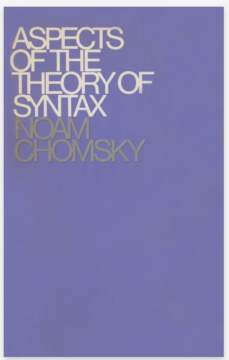
By now I feel like the linguist-in-residence at 3 Quarks Daily; and that would be quite right, as every outlet should have an in-house linguist (a generative linguist, of course), considering how often, and how badly!, language matters are discussed in the popular press. Perhaps I should start a series of posts calling out all the bad examples of the way language is discussed in the media, correcting the mistakes as a sort of avenging angel as I go (God knows I would spend most of my time talking about machine learning and large language models, and I have been there already); but nay, in this note I am more interested in bringing attention to one of the most important books in linguistics since its publication in 1965, and certainly the most influential: Noam Chomsky’s Aspects of the Theory of Syntax.
But why? For ulterior motives, of course (it will come handy in future posts, that is); in this particular post, though, my aim is to highlight the importance of Chomsky’s monograph to other fields of the study of cognition. Having done this (today), the application of some of the ideas from Aspects, as most linguists call it, will be more than apparent from next month onwards.[i]
In particular, I would like to discuss how the distinction introduced in Aspects between competence and performance plays out in practice, and to that end I shall focus on a particular way to study cognitive matters: one that accounts for a given mental phenomenon at the different levels of analysis that the neuroscientist David Marr and colleagues identified some thirty years ago. If only modern research in AI would follow this framework! [ii]
What follows will include my own editions and additions on such a perspective and I hope the result isn’t too tendentious, but at least the discussion should give a comprehensive idea of the sort of interdisciplinary work Aspects spurred – in this specific case, in the psychology of language.[iii] Read more »
by Mark Harvey
 Vitamins and self-help are part of the same optimistic American psychology that makes some of us believe we can actually learn the guitar in a month and de-clutter homes that resemble 19th-century general stores. I’m not sure I’ve ever helped my poor old self with any of the books and recordings out there promising to turn me into a joyful multi-billionaire and miraculously develop the sex appeal to land a Margot Robbie. But I have read an embarrassing number of books in that category with embarrassingly little to show for it. And I’ve definitely wasted plenty of money on vitamins and supplements that promise the same thing: revolutionary improvement in health, outlook, and clarity of thought.
On the face of it, there’s nothing wrong with self-help. I think one of the most glorious and heartening visions in the world is that of an extremely overweight man or woman jogging down the side of the road in athletic clothing and running shoes. When I see such a person, I say a little atheist prayer hoping that a year from now they have succeeded with their fitness regime and are gliding down the Boston Marathon, fifty pounds lighter. You never know how they decided to buy a pair of running shoes and begin what has to be an uncomfortable start toward fitness. But if it was a popular book or inspirational YouTube video that nudged them in that direction, then glory be!
The same goes with alcoholics and drug addicts. Chances are, millions are bucked up by a bit of self-help advice from a recovering addict or alcoholic, an inspirational quote they read, and even certain supplements to help their bodies heal from abuse.
But so much of what’s sold as life-changing does little more than eat at a person’s finances in little $25 increments of shiny books and shiny bottles. Sometimes the robberies are bigger—thousands of dollars in the form of fancy seminars, retreats, or involved online classes. There are thousands of versions of snake oil, and there will always be people lining up for some version of it. Read more »
 Sughra Raza. Shadow Self-portrait on a Young Douglas Fir, May 3, 2024.
Digital photograph.
by Richard Farr

Beautiful, enchanting Andalucía! — but I probably shouldn’t say that. It’s one of my favorite places in the world and we got to spend the whole of March traveling there. We even spent a week in a town with fabulous food, glorious beaches and lashings of history that the international tourist trade seems largely to have missed, ————— .
Like many people before me, I fell in love with Andalucía because of the bull who wouldn’t fight. My mother read the story over and over, slowing dramatically when she got to her favorite lines:
“Once upon a time in Spain. There was a little bull. And his name. Was….”
“One day, five men came. In very. Funny. Hats.”
“And the Banderilleros were afraid of him. And the Picadores were afraid of him. And the Matador was. Scared stiff.”
I have heard Munro Leaf’s The Story of Ferdinand described as the only great work of literature composed in under an hour. That last part is surely an exaggeration; on the other hand ‘great literature’ seems to me not far off the mark, but perhaps I’m biased by knowing that these elegiac, funny, moving and geometrically perfect few dozen words about loving peace and refusing violence were written in 1936 and brought the Falangists out in a rash. (Franco banned the book. Hitler described it as degenerate. Why can you never find a Nobel Prize Committee when you need one?) On the other hand, the words would be far less memorable without the simplicity and wit of Robert Lawson’s drawings, with their magical evocation of heat and silence, their gimlet eye for comic detail. Has any book ever had text and drawings in more perfect symbiosis? Read more »
by Brooks Riley

by Mindy Clegg
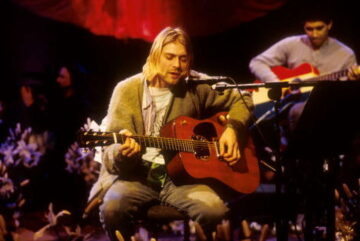
In retrospect, the year 1994 seems a momentous one. That year: the genocidal war in Bosnia continued. NAFTA began and Mexico saw the Zapatista uprising emerge in rebellion against it. The Rwandan Genocide began and ended. The Republic of Ireland recognized Sinn Fein. Nelson Mandela was elected president of South Africa. Nicole Simpson and Ron Goldman were found murdered, kicking off the “case of the century” as OJ Simpson (a popular retired football player and actor and estranged husband of Nicole) was accused of the murder and later acquitted. President Clinton signed an assault weapons ban. And Kurt Cobain committed suicide on April 5th, with his body not being found for three days.
Perhaps we can see that year as indicating the direction the post-Cold War era was headed. As the Iron Curtain parted and the Berlin Wall fell, hope was palpable, at least in the US and in Europe. We in the west might have heeded the message of the 1989 Tiananmen Square crackdown in China.
By the year 1994, it was clear something other than just the emergence of a more peaceful, unified and democratic world was manifesting. Contrary to Francis Fukuyama’s celebratory missive in 1989, history had not ended but was marching merrily along. Neoliberalism was ushered in by western powers and authoritarianism was soon to follow. Strikingly, it was the Democratic party (US) and the Labour party (UK) who did much of that ushering once in power, under the auspices of President Bill Clinton and Prime Minister Tony Blair. Their third way ideology continued the Reagan-Thatcher revolutions of deregulation and government disinvestment, setting the stage for the current right wing challenge to liberalism around the world. While the shifts seem obvious in the political realm, can we see the neoliberal shift in the cultural production, too? I argue we can, and that the rise of Nirvana and subsequent death of Kurt Cobain offers us a vector to explore just that cultural shift. Read more »

Winter on the mountains, spring in the Mittewald valley of the South Tyrol, on this crisp day in late April, 2024.
by Mary Hrovat

When I was a child, my parents saw that I was shy and didn’t make friends easily. It didn’t help that we moved several times when I was very young; I went to four different schools for kindergarten through eighth grade. (I got my high school diploma by home study.) And back then, no one would have guessed that an odd, quiet, anxious little girl might be autistic.
My mother tried to engage me in activities of the type that might draw a shy child out of her shell. For example, she signed me up for Brownies when I was in second grade. Unfortunately, this well-meaning attempt felt almost like a punishment to me. I’d been learning how to get by in the classroom without attracting much attention (luckily, school work came easily to me), but I didn’t know how to behave in what was essentially a social club. I was miserable.
I knew well before second grade that I was different from other people. Because I was so young when I learned this, and I was the only one like me that I knew, I thought there was something wrong with me. I disliked things that children were supposed to love: the circus (too crowded, too loud and confusing), cartoons (they moved too fast and were too silly). I preferred familiar settings and warmed up to new people or places very slowly. I didn’t roll with the punches; I became anxious when I wasn’t sure what was going to happen next or what was expected of me. I liked to be quiet and observe the world rather than participating. I would have loved to share my observations with someone—little things I noticed about the snails in the back yard or the patterns of clouds in the sky. But no one else, not even other children, seemed all that interested. I could sense, in many contexts, that I was expected to adapt, or at least appear to adapt, to the things that made me uncomfortable. I was often lonely and confused. Read more »
“No footballer
no football manager
no football club
no football reporter
no football pundit
no Ian Wright
no Gary Lineker
no football authority of any kind
not FIFA
not UEFA
not the FA
not one of them has even mentioned
the murder on screen
of the captain
of the Palestine football team
recording his own death
at the hands of the Air Force
of a country that still fully participated
in every one of your football
tournaments and competitions.”
Click on Read More for translations into Irish, German, French, Scot, and Slovenian by eminent literary figures at the invitation of Gabriel Rosenstock, the noted Irish poet. Read more »
by Gus Mitchell
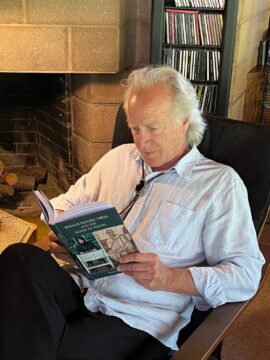
Professor, writer, talk show host, part-time guitarist–Robert Pogue Harrison stands in a category of one among American intellectuals of his generation.
His first book, The Body of Beatrice (1988) a study of the Vita Nuova, lay well within his wheelhouse as a Dante scholar; since then, however, Harrison has charted an increasingly idiosyncratic course as a thinker, a writer, and an educator––in the broadest sense of the word.
Harrison joined the faculty of Stanford in 1986 and became chair of the Department of French and Italian in 2002. He turned 70 this year and announced his retirement. (Andrea Capra’s tribute, part of at a day-long celebration of Harrison’s career at Stanford held on 19th April, was recently republished by 3 Quarks Daily.)
Harrison has written books at a steady clip, each beautifully written and finely wrought, combining intensely felt thought and erudition with quietly challenging daring. His subjects–the forest, the garden, the dead, our obsession with youth–might appear dauntingly bottomless. Yet Harrison’s style, a graceful inter-flowing of literary, philosophical and (increasingly in his recent work) scientific reference-points, gives the impression that one is both ascending and descending, reaching strange giddy heights while delving deep to the essential mysteries at the core of the matter in hand.
It’s the same style that marks the conversations and monologues of his radio show-cum-podcast, Entitled Opinions. I stumbled across an episode of Entitled Opinions sometime in 2020 on the iTunes Podcast app while looking for something about W.H. Auden. But the show has been broadcasting for almost 20 years, “down in the catacombs of KZSU” (Stanford’s local radio station) where, in Harrison’s phrase, “we practice the persecuted religion of thinking.” Read more »
by Barry Goldman

Suppose a cop pulls you over for speeding. What do you think should happen? My guess is you think he should give you a warning and let you off without a ticket. Why? Well, because you will, no doubt, be polite, respectful and contrite (or at least you will attempt to appear to be) and because you are a generally law-abiding citizen, you aren’t drunk, and you are not obviously transporting guns, drugs or kidnapped children.
That’s fine, but now let’s take your personal interest out of it. Suppose a driver gets stopped for speeding. The reason for the stop is that speeding is unsafe. A speeder presents a danger. That danger has nothing to do with whether the driver is polite. Politeness and rudeness are completely beside the point. So how would you want the cop to decide whether or not to write a ticket? What criteria would you want him to use?
How about tribal membership? When I was a kid my world was divided into two tribes. There were long-haired, hippie pot smokers like me on one side and short-haired, beer-drinking cops on the other. It was a simpler time. We made life miserable for each other whenever we got a chance. I suspect none of us today believes that tickets should be issued or not issued based on tribal membership, however delineated. Too much room for mischief. But we also don’t think everyone who gets pulled over should get a ticket. So, if it isn’t politeness, and it isn’t tribal membership, what should the determining factor(s) be? Read more »