
by David Winner

Coming from a Jewish family that arrived in America between the Slave Trade and the Holocaust, I thought that we were ethically in the clear, but researching my family story for Master Lovers, a book about my great-aunt Dorle’s love life in the 1930s, brought me face to face with famously fraught questions about evil and prejudice and the degree to which art and/or historical context can relieve us of its burdens. I thought of Ezra Pound’s and T.S. Eliot’s fascism, of course, Dustin Hoffman, Keven Spacy, and all the other actor/molesters but also Alice Walker’s interrogation of the Talmud, antisemitic or simply pro-Palestinian. And V.S. Naipaul, Indian from Trinidad, whose work (Bend in the River, India: A Wounded Civilization) skewered the post-colonial world.
Dorle Jarmel Soria, a Jewish woman who was a force in mid-century music, integral to both Leonard Bernstein and Maria Callas’s careers, and her husband Dario, who’d fled Rome after the Mussolini/Hitler pact, essentially raised my father. Once, he questioned Dorle about her friend soprano Elizabeth Schwarzkopf’s, close relationship (maybe affair) with Goebbels only to be rebuffed by the claim that “great art” lay “outside of politics.” And learning more about both her family and her lover, John Franklin Carter, whom she nearly married, revealed more dark associations. Ben Affleck convinced Henry Louis Gates not to reveal his enslaved-owning ancestors, but I – unfamous, little to lose – feel driven to out my family. Dorle, who smoked Benson & Hedges, drank gin and tonics, and traveled to Capri well into her nineties always recalled Graham Green’s beloved Aunt Augusta (Travels with my Aunt), but learning more about her made her seem more like Aunt Denver from Beloved, Heathcliff perhaps, someone haunted by their past.
By age thirty, I knew only a few “facts” about my Jewish family: our name did not come from Weiner, we were from somewhere near Poland, a distant relative translated the Declaration of Independence or was it the Constitution into Hebrew or Yiddish. Whereas my mother’s mother, born in Hapsburg Prague, compiled a genealogy going back centuries, my father’s Jewish side was apparently the family who fell to earth. Read more »

 Notational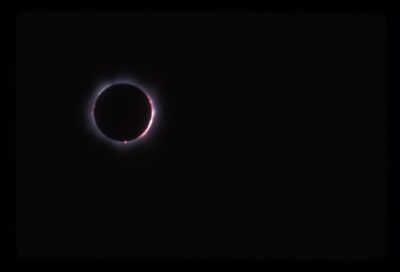

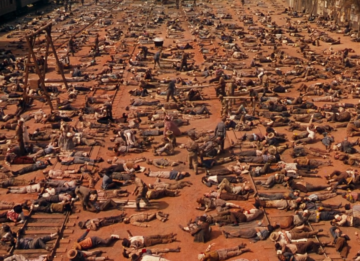 A cinematographer would recognize this as a crane shot, or its replacement, the drone shot. This crane or drone doesn’t move. It defines the POV (point of view) of the painter, and shows how far his perspective can reach and how much he can cram into the in-between, that 2D surface which expands vertically with every higher angle of his POV, as in this crane shot from Gone with the Wind.
 Like many of us, they assembled an inordinate number of puzzles during the COVID-19 restrictions. And like many puzzlers, they came to wonder:
 In the middle ’60s when I first was a new husband, a new teacher, and new father, I met my first indication of the changing consciousness of women in a freshman English class. I was teaching the Yeats poem “A Prayer for My Daughter.” I found it, and in many ways still do a marvelous poem and I spoke of it to my class with great enthusiasm saying that this is what I would wish for my daughter – that she would be “beautiful” but not “too beautiful” and “learned courtesy” for:
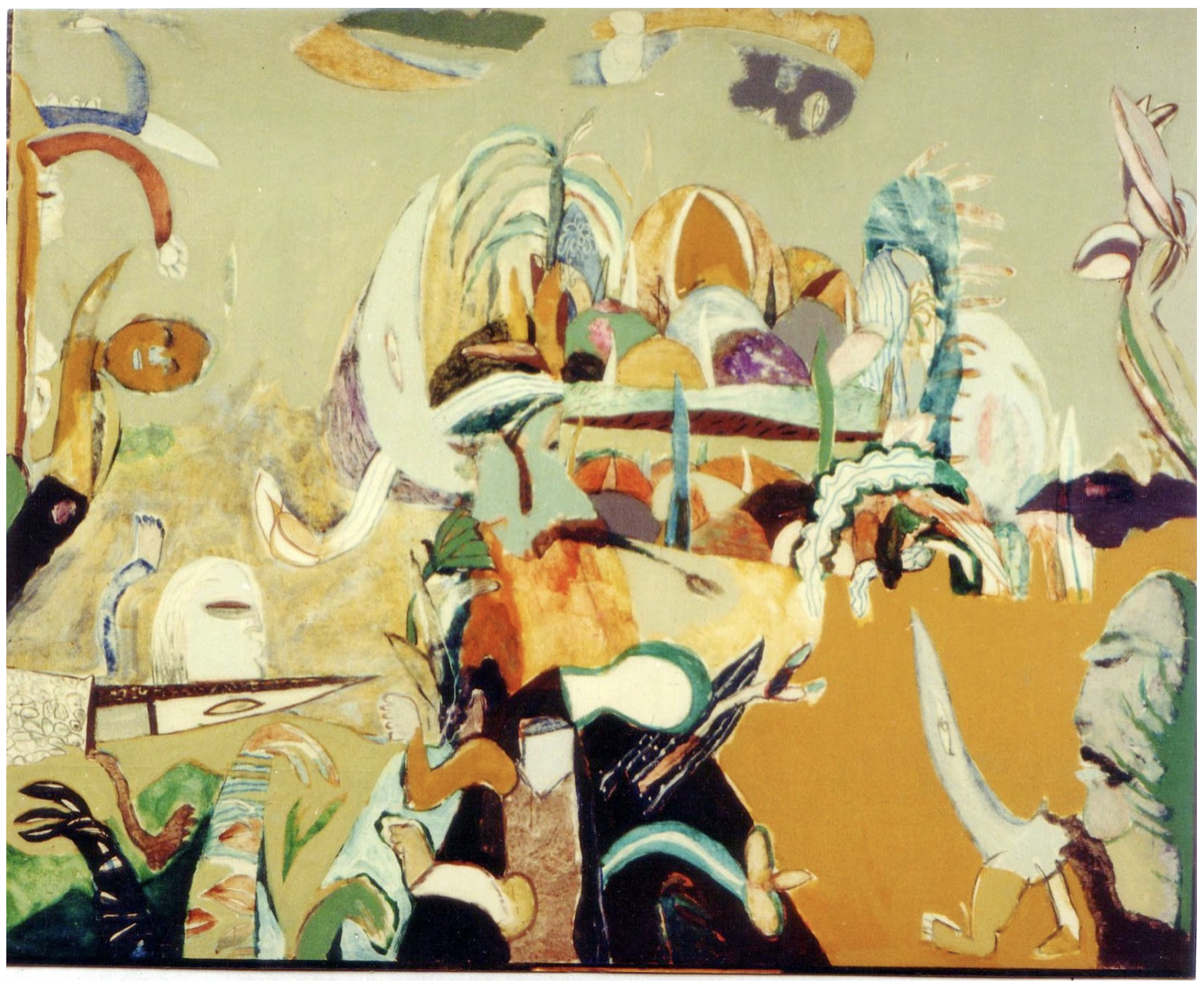 Dilara Begum Jolly. Untitled, ca 2014.

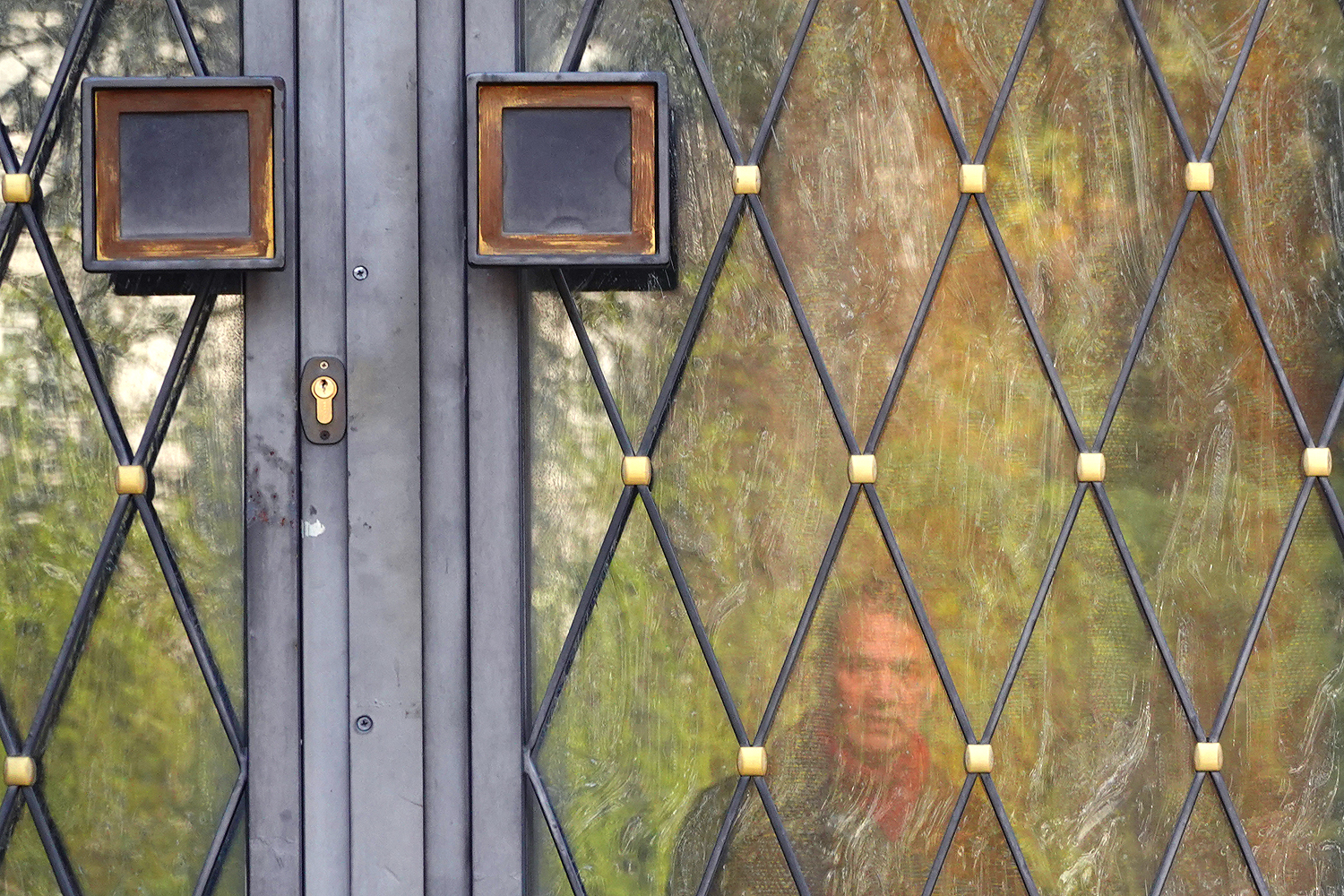
 I’ve heard owls are signs of a big shift in your life; I also know that I only really look for owls during those times.
  The
The 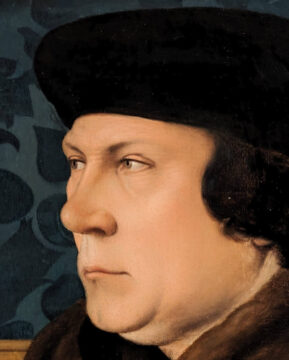 Poets. Dancers. Singers. Scientists. Generals. Explorers. Actors. Engineers. Diplomats. Reformers. Painters. Sailors. Builders. Climbers. Composers. In a pretty-good eighteenth-century copy of a portrait by Holbein the Younger, Thomas Cromwell is not so much a man as a slab of living, dangerous gristle. Henry James looks dangerous too, in a portrait by John Singer Sargent that more people would recognize as great if inverted snobbery hadn’t turned under-rating Sargent into a whole academic discipline. Humphrey Davy, painted in his forties, could not be more different. He looks about 14; thinking about science has made him glow with delight.
 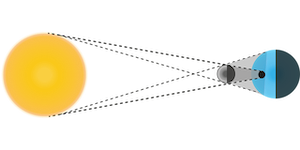 There are worse places to be a stargazer than south-central Indiana; it’s not cloudy all the time here. I’ve spent many lovely evenings outside looking at stars and planets, and I’ve been able to see a fair number of lunar eclipses, along with the occasional conjunction (when two or more planets appear very close together on the sky) and, rarely, an occultation (when a celestial body, typically the moon but sometimes a planet or asteroid, passes directly in front of a planet or star).