by Martin Butler
Recently I read an article which included the idea that nature can have rights, something I have to admit I had not come across before, despite a keen awareness that nature needs protecting. I discovered that this is a well-established point of view – there is a lengthy Wikipedia page on the topic. I found this rather odd – it seemed a misplaced use of the concept of a right. But it made me reflect that in the modern world the possession of rights is one of the few ethical ideals that is taken seriously wherever you happen to be on the political spectrum, so it’s understandable why those who want to protect nature might adopt the language of rights.

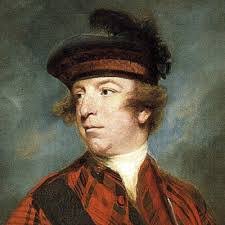
From the right to bear arms to transgender rights, rights matter across the board, having an authority that religious commandments, the claims of ‘social justice’, and other varieties of moral prescription seem to lack. The idea that we have rights is an unquestioned certainty, but rights are also often a source of considerable conflict in the modern world. Which rights do we actually possess? Do animals have rights? How can conflicting rights, which are presented as fixed, be reconciled? Do some rights automatically trump other rights? If so, how could a hierarchy of rights be devised? The language of rights, it seems, very quickly leads to dogmatism and impasse. Jeremy Bentham certainly had no time for rights:
Natural rights is simply nonsense: natural and imprescriptible rights, rhetorical nonsense – nonsense on stilts.[1]
He wrote this in an essay entitled “Anarchical Fallacies; being an examination of the Declaration of Rights issued during the French Revolution”(1796). Interestingly, Bentham’s arguments have something in common with Karl Marx’s and Edmund Burke’s critiques of rights – and these two philosophers are at opposite ends of the political divide. Read more »
 I was listening to “
 Sughra Raza. Random Street Composition While Walking Home, March 2, 2024.






 A little over a year ago I published
  Eddie Rodolfo Aparicio. White Dove Let US Fly, 2024.
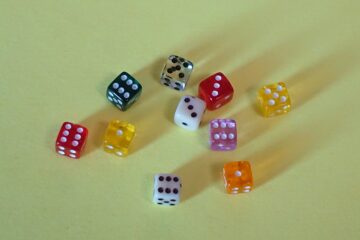 “You are aware”, I ask a pair of students celebrating their fourth successful die roll in a row, “that you are ruining this experiment?” They laugh obligingly. In four pairs, a small group of students is spending a few minutes rolling dice, awarding themselves 12 euros for every 5 or 6 and ‘losing’ 3 euros for every other outcome. I’m trying to set them up for the concept of expected value, first reminding them how to calculate their average winnings over several rounds, and then moving on to show how we calculate the expected average without recourse to experiment. It would be nice, of course, for their experimental average to be recognizably close to this number. Not least since this particular lesson is being observed by the Berlin board of education, and the outcome will determine whether or not I can get a teaching permit as a foreigner.