
by Mike Bendzela
Today is a bit of an experiment.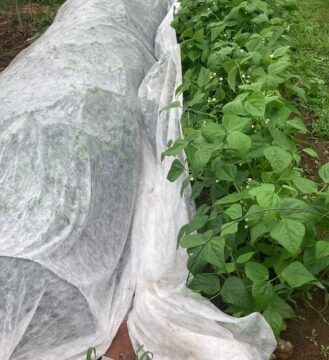 I take the row covers off of two forty-foot rows of beans (three varieties) as the plants have become so big so fast in the ungodly heat they are pressing against the cloth. Afterwards, in the early evening, I let the chickens out of their sweltering little house to run free for a couple of hours. I will watch them to see if they bother the plants. The birds might peck at and scratch up the bean plants, but these plants are so large the birds should be indifferent to them. The experiment is a success: The plants bask in full sunlight while the birds rummage for grubs around them. I decide to leave the row covers off for now and will recover them at night to deter the deer. One’s smallness is manifested in gardening, as the gardener is a single organism set against myriads. It is wise to tend to one’s insignificance during these times. Come what may, no one will care much about those who stay at home husbanding rows of Maxibel haricots.
*
With the row covers off, I can spend a sweaty half-hour or so weeding the thick crab grasses, galinsoga, and lamb’s quarters growing between the rows. Some of these are introduced plants, meaning the garden is a symbol of human perturbation of the biosphere in more ways than one. You must take care to grasp the weeds down low to remove whole plants from the soil because plants break off easily near the root, and you don’t want the weeds regrowing from the remaining root mass. This is especially troublesome with the grasses, which feature thick root mats. An evolutionary adaptation is at work here: Had prehistoric grazing ruminants been able to pull whole plants out of the ground with their teeth, that would have spelled the end of that plant variety. Grass varieties with regenerative stems and rugged roots survived grazing, persisted, and thus multiplied. For millions of years during the Miocene Epoch, grasses outwitted the horsey lips of Parahippus and the like. In the garden, I just have to stay ahead of them. They will outwit me if I get lazy, so it is a battle that never ends. Like dealing with contemporary stressors, patience and tenacity are key.
*
Galinsoga is a plain-Jane weed that can sort of imitate the crop it is plaguing, thus evading detection. As you weed, it will suddenly appear near a plant like an afterthought: Say what? Crab grasses always look like crab grasses, but they can hide between plants and crowd out the very stems of the crop plant. You push aside a bean plant, find grass, and say, I thought so! Lamb’s quarters, with its spike of goose-foot-shaped leaves, stands out insolently, like thought-deadening slogans. You rip out whole plants, one by one, but it takes time. Your reward will be a year’s worth of glass jars full of pressure-canned green and wax beans. Now is a good time to focus on securing the things you set store by. Read more »


 This week marks one year since Affirmative Action was repealed by the Supreme Court. The landmark ruling was a watershed moment in how we think of race and social mobility in the United States. But for high schoolers, the crux of the case lies somewhere else entirely.
 Arguably the greatest global health policy failure has been the US Department of Health and Human Services’ (HHS) refusal to promulgate any regulations to first mitigate and then eliminate the healthcare industry’s significant carbon footprint.
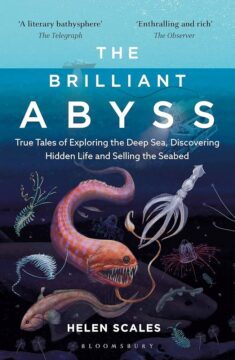 Marine biologist Helen Scales’ previous book The Brilliant Abyss: True Tales of Exploring the Deep Sea, Discovering Hidden Life and Selling the Seabed, brilliantly provided us with a glimpse of the wondrous life forms that inhabit the abyss, the deep sea. She also made known her profound concern for the future of ocean life posed by human activity. She now expands on those issues and concerns in her new book, What The Wild Seas Can Be: The Future of the World’s Seas. Scales provides us with a fascinating exposition of the pre-historic ocean and the devastating impact of the Anthropocene on ocean life over the last fifty years. Her main concern, however, is the future of the ocean and her new book makes a major contribution to people’s understanding of the repercussions of human activity on ocean life and the measures that need to be taken to protect and secure a better future for the ocean.
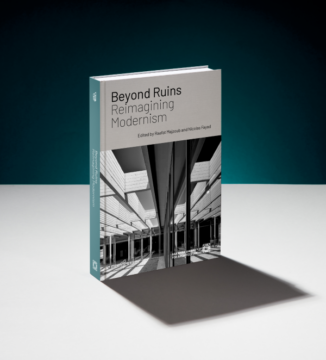 In this conversation—excerpted from the Aga Khan Award for Architecture’s upcoming volume, Beyond Ruins: Reimagining Modernism (ArchiTangle, 2024) set to be published this Fall, and focusing on the renovation of the Niemeyer Guest House by East Architecture Studio in Tripoli, Lebanon—
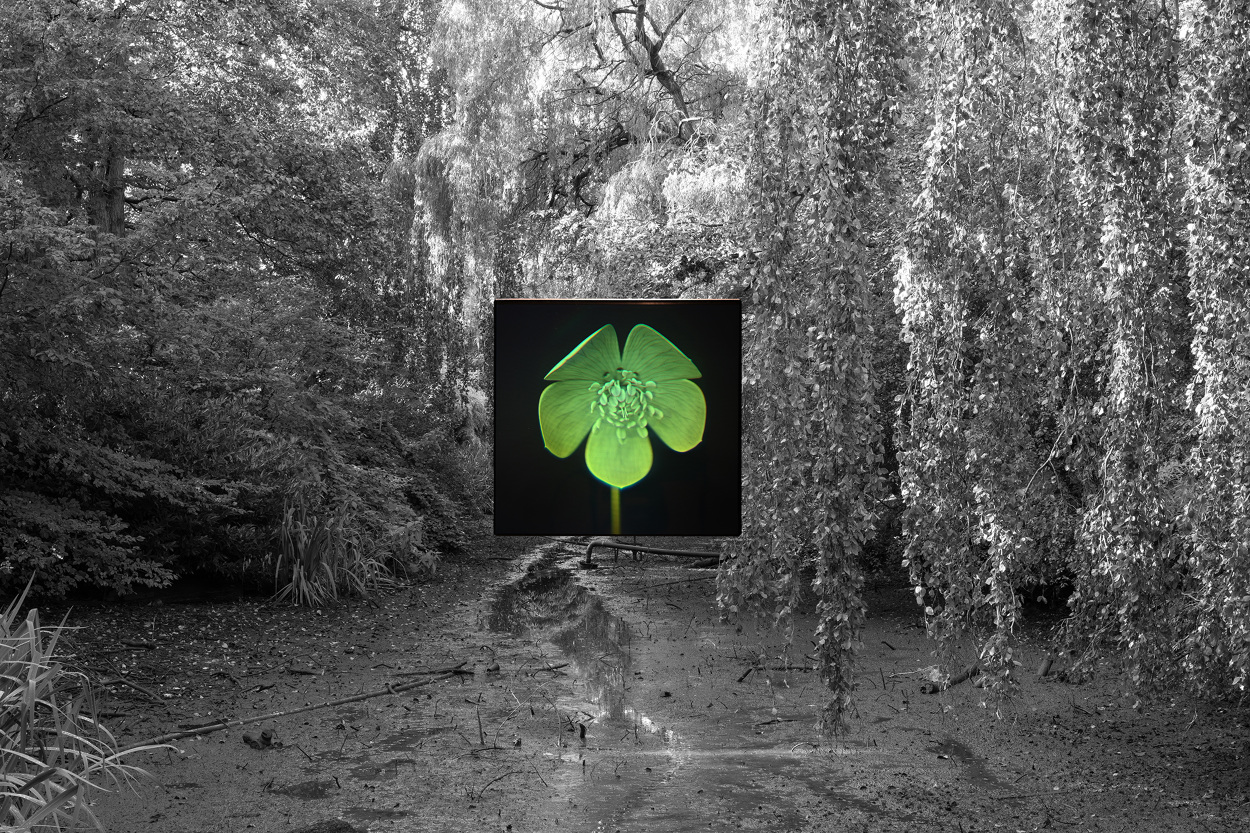 Michael Wang. Holoflora, 2024
 In the game of chess, some of the greats will concede their most valuable pieces for a superior position on the board. In a 1994 game against the grandmaster Vladimir Kramnik, Gary Kasparov sacrificed his queen early in the game with a move that made no sense to a middling chess player like me. But a few moves later Kasparov won control of the center board and marched his pieces into an unstoppable array. Despite some desperate work to evade Kasparov’s scheme, Kramnik’s king was isolated and then trapped into checkmate by a rook and a knight.
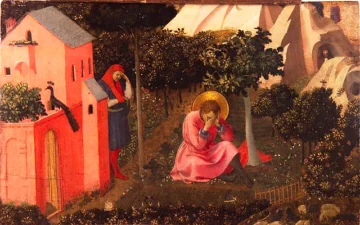
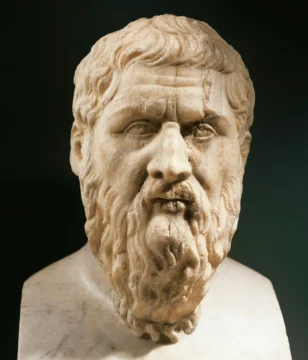
 In Discourse on the Method, philosopher René Descartes reflects on the nature of mind. He identifies what he takes to be a unique feature of human beings— in each case, the presence of a rational soul in union with a material body. In particular, he points to the human ability to think—a characteristic that sets the species apart from mere “automata, or moving machines fabricated by human industry.” Machines, he argues, can execute tasks with precision, but their motions do not come about as a result of intellect. Nearly four-hundred years before the rise of large language computational models, Descartes raised the question of how we should think of the distinction between human thought and behavior performed by machines. This is a question that continues to perplex people today, and as a species we rarely employ consistent standards when thinking about it.
 The human tendency to anthropomorphize AI may seem innocuous, but it has serious consequences for users and for society more generally. Many people are responding to the