by Xavier Muller
Colorectal cancer is the third most common cancer with an estimate of more than 150,000 new cases in 2024 in the United States (1, 2). In approximately one third of patients, colorectal cancer is metastatic at the time of diagnosis, meaning that cancer cells have already spread from the colon or rectum to other organs in the body (2). One of the most frequent metastatic sites of colorectal cancer is the liver (50% of patients). In case the metastases are localized only in the liver, the optimal treatment is to remove them surgically in combination with chemotherapy (3). Of note, resection of liver metastases is only beneficial if all macroscopically visible lesions can be removed. Unfortunately, a complete resection of liver metastases is only possible in up to 35% of patients, owing to anatomical limits imposed upon the surgeon (3).
What are the limits of liver surgery?
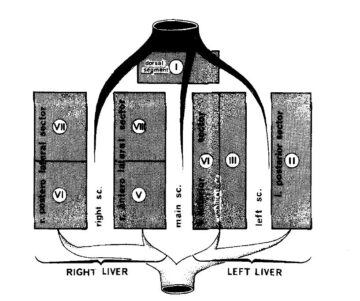
In order to understand the limits of surgical resection of liver metastases, one has to focus on liver anatomy. French anatomist Claude Couinaud published the first complete description of the functional anatomy of the liver in 1957 (4). The liver consists of two functional entities, the left and the right hemiliver, which are both supplied by three main structures: a vein, an artery and a bile duct (5). These three structures are referred to as the portal pedicle. There is a right portal pedicle for the right hemiliver and a left portal pedicle for the left hemiliver. The hemiliver can be further divided into individual segments, defined by the bifurcation of the respective portal pedicle into smaller branches (6). One can image the functional liver anatomy as a tree, with the left and right pedicles originating directly from the main trunk before further dividing into smaller branches as we approach the periphery of the tree. In total, there are eight liver segments with a dedicated portal pedicle (6). Read more »

 In daily life we get along okay without what we call thinking. Indeed, most of the time we do our daily round without anything coming to our conscious mind – muscle memory and routines get us through the morning rituals of washing and making coffee. And when we do need to bring something to mind, to think about it, it’s often not felt to cause a lot of friction: where did I put my glasses? When does the train leave? and so on.
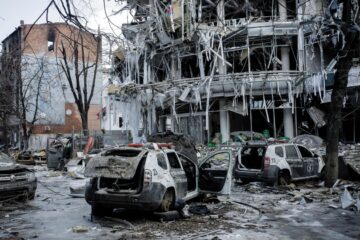 A good poem can do many things – be clever, edifying, provocative, or moving – but a truly great poem (which is to say a successful one), need only be concerned with one additional attribute, and that is an arresting turn of phrase. By that criterion, Ukrainian-American poet Ilya Kaminsky’s “We Lived Happily During the War,” originally published in Poetry in 2013 and later appearing in the 2019 collection Deaf Republic, is among the greatest English-language verses of this abbreviated century. Within the context of Deaf Republic, Kaminsky’s lyric takes part in a larger allegorical narrative, but that broader story in the collection aside, “We Lived Happily During the War” is arrestingly prescient of both the 2014 Russian invasion of Crimea and Vladimir Putin’s brutal and ongoing assault on the broader country of Kaminsky’s birth since 2022, including bombardment of the poet’s home city of Odessa. Yet even stripped of this context, “We Lived Happily During the War” concerns itself with the general tumult of modern warfare, both its horror and prosaicness, its sanitation and its tragedy. More than just about Ukraine, or Syria, or Gaza, Kaminsky’s lyric is about us, those comfortable Western observers of warfare who have the privilege to be happy and content at the exact moment that others are being slaughtered.

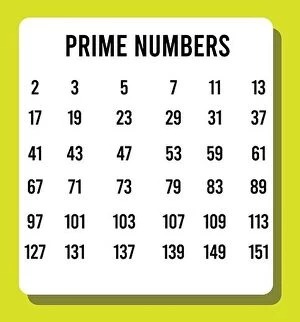 Prime numbers are the atoms of arithmetic. Just as a water molecule can be broken into two hydrogen and one oxygen atoms, 12 can be broken into two 2s and a 3. Indeed, the defining feature of a prime number is that it cannot be factored into a nontrivial product of two smaller numbers. Two primes that are easy to remember are

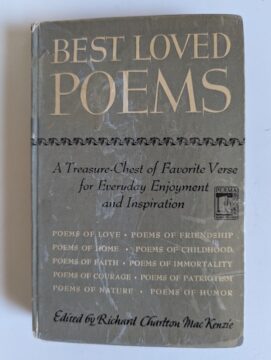 When I was growing up, my mother and I would sometimes read or recite poetry to each other. Ours was not a poetic household, and my father would occasionally complain: “If poets have something to say, why don’t they just say it?” But we thought they did say it, albeit indirectly sometimes, and we continued with our Longfellow, a bit more quietly.