by Marie Snyder
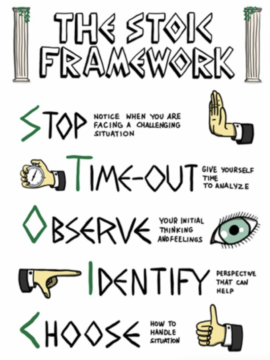 I dipped my toe into Stoic Week again this year. I’ve done it before a decade ago, and even went to StoicCon once! I was hoping to find the attitude necessary to manage all this (gestures broadly at everything). I got stuck on the first day.
They start with Epictetus’s bit on figuring out what we can control and what we can’t:
Some things are under our control, while others are not under our control. Under our control are conception [the way we define things], intention [the voluntary impulse to act], desire [to get something], aversion [the desire to avoid something], and, in a word, everything that is our own doing; not under our control are our body, our property, reputation, position [or status] in society, and, in a word, everything that is not our own doing.
It’s from the Encheiridion, or handbook, which is a short read and pretty accessible.
I get the gist of it. A lot of the time when we’re bothered by something, we can’t control what’s going on in the world, but we can control our attitude towards it. It’s only bad because we think it’s bad. The thing to do in all cases is to act virtuously because that’s all that’s within our control. Comedian Michael Connell explains the stoic attitude in an analogy about late trains. If we’re in a hurry, news of a late train is a tragedy. But if we’re stuck on the tracks, it’s fantastic! But in the face of Covid, climate change, and the many conflicts around the world, how do we shift this news to be anything but horrific? The only perception that can spin it as good seems to be genocidal in nature.
So maybe I’m overthinking it, but I have questions about what Epictetus specifically says here.
First of all, how is desire under our control? I can’t control what desire to have or not have, but I can notice it and decide what to do with it if I have my wits about me. If I’m tired, then sometimes even my behaviour feels not remotely within my control. With practice, I think we can reduce the intensity of some desires or desensitize ourselves from aversions, but desire is pretty automatic. We desire or are repelled in an instant. Epictetus is calling on us to do that practice every day, but it only gets us so far. Even just being able to take a beat to consider the situation is a challenge when we’re overwhelmed with demands on it. Read more »
 Professor Paul Heyne practiced what he preached.
 by William Benzon
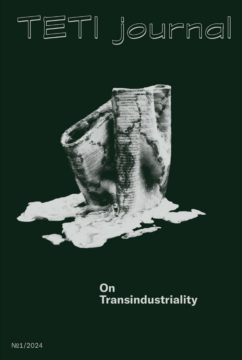 Last Saturday, November 2, 2024, at a collective atelier in Zurich’s Wiedikon neighborhood, I attended the launch of a new periodical.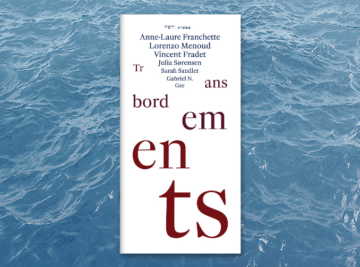

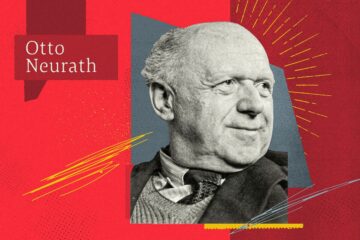 In 1919, Otto Neurath was on trial for high treason, for his role in the short-lived Munich soviet republic. One of the witnesses for the defense was the famous scholar Max Weber.
 Historians have spilled much ink analyzing and interpreting all of the U.S. presidential elections, dating back to George Washington’s first go in 1788. But a handful of contests get more attention than others. Some elections, besides being important for all the usual reasons, also provide insights into their eras’ zeitgeist, and proved to be tremendously influential far beyond the four years they were intended to frame.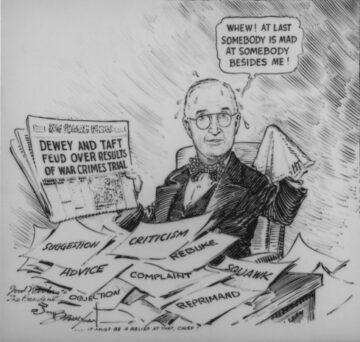
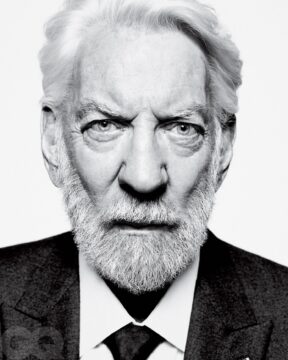 Donald Sutherland was a connoisseur of poetry. In the 80s I knew poetry-quoting doyennes from the glittering parties the Academy of American Poets threw as well as the Sudanese who recited their histories in song, but mostly I knew poets obsessed with competing with dead ones, with an eye toward their next book. Poets generally love poetry the way auto mechanics love cars. They don’t luxuriate in the front seat, or take long winding car trips through the Berkshires, they make sure the ignition catches and go on to the next one. Hearing Sutherland recite poetry you heard the Stanislavski method of poetry-recitation, an oral delivery straight from the mind as well as the mouth. Sutherland said he was manipulated by words, not as a ventriloquist but in the relationship between feeling and meaning. Likewise, after numerous tussles with directors Fellini and Preminger and Bertolucci – he even tried to get Robert Altman fired from M.A.S.H. – he decided he was merely the director’s vehicle. Poetry directed him.