by Joseph Shieber

Recently I came across Jonathan Rose’s thesis that it was no accident that the literary tastes of the working classes in Britain lagged behind those of the educated classes. According to Rose, the educated classes adopted ever-more-complex literary forms (read: literary modernism) to distinguish themselves from the “great unwashed”. (H/t Matthew Wills at the JSTOR Daily blog.)
Reading this account of the ascendance of literary modernism as a reaction on the part of the educated classes to rising literacy rates among the lower and working classes made me think of the role of complexity and difficulty in writing. Is it merely gate-keeping and/or signaling (to give a shout-out to my previous post)?
One of the criticisms of analytic philosophy that I often encounter is that it’s too complex or difficult. And there’s no question: it often IS extremely complex and challenging writing.
For example, here’s Geoff Pullam, a well-known linguist … not a philosopher, on this topic. In an essay entitled “Writing on Philosophy: It’s Not Rocket Science. It’s More Complicated Than That” for the unfortunately now-defunct Lingua Franca blog of the Chronicle of Higher Education, Pullam addresses the complexity of analytic philosophical writing:
I don’t know any academic field whose writing regularly indulges in sentence structure as complex as what you find in analytic philosophy.
Let me exhibit for you a wonderful sentence from Page 182 of a recent philosophy book by Ruth Garrett Millikan, Beyond Concepts: Unicepts, Language, and Natural Information (Oxford University Press, 2017). I thought I might have it embroidered on a wall hanging. I omit only the initial connective adjunct “Second” (since the link to the previous paragraph is not relevant here) and a reference date (1957) at the end.
“In arguing for his analysis of non-natural meaning, Grice made the mistake of arguing from the sensible premise that a hearer who believed that a speaker did not intend by his words to produce in the hearer a certain belief or intention would not acquire that belief or intention to the invalid conclusion that a hearer who merely failed to believe that a speaker intended by his words to produce a certain belief or intention in the hearer also would not acquire that belief or intention.”
That is an 86-word sentence, so by the usual standards of readability it’s off the charts, even for high-school students. Yet it is perfectly formed; don’t imagine that I’m criticizing it. It’s just extraordinarily complex and demanding.
When Pullam notes that Millikan’s sentence is off-the-charts in terms of readability, he’s not exaggerating. Its Gunning Fog Scale Level score is 40.78, and its Flesch-Kincaid Grade Level is 36.92. Read more »
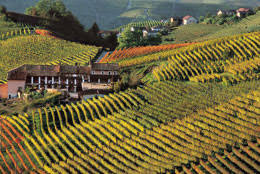 Discussions of the factors that go into wine production tend to circulate around two poles. In recent years, the focus has been on grapes and their growing conditions—weather, climate, and soil—as the main inputs to wine quality. The reigning ideology of artisanal wine production has winemakers copping to only a modest role as caretaker of the grapes, making sure they don’t do anything in the winery to screw up what nature has worked so hard to achieve. To a degree, this is a misleading ideology. After all, those healthy, vibrant grapes with distinctive flavors and aromas have to be grown. A “hands off” approach in the winey just transfers the action to the vineyard where care must be taken to preserve vineyard conditions, adjust to changes in weather, plant and prune effectively and strategically, adjust the canopy and trellising methods when necessary, watch for disease, and pick at the right time.

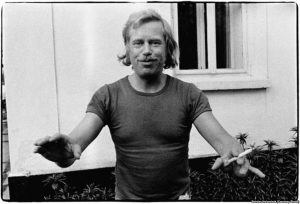 On the morning of August 20, 1968, the Czech playwright Vaclav Havel had a serious hangover. He was at his country home in Liberec after a night of boozing it up with his actor friend
  by Leanne Ogasawara
 My wife and I took a peek into the interior of Papua New Guinea twenty years ago.


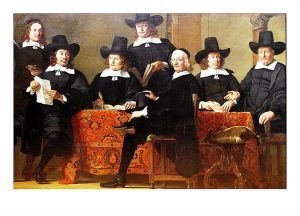




 “I’m on a roadside perch,” writes Ghalib in a letter, “lounging on a takht, enjoying the sunshine, writing this letter. The weather is cold…,” he continues, as he does in most letters, with a ticklish observation or a humble admission ending on a philosophical note, a comment tinged with great sadness or a remark of wild irreverence fastened to a mystic moment. These are fragments recognized in Urdu as literary gems because they were penned by a genius, but to those of us hungry for the short-lived world that shaped classical Urdu, those distanced from that world in time and place, Ghalib’s letters chronicle what is arguably the height of Urdu’s efflorescence as well as its most critical transitions as an elite culture that found itself wedged between empires (the Mughal and the British), and eventually, many decades after Ghalib’s death, between two countries (Pakistan and India).