
by Akim Reinhardt
 I write this not to counter Holocaust deniers. That would be a waste of time; the criminally insane will spew their fantastical vitriol no matter what you tell them. Nor do I write this in the spirit of “Never forget!” As a historian I am committed to remembering this and many more genocides, particularly the most devastating and thorough genocide of all: the European genocides of Indigenous societies. At the same time, I understand the ultimate futility of admirable slogans such as “Never Forget!” For everything is forgotten, eventually. Everything and everyone.
Rather, I say “The Holocaust happened” as a reminder that human beings are quite capable of the worst. Not during any particular era, but at all times. Not a particular group of humans, but all of them. For no ethnic group is cut out to be the villains or the victims. Inflicting horror is a fully human affair. Any person can become a monster if pushed far enough, and many don’t need all that much pushing. Every society is ready to be awful. If flattered sufficiently, any large group of people will tacitly approve the horrors that others inflict on their behalf and in their name.
Why do humans act so atrociously, while other humans countenance it, or at least sit by unbothered as it happens? The phenomenon is so common that the answer cannot be exotic. The reasons can’t be too specific. Humans do not need some grand excuse to enable their worst behavior, or to cheer it on, much less sit by untroubled. Humans are quite capable of, and even given to, inventing their own petty little lies to serve as ludicrous justification for their hellish actions. This is History’s lesson, recited over and over again. To insist otherwise is to give humanity far too much credit.
Yet, insist we do.
These lies generally come in two forms. The most common and criminal is erasure. The sin of omission. The lie of active forgetting. While humans are doomed to forget and be forgotten, that is a passive process. Instead I am referring to active forgetting. Erasure comes when a society takes active steps to forget the horrors it has committed. Read more »

 In reading about attachment theory,
 On a sunny Saturday towards the end of last month we took a train to Moutier in the west of Switzerland, half an hour from the French border, to attend an opera in a shooting range. We had tickets to hear my friend


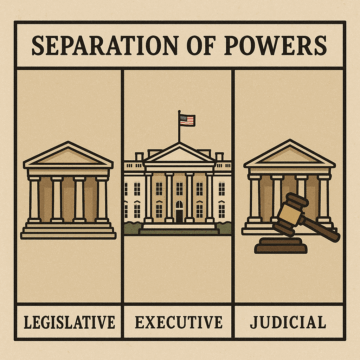 Americans learn about “checks and balances” from a young age. (Or at least they do to whatever extent civics is taught anymore.) We’re told that this doctrine is a corollary to the bedrock theory of “separation of powers.” Only through the former can the latter be preserved. As John Adams put it in a letter to Richard Henry Lee of Virginia, later a delegate to the First Continental Congress, in 1775: “It is by balancing each of these powers against the other two, that the efforts in human nature toward tyranny can alone be checked and restrained, and any degree of freedom preserved in the constitution.” As Trump’s efforts toward tyranny move ahead with ever-greater speed, those checks and balances feel very creaky these days.
 Gozo Yoshimasu. Fire Embroidery, 2017.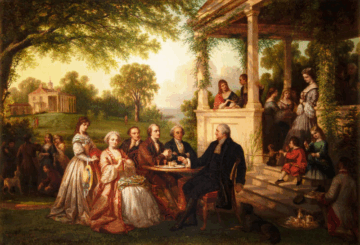
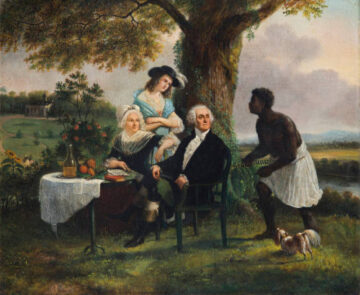
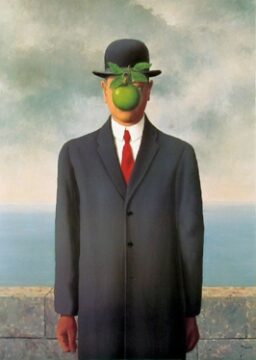

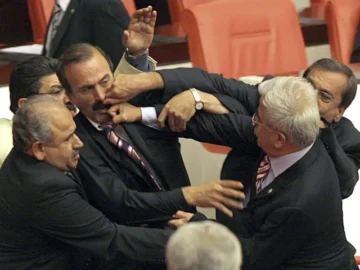
 In a culture oscillating between dietary asceticism and culinary spectacle—fasts followed by feasts, detox regimens bracketed by indulgent food porn—it is easy to miss the sensuous meaningfulness of ordinary, everyday eating. We are entranced by extremes in part because they distract us from the steady, ordinary pleasures that thread through our daily lives. This cultural fixation on either controlling or glamorizing food obscures its deeper role: food is not just fuel or fantasy, but a medium through which we experience the world, anchor our identities, and rehearse our values. The act of eating, so often reduced to a health metric or a social performance, is in fact saturated with philosophical significance. It binds pleasure to perception, flavor to feeling, and the mundane to the meaningful.
 Since 1914, the Federal Trade Commission ‘s mission has been to enforce civil antitrust and unfair competition/consumer protection laws. The question is whether this mission has been supplanted—whether the FTC under Trump 2 .0 is becoming the Federal Political Truth Commission.