
by Daniel Shotkin
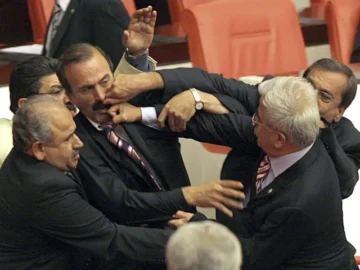
Conflict follows us everywhere. Terrible drivers, horrible friends, evil politicians—the list goes on and on. For me, most conflicts never really made much sense. I avoid clashing with people as much as possible. It feels self-righteous, almost cringey, to be in a state of dispute. Ironic, because my favorite club in high school was debate. Still, I know people who, far from avoiding conflict, thrive in argument. So why do we conflict?
On a basic level, almost every human can agree on a core set of moral principles. Thou shalt not kill, thou shalt not steal, do unto others as you would have them do unto you. These are fundamental truths present in every culture. The three Abrahamic faiths, Hinduism, and Confucianism all espouse that last point independently. Even cultural practices that are, to us, morally questionable (think human sacrifice, headhunting) can’t be chalked up to evil intentions. Can you really blame the Aztecs for wanting to appease Quetzalcoatl?
At the end of the day, you’d be hard-pressed to find anyone who acts without explicit good intentions. Look at a morally deplorable historical figure, and you’ll see that even they acted with “good” in mind. Regimes don’t declare war, restrict speech, or commit genocide for evil’s sake; they do so in the name of national security. Similarly, ask any two beefing high schoolers, and you’ll see that neither did anything, and even if they did, it wasn’t on purpose—and actually, it was the other one who wanted to start shit.
So, logically, we’re in agreement. Then why do we still conflict?
Personal conflicts have been the focus of countless psychologists. John Dollard coined the frustration-aggression hypothesis in 1939, focusing on frustration as a root cause of conflict. Leon Festinger proposed that conflict occurs when people’s actions misalign with their beliefs. Finally, social psychologist Albert Ban dura believed that children learn aggressive behavior from parents, media, and their environment—his social learning theory. A common thread among these explanations is a focus on a specific trait—frustration, dissonance, learning—as the cause of conflict.
On a broader level, sociologists have tried to explain conflict through a focus on societal traits. Critical theory proposes that conflict arises through power structures and imbalances. Its contentious namesake, critical race theory, focuses on race as a source of division. Extend sociology to broader political ideologies, and Marxists will tell you all conflict is class conflict, while Fascists argue it’s racial or national.
Global conflicts are tougher to pinpoint, mainly because of the countless factors involved. Realist international theorists argue that conflict is rooted in the rational actions of self-interested states. All international conflict is, therefore, the result of overlapping security interests. Liberal theorists posit a global international order based on rules, statutes, and conventions. Conflict comes when states fail to participate in the rules-based order.
All these theories focus on traits at various levels of conflict, but there’s a broader way to unify them. If you’ve ever talked to someone who radically disagrees with you, you understand that conflict is more than just a difference in opinion, cognitive traits, or social circumstance—it’s a clash of realities.
A perfect example of this, in my experience, comes when discussing current events at my high school. The war in Ukraine is a central talking point in the news, and so it’s come up more than once in discussions with friends. As someone who speaks Russian at home, has friends and family in Russia, and has visited more than once, I’m inevitably asked about my thoughts on the war. Of course, I’m no supporter of Putin—I am against the war in every way. Then comes the follow-up: Do they support the war in Russia? I’d love to say that Russians are vehemently against the war, but the truth is, the overwhelming consensus is either apathy or support. The implication, then, is that Russians support an illegal invasion and are in favor of attacking a sovereign country. But from experience talking to Russians, that just isn’t the case.
Russian supporters of the war aren’t in support because they want an illegal invasion or have an irrational hate of Ukraine, but because they believe in a “denazification,” or a “special military operation.” From that perspective, the entire framing of the conflict shifts—the war isn’t just legal, it’s necessary to ensure Russia’s security against the West. This is more than just a difference in perspective; it’s a fundamental shift in how reality itself is perceived.
Similarly, I have an Israeli friend—call him N—with whom I frequently discuss the war in Gaza. N believes that the hostages should be returned to Israel as soon as possible, and that the Israeli government is justified in using any means to bring them back. As an Israeli, he’s absolutely justified in believing this. N’s reality is that October 7th was the single deadliest day for Jews since the Holocaust, and that Israel is fighting to bring back the 250 Israeli civilians held hostage by Hamas. Of course, the Palestinian reality is that since Israel began military operations in Gaza, thousands of Palestinian civilians have died, the entirety of Gaza has been displaced, and its two million civilians are at risk of famine. Palestinians are equally justified in their reality because of the extreme death and destruction caused by Israel’s offensive. Both realities are true, but at the same time, they negate one another—and that’s where the root of conflict sits.
These two perspectives aren’t just opinions; they are fundamentally different perceptions of reality. Israelis view the war in a completely different way from Palestinians, and vice versa, to such an extent that even hard facts become disputed. As of July 3rd, the official count of civilian deaths in Gaza is 57,645, but even that number is contested by the Israeli government, which claims that Gaza’s Health Ministry inflates the toll. The saying goes that truth is the first casualty of war, but it feels like it’s the other way around. Conflict arises when two truths conflict with one another.
At the end of the day, in any dispute, both realities are true—which is why conflicts can escalate to such vast levels. The reason why we feel so deeply about deep-seated conflicts is because our reality is in contradiction to the other side’s. Even on a personal level, any breakup, divorce, or falling out stems from two true but conflicting perspectives on the same events. It’s also why we can argue for hours without finding agreement—no matter what facts we present, the other side will always view them through the lens of their own reality, which is fundamentally opposed to ours. This also explains the contradiction I presented at the start of this article—we all agree that murder is morally wrong, but self-defense, revenge, and national security are less clear-cut—our realities influence how we frame any action.
Some might say that viewing conflict through this lens means rejecting any possibility of absolute truth. When all sides of a conflict are true in their own right, then who’s to say anyone is ever wrong? To me, this counterargument just perpetuates why we conflict in the first place. We live in times of fractured realities—if we could once point to a national, if not global, consensus on most issues, today we find ourselves in complete disagreement on most fronts. If we understood that no reality is universal, we’d have an easier time understanding why we conflict at all.