
by Dilip D’Souza
Potholes and education. What connects the two? Not much, I imagine. But in recent days here in India, I’ve been musing over one, possibly tenuous, link. Especially on the night before I started writing this column, when we bumped and rattled through various pothole-ridden Bombay streets on our way home from a distant suburb.
Let me start with a list of statements made by Eknath Shinde. Shinde is now the Deputy Chief Minister of my state, Maharashtra. But between 2022 and 2024, he was the Chief Minister.
- On July 22, 2022, Shinde said “roads in Mumbai will become free from potholes within two years.”
- A month later, on August 23, 2022, Shinde was “confident” that Mumbai’s roads would be “free of potholes” in the next two years.”
- Through the rest of 2022, he repeated these assurances on August 28, November 4 (Marathi), December 8 (2.5 years) and December 8 again.
- In 2023, he repeated these assurances on January 23, February 26, March 3, April 29, May 1, June 25 (“2-3 years”), July 30 (“30 days”), August 27 (“2-2.5 years”) and December 11 (“2-2.5 years”).
- In 2024, he repeated these assurances on February 16, April 26, June 22, August 18, August 26, September 12 (I’ve spared you those links) and September 25 (a “guarantee”).
To sum up: That’s over two years of Shinde promising my city something in two years. There’s something poetic there. The promises may have continued beyond September 2024, too. That month is when, somewhat wearily, I gave up keeping track of the man’s pothole pronouncements. So I have no idea if he has repeated them.
But remember: nearly two years after the last one I noted, I did bump and rattle through various pothole-ridden Bombay streets on our way home from a distant suburb. So much for a city free of potholes.
Still, considering that politicians the world over make empty promises all the time, why am I inflicting this man’s pronouncements on you? Because recent events in India have brought me a reminder.
Maybe you know what events I refer to. Still, the sheer energy, inventiveness and passion we’ve seen in recent weeks demand at least a quick recap.
There have been a number of “leaks” of the question papers in government-run public examinations; in particular, a medical college entrance exam that hundreds of thousands of young students sit for. Because of the leak, it was cancelled and the students were made to sit for it a second time. Then there’s a widely-taken school-leaving exam. This year, the submitted papers were “corrected” with incredible shoddiness – and that’s the kindest word I can find. In parallel, some diligent youths found that the server where the grades for this exam were stored is so easily breached that you or I or anyone else can easily modify, in any direction, any grades awarded to anyone we choose.
Several students who were affected by these perversities, this corruption, took their lives.
In May this year, while all this was happening, the Chief Justice of India chose to make this observation while hearing a case in the Supreme Court: “There are youngsters like cockroaches, they don’t get any employment, they don’t have any place in profession. Some of them become media, some of them become social media, some of them become RTI activists… and they start attacking everyone.”
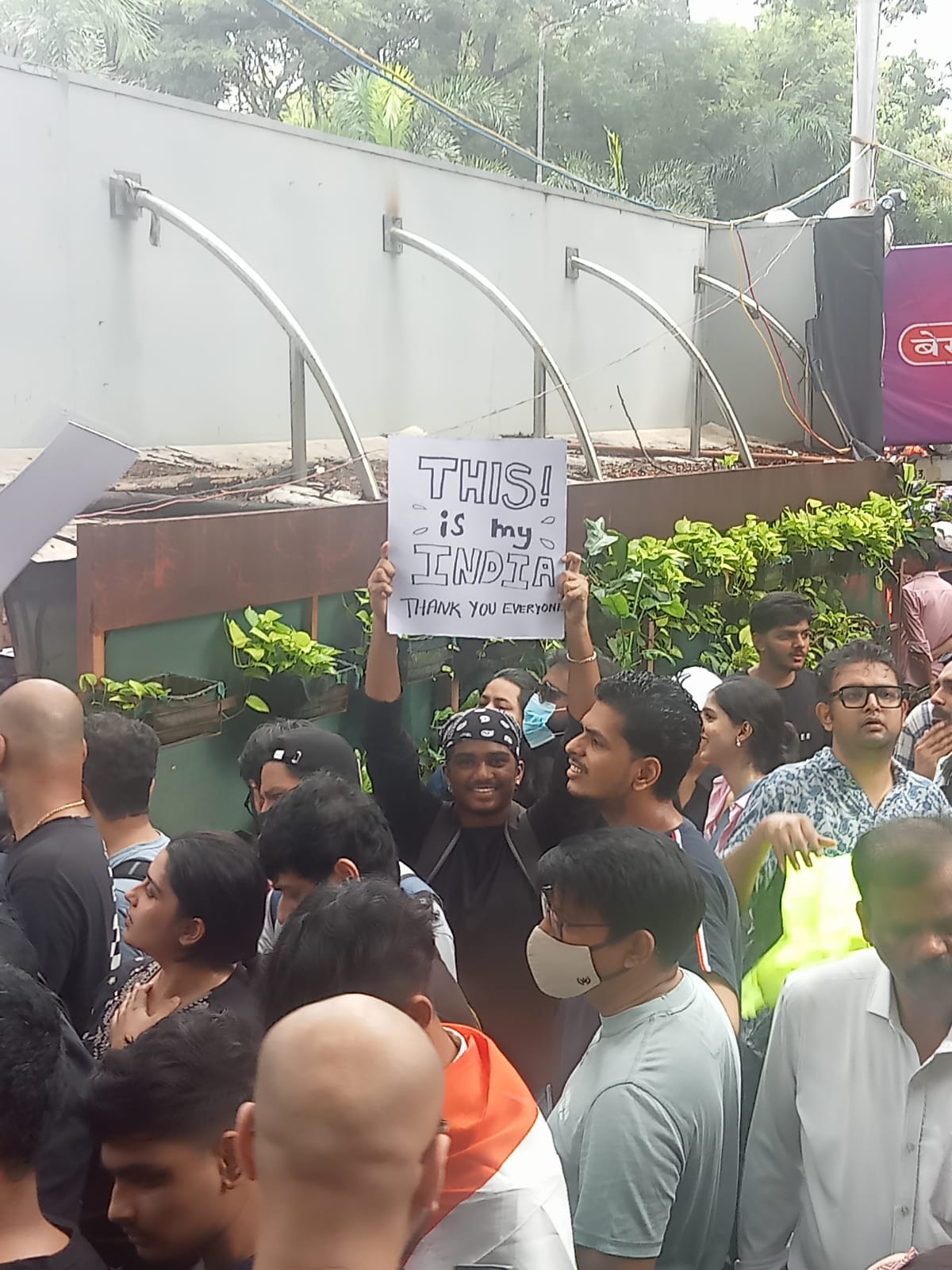
He has repeatedly tried to explain away this remark, most recently while I was writing this very sentence. He has felt the need to do so because of what the remark set in motion: the birth and spectacular growth of the Cockroach Janata Party (Cockroach People’s Party). It started as just a young man’s – Abhijeet Dipke’s – satirical online take on the CJI’s insensitive outburst. He invited people to join the party via a Google form with questions like “Are you lazy?”, and this motto on Twitter: “Secular – Socialist – Democratic – Lazy.” But the satire struck a chord with a huge swathe of young Indians – well, with greying Indians like me too (I filled the form, admitting to laziness) – that neither Dipke nor anyone else could have anticipated.
A mere Twitter account was suddenly a vast movement. And it had as an immediate focus an urgent issue on everybody’s lips, one of immense relevance to the very youth the CJP had attracted – the education mess.
The CJP called for and began a sit-down protest in New Delhi, demanding the resignation of the Minister for Education, Dharmendra Pradhan. As the days went by, the government presumed it could outlast the movement. That it would run out of steam. It presumed wrong. Huge crowds flocked to the New Delhi site; more huge crowds staged protests in cities like Patna, Nagpur, Bombay and Bangalore. For over a month, plenty of water flowed under the CJP bridge, some of it turbulent because the Delhi police unleashed a crude but so-familiar brutality on the protesters. But most of it was irreverent, joyous, courageous and – for greying Indians like me – incredibly inspiring. The creativity and energy of India’s Gen Z has been something to see.
And two things happened. One, only a few hours before I wrote these particular words, but weeks after the demand was first articulated, Dharmendra Pradhan resigned.
But two, and actually a day before Pradhan resigned, Prime Minister Narendra Modi announced that his government would “set up fast-track courts to ensure swift and stringent punishment for those involved in paper leaks. … Those who try to harm the future of our youth will not be spared.”
Fine words? Stern, serious intent? Maybe so.
Only …
- On July 27 2023, Modi told an election rally: “There will be very severe action against the paper-leak mafia.“
- On October 5 2023, Modi told an election rally: “[My party’s] government will take very severe action against every paper-leak mafia in India. … it will wipe out the paper mafia.“
- On November 9 2023, he told an election rally: “I assure you, [my party’s] government will take strict action against mafias who mess with the future of our students.“
- On February 10 2024, Modi told Parliament: “[For] paper leaks, which used to worry the youth, we have made very strict laws.“
- On February 16 2024, he said in a speech: “In Parliament just a few days ago, [my government] has just tabled a strict, strong law … [now] the paper leak mafia will think a hundred times before committing any crimes.“
- On July 2 2024, Modi told Parliament: “I will tell all the country’s students and youth that the government is extremely serious about preventing such incidents. Those who play with the future of our youth will never be spared.“
- On December 17 2024, Modi warned about paper leaks, saying they had become the “identity” of the previous government of a different political party. The new government of his party, he said, had conducted strict investigations and arrested several people.
(Between them, this tweet and this one cover all seven statements.)
The day after Modi’s most recent broadside, my morning newspaper carried, alongside the front-page news of Pradhan’s resignation, an article about a leak in the Teacher’s Entrance Test (TET). This was its headline: “Maharashtra TET paper leak: Month later, ‘mastermind’, aide arrested from Bihar.” So much for ending paper leaks.
Now you tell me: wouldn’t you think of potholes?