
by Leanne Ogasawara
1.
In a recent installment of Sinica’s “Phrase of the Week,” Andrew Methven wrote about an expression that has gone viral on the Chinese internet: the “Odyssey Years”—奥德赛时期— a phrase that caught fire well before Christopher Nolan’s new movie started making headlines.
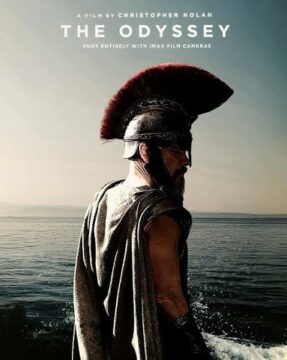
According to Methven, the phrase is used by young people to describe the unmoored decade of their twenties: the job-hopping, the city-switching, the marriages and mortgages deferred. Borrowed from a 2007 David Brooks column in the NYT, it dignifies aimlessness by reaching for Homer. You are not lost, it whispers; you are Odysseus, and somewhere out there an Ithaca awaits.
I love the phrase. Trying to think of a Japanese equivalent, even after two decades in Japan, I came up strangely empty. And the more I thought about it, the more intrigued I felt.
Start with Homer’s epic itself, which never quite landed in Japan the way Shakespeare did. Japanese readers encountered summaries and adaptations of the Odyssey in the early twentieth century, but the first complete translation from Greek appeared only in 1939.
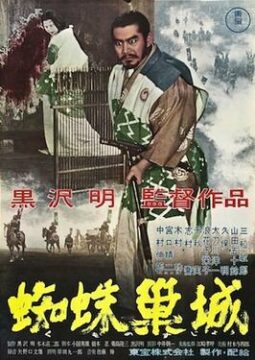
The Meiji man of letters Tsubouchi Shōyō, by contrast, completed his forty-volume translation of Shakespeare in 1928. Kurosawa later remade Macbeth as Throne of Blood, King Lear as Ran, and Hamlet as the corporate revenge drama The Bad Sleep Well. Shakespeare was adopted. Homer remained a classic admired from a polite distance.
But as I was poking around, I found a story that I had not heard of before: Tsubouchi himself believed the Odyssey had actually reached Japan centuries before the Meiji era, carried perhaps by Portuguese missionaries and absorbed into the folk tale of Yuriwaka, which tells of a warrior stranded on an island who returns home to find his place usurped and his faithful wife holding out against the very man who betrayed him. The Penelope echo is unmistakable. Yuriwaka, unrecognized on his return, proves his identity by drawing the great iron bow that no other man can bend — just as Odysseus, disguised as a beggar, is the only man who can string his own bow. And so, scholars continue to argue: was this an early borrowing of the epic poem? Or was there a common root to both stories to be found somewhere perhaps on the Central Asian grasslands?
But notice what had to happen for Odysseus to survive on Japanese soil: he had to surrender his Greek name and become a samurai. The wanderer’s tale took root here only once it was recast as the story of a warrior who lost his place and fought his way back.
This brings me to the other word I was reaching for: rōnin (浪人), the masterless samurai of the Edo period, and, these days, a student who failed the university entrance exam and spends a year at cram school preparing to try again. The student is seen as a “masterless samurai” until he or she finds their liege in a university acceptance letter.
A relevant term: shūshoku-rōnin (就職浪人) refers to a graduate who didn’t get the job and regroups for the next cycle.
As you can see, there is little romance here. No Ithaca, no epic. But there is something the Odyssey Years cannot offer: a structure. To be a rōnin is to occupy a socially legible corridor. Everyone knows the condition is temporary. Everyone knows the expected motion is forward. And it doesn’t suggest the journey will be long either.
2.
I’ve been thinking a lot about this as I watch my son’s friends go out into the world and struggle mightily to find jobs. I always considered that transition to be the most challenging of my life. A philosophy major looking for work, I hit the job market in the horribly unsettling aftermath of my father’s death. Going out into the world felt like the rug had been ripped out from beneath my feet. Even now when I think about those years, they seem so scary and dark. It was, no surprise, how I found myself in Japan. I washed up there without any real direction.
And yet, what I see now seems so much worse. My son’s friends listened to their parents— studied the “right” subjects (STEM or finance), went to the best schools and jumped every hoop— only to find that doors did not open the way promised. In Japan, they’d be shūshoku-rōnin, and I suspect the word would do some quiet work on them: this is a phase, and phases have beginnings and endings.
 3.
3.
I am old enough to remember when there was, at least within a certain middle-class American imagination, room for young people to wander after graduation. You might travel, take temporary jobs, live cheaply, change direction, or spend a few years “finding yourself.”
That freedom was never equally available to everyone, of course.
But today, “drifting” has changed its meaning in America. Recent graduates entered 2026 with unemployment around 5.7 percent and underemployment at 41.5 percent. And this is in a country where health insurance is stapled to employment.
Delay no longer feels like adventure. It feels like a dangerous failure to launch.
4.
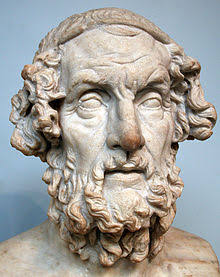
There is one last thing the Greek epic offers, and to my mind at least, it might be the most useful thing of all. The first adjective Homer attaches to his hero—before we even learn his name—is polytropos: the man of many turns.
Robert Fagles gave us “the man of twists and turns.” Emily Wilson (*) wonderfully translates this as “a complicated man.” And Daniel Mendelsohn, perhaps best of all, translates it as the man “who had so many roundabout ways / To wander.”
The name Odysseus itself comes from a darker root, odyssomai: to be hated, to suffer, to bring trouble. Homer’s hero is named for pain and celebrated for pivoting. He has no plan. He has an aim—Ithaca—and an inexhaustible willingness to turn: to improvise, to disguise himself, to take the long way. To hustle.
 When I fretted about the current job market to a friend, he shrugged and said it has always been like this. “We had to hustle after graduation too,” he said.
He’s right: the pain of the years before a life takes shape is real in every time and place. It was real for me, decades ago, in what I’d now unhesitatingly call my own Odyssey years. I hustled myself all the way to Tokyo. And on it went. But the turns come faster now and cost more, and there may be no Ithaca at the end. Pivoting is crucial to the hustle. And Odysseus, according to the greatest teacher of my own life, Hubert Dreyfus, was a genius of skillful coping.
My class with Professor Dreyfus was one of my last ones before graduating with my philosophy degree from UC Berkeley. In many ways it was perfectly suited for my going to Japan. With a culture less committed to the autonomous Kantian self, Japan displays this prioritizing of attunement and responsiveness to the world over self-expression at every turn. We find it in the tea room, in the seasonal markers, in the insistence on the correct gesture, and in the holding up of the shining of a particular moment rather than the assertion of an inner will.
No one understood this more than Professor Dreyfus, who many years later, would ask me questions about my life in Japan in our emails.
Thinking of the Dreyfusian Odysseus — always grateful, drawn by the world, skillfully coping, at home everywhere because he imposes himself nowhere — I really think he was a surprisingly good traveler’s companion for someone crossing into exactly that world.
And so perhaps what this generation needs is neither the rōnin’s corridor nor the romance of the epic, but the epithet itself. Not a destination. A disposition. Many turns.
***
Note:
A last thought on Professor Dreyfus, because I can’t resist. Long before he was teaching me Homer, Dreyfus was famous (notorious, really!) as the man who told the AI researchers they were wrong. In 1965 he wrote a paper for RAND called “Alchemy and Artificial Intelligence” (the title alone tells you how he felt), which grew into his book What Computers Can’t Do. His argument was simple and, at the time, wildly unpopular: intelligence isn’t rule-following. You don’t play tennis by computing the swing, and you don’t perform tea by consulting a procedure for the correct gesture. Real intelligence is embodied, situated, absorbed — it’s skillful coping. The AI people were furious with him for decades. And then, rather wonderfully, the rule-based AI he attacked collapsed more or less on schedule. That the man who spent fifty years arguing machines can’t cope was also the man who taught me what Odysseus was doing — well, that’s a story for another day!
Further Reading:
On a society with less stakes: My substack post on Denmark
Books about the Odyssey I love:
Translator and writer Daniel Mendelsohn’s memoir, The Odyssey, Adam Nicolson’s very personal account of Why Homer Matters, and Barry Strauss’ The Trojan War
And (*) regarding the translations of polytropos, Emily Wilson has a wonderful book of essays coming out in September called Crossing the Wine-Dark Sea: Journeys Through Ancient Literature, thirteen essays, with the Odyssey translation essay as the capstone
Polytropos
Fitzgerald: “skilled in all ways of contending”
Lattimore: “the man of many ways”
Fagles: “the man of twists and turns”
Wilson: “a complicated man”
Mendelsohn: “so many roundabout ways / to wander”