by Mark Harvey
All water has a perfect memory and is forever trying to get back to where it was. —Tony Morrison
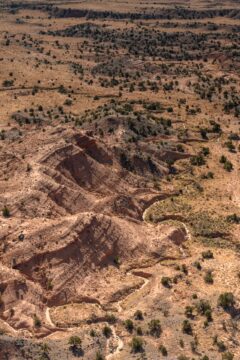
This summer may be a harsh preview of what’s ahead for parts of the Rocky Mountain West. The story for those who don’t live here is that we had a very stingy snowpack and a too-warm March and April. So when May came, we got none of the delicious torrent of snowmelt, the swollen rivers, the copious irrigation water, the full reservoir ponds, or the saturated soil. Instead we got a tiny surge of water followed by barely trickling streams, something I’ve never seen in my life here in Colorado.
We knew it was coming. The US Department of Agriculture has done wonderful things with “SNOTELS”, which stands for snowpack telemetry and gives anyone interested real-time information on volumes of snow-water equivalents. SNOTELS use giant rubber bladders filled with antifreeze, pressure transducers to measure weight, and radio transmitters to communicate. So an angler, a rafting guide, or a rancher can sit in their kitchen in March and April, study the information from a distant SNOTEL and make plans for the summer.
For lots of ranchers, it meant cutting way back on cattle numbers; for fishing guides it’s meant warm shallow waters, and for rafting guides, it’s meant shortened seasons.
Things don’t look nice for the Rocky Mountain states in the next 30-50 years. If the planet continues to warm as climatologists predict, the average temperature of Colorado (for example) will be 2.5 degrees to 5.5 degrees warmer than state averages in the late 20th century. Warmer air means higher evapotranspiration rates to the tune of approximately a 15% increase. So our soils will dry out more quickly, our reservoirs will evaporate faster, and our plants (grasses and trees) will dry out more quickly. I don’t know how much of this can be mitigated. Still, it’s certainly worth exploring every possible solution to keep some moisture in the ground and to protect our subsurface and surface water supplies. And some of the best solutions may be pretty low tech.
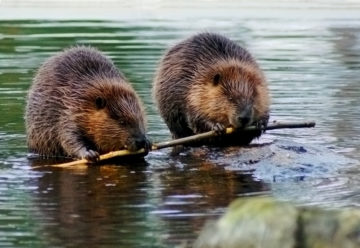
Start with the beaver, that buck-toothed little dam builder with the webbed feet and the flat tail. When a beaver builds a dam on a streambed, it changes the entire hydrology of the area rather radically. Read more »