
by Mark Harvey
All water has a perfect memory and is forever trying to get back to where it was. —Tony Morrison
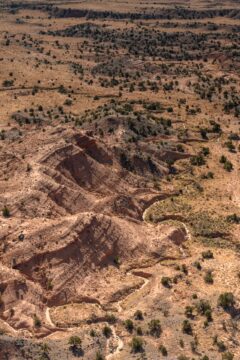
This summer may be a harsh preview of what’s ahead for parts of the Rocky Mountain West. The story for those who don’t live here is that we had a very stingy snowpack and a too-warm March and April. So when May came, we got none of the delicious torrent of snowmelt, the swollen rivers, the copious irrigation water, the full reservoir ponds, or the saturated soil. Instead we got a tiny surge of water followed by barely trickling streams, something I’ve never seen in my life here in Colorado.
We knew it was coming. The US Department of Agriculture has done wonderful things with “SNOTELS”, which stands for snowpack telemetry and gives anyone interested real-time information on volumes of snow-water equivalents. SNOTELS use giant rubber bladders filled with antifreeze, pressure transducers to measure weight, and radio transmitters to communicate. So an angler, a rafting guide, or a rancher can sit in their kitchen in March and April, study the information from a distant SNOTEL and make plans for the summer.
For lots of ranchers, it meant cutting way back on cattle numbers; for fishing guides it’s meant warm shallow waters, and for rafting guides, it’s meant shortened seasons.
Things don’t look nice for the Rocky Mountain states in the next 30-50 years. If the planet continues to warm as climatologists predict, the average temperature of Colorado (for example) will be 2.5 degrees to 5.5 degrees warmer than state averages in the late 20th century. Warmer air means higher evapotranspiration rates to the tune of approximately a 15% increase. So our soils will dry out more quickly, our reservoirs will evaporate faster, and our plants (grasses and trees) will dry out more quickly. I don’t know how much of this can be mitigated. Still, it’s certainly worth exploring every possible solution to keep some moisture in the ground and to protect our subsurface and surface water supplies. And some of the best solutions may be pretty low tech.
Start with the beaver, that buck-toothed little dam builder with the webbed feet and the flat tail. When a beaver builds a dam on a streambed, it changes the entire hydrology of the area rather radically. Beaver dams don’t just retain surface water. The elevated weight and volume of the water in the ponds they build create hydrostatic pressure and push water into the surrounding earth floor and walls. The technical term is the hyporheic zone. And more water gets stored in the surrounding soils than in the pond itself—up to ten times as much water. The water spreads out hundreds of yards laterally from the dam site, creating alluvial aquifers.
According to a study done by scientists at Colorado State University, Colorado’s 185,000 miles of stream networks could support 1.36 million beaver dams.
Colorado Parks and Wildlife has estimated that there are approximately 53,000 beavers in the state. From that number, they’ve inferred that there are between 30,000 and 60,000 dams in the state, meaning that the state is only at about 5% capacity when it comes to beaver dams.

Under Colorado law, a rancher or farmer can’t just build a holding pond without going through the long process of determining how much water will be stored, evaporation rates, how the water will be used, and whether there will be any injury to downstream users with senior rights. Sometimes it involves augmentation plans to make up for evaporation, dam safety approvals from the state, and filing public notices.
Fortunately, beavers can build their dams without hiring engineers and lawyers. To my knowledge, the Castor Canadensis has never had to drag his musky tail to water court and explain why he was building water storage in the dark of the night without adjudication.
Scientists at Colorado State University estimate that if there were enough beavers to build the potential 1.36 million dams per their studies, it would add in the neighborhood of 213,000 acre-feet of surface water (about 70 billion gallons). But the big numbers come when you consider the amount of subsurface water added by those dams—an additional million acre-feet (on the high end) or about 325 billion gallons.
For context, the Colorado River’s total annual flow is about 13 million acre-feet. Colorado’s “paper” allocation is roughly 4 million acre-feet, though its actual share is closer to 3 million. Restoring beavers to suitable streams could add about a third of that amount to Colorado’s soils—an extraordinary prospect.
Beavers have very specific conditions for dam sites, including gradient, surrounding vegetation, power of water flow (measured in watts), valley width, and bed substrates. Ideally, the stream gradient is between one and three percent, there is an ample supply of aspen, willow, or cottonwood trees within 100 feet, there is an unconfined floodplain wider than 120 feet, and the bed substrate is silt, sand, gravel, or cobble. The corollary is that they don’t build dams on steep streams, streams surrounded by conifers, or streams on bedrock.
Their cue to build dams on running streams is also apparently hard-wired and auditory. This was discovered in the 1960s by a Swedish biologist named Lars Wilsson. Curious to figure out what triggered their dam-building activity, Wilsson captured some beaver kits and raised them in a terrarium where they never saw a wild river or adult beavers building structures. Once they were a little bigger, he set up a speaker to emit the sound of running water. The small beavers immediately tried to bury the speakers with sticks, towels, and mud.
To test whether beavers reacted visually, Wilsson set up pools of water with a hidden pipe that would drain the pools silently. Despite the drop in water levels, his beavers were indifferent and didn’t act to find and repair the leak.
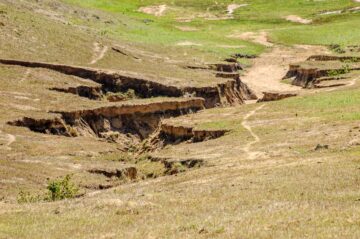
Climate change in the Rocky Mountain states, especially the southwest, is lowering water tables and destroying floodplain ecology in mechanical ways that are painful to see. The flashfloods associated with atmospheric saturation, denuded waterways from drought and wildfire, and rain-on-snow events that unleash vast amounts of water lead to severe erosion of stream beds. Hydrologists use the term incised stream banks, and once begun, they are hard to stop. Basically, once meandering streams that allow water to move into the soils and the water table become deep, straight channels with rushing water that no longer infiltrates the soil. The surrounding meadows dry out, the channels get deeper—it’s pernicious.
There are various terms to describe returning to old ways of farming, building, or ecological restoration, such as the technological pendulum or retro-innovation. Sometimes the ways of the ancients just work better. Such might be the case when it comes to managing dear water in a dry land.
Over a thousand years ago, the Zuni Indians of the Colorado Plateau controlled incisions and erosion in stream beds with small check dams made of dry-laid rocks and stepped plunge pools. The plunge pools were built to slow the most violent rushing water. Downstream, the check dams were tiny—from one to three feet tall and weren’t meant to stop the water, just slow it, redirect it, and allow it to infiltrate the soil instead of ripping down the valley.
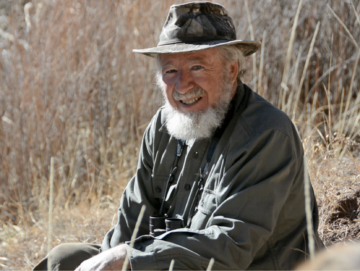
In the 1990s, Bill Zeedyk, a retired US Forest Service supervisor, began working with Zuni tribal members on restoration projects in the Zuni Mountains and observed how efficiently their techniques worked to prevent erosion and conserve water. He formalized the techniques in writing and diagrams, naming the drop pools Zuni Bowls in honor of the people who developed them. Zeedyk went on to formalize the practice of what he called one-rock dams. The dams were not just one rock; rather, they were aprons of rocks only one rock high, meant to slow and spread fast-moving water from flash floods.
Zeedyk went on to write a book called Let the Water do the Work, which espoused the low-tech strategies of the Zunis instead of the bulldozer-backhoe-concrete methods traditionally used in restoration projects. He is now in his nineties, with a white beard and a wizened face evoking John Muir or Edward Abbey. Since writing the book, thousands of Zuni Bowls and one-rock dams have been built throughout the West and Australia.
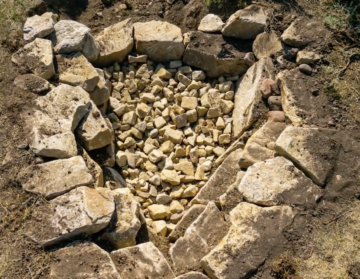
Even big federal agencies such as the Bureau of Land Management and the Natural Resource Conservation Service have endorsed the Zeedyk methods for stream restoration. To wit, Range Technical Note #40 of the NRCS has a photo of a Zeedyk structure on its cover and goes on for 37 pages explaining how to build Zuni Bowls and one-rock dams.
In Colorado, where water is like gold—but fought over even more viciously—the Department of Water Resources and senior water rights holders argued that these low-tech structures were undecreed forms of water storage or illegal diversions. It put a chill on some individuals and organizations that wanted to build them. Fortunately, in 2023, the Colorado General Assembly passed Senate Bill 23-270, allowing low-tech restoration like Zuni Bowls to be built without legal decrees.
The beaver features prominently in the mythology of various Native American peoples. In the Cree Indian creation story, a beaver builds a dam and floods the land. Later, a wolf spins a web of moss on the water to create a new world. For the Jicarilla Apache, the beaver stops water from disappearing by building dams that form lakes. The Stikine Tlinget Indians of Alaska carved beavers into their totem poles and have a story about a beaver slapping his tail so hard, the village collapses.
I don’t know where the beaver sits in the Zuni culture despite at least a cursory search. But it must have a special place given the intricate fetishes in the shape of beavers carved by some of their talented artists.
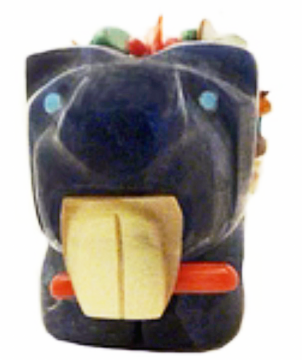
In facing the inevitable broadsides of climate change coming fast at us—the droughts, the fires, the flash flooding—it may be that some low-tech solutions help us to face this most high-tech problem. Beavers have had about 30 million years to figure out how to move and manage water. The Zunis not quite as long, but certainly thousands of years, thriving in the Southwest with scarce water. Throughout the Rocky Mountain West, we are finally learning from these wise veterans.