
by Eric Feigenbaum
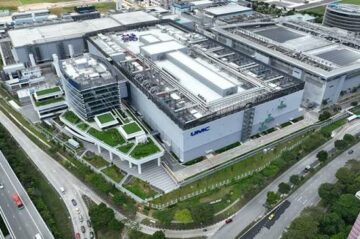
There are few acts that express a belief in globalism like phasing out agriculture. From the city-state’s independence in1965 until 1990, Singapore reduced its agricultural land from 13,160 (roughly 22% of the island’s then-size) to 1,500 hectares (roughly 1% of Singapore’s area) of which only 600 were used by the year 2000.
Singapore’s leadership made this controversial shift for three major reasons: it believed the land had higher value use in industry and housing than in agriculture; Singapore’s agricultural output wasn’t nearly enough to feed the country as it was, making food importation was already a fact of life; and livestock farming – particularly pigs – polluted land, streams and the Singapore River.
Naturally, all but abandoning agriculture came with great risk. Singapore had to believe in the stability and quality of its imported food supply which could be hampered by many things from meteorological phenomena causing droughts in supplier nations to the international relationships secure enough to believe no one would try to choke off or siege Singapore.
To that end, Singapore has always diversified its basket of suppliers – receiving the same or similar items from multiple countries. In a Singaporean supermarket, you can expect to find your choice of onions from Malaysia, the US and Australia, for example. Chicken from Malaysia or Brazil. This provides multiple price points and greater food security.
The decision came with costs one might not expect – and certainly Singapore’s leaders did not. As told by Singapore’s founding Prime Minister, Lee Kuan Yew:
Difficult adjustments were inevitable and there were comic, even absurd, results. Several pig farmers could not bear to part with their pigs and reared them in their high-rise flats. Some were seen coaxing their pigs up the stairs! One family, a couple with 12 children, moving from a hut to a new HDB flat at Old Airport Road brought a dozen chickens and ducks to rear in the kitchen. The mother built a wooden gate at the kitchen entrance to stop them from entering the living-room. In the evenings the children would look for earthworms and insects at the grass patches outdoors for feed. They did this for 10 years until they moved into another flat.
Less absurdly:
We phased out the rearing of over 900,000 pigs on 8,000 farms because pigwaste polluted our streams. We also shut down many food-fish ponds, leaving only 14 in agrotechnology parks and a few for leisure fishing. Food-fish are now farmed offshore in shallow net-cages in the Straits of Johor as well as in deep- sea net-cages off deeper waters near our southern islands.
We had a resettlement unit to deal with the haggling and bargaining involved in every resettlement, whether of hawkers, farmers or cottage industrialists. They were never happy to be moved or to change their business. This was a hazardous political task which unless carefully and sympathetically handled would lose us votes in the next election. A committee of officials and MPs whose constituencies were affected helped to limit the political fallout.
Resettling farmers was toughest. We paid compensation based on size of farm structures, the cemented area of open space within their farm holding and the number of fruit trees and fish ponds. As our economy thrived, we increased the amount, but even the most generous payment was not enough. Older farmers did not know what to do with themselves and their compensation money. Living in flats, they missed their pigs, ducks, chickens, fruit trees and vegetable plots which had provided them with free food. Fifteen to 20 years after being resettled in HDB new towns, many still voted against the PAP. They felt the government had destroyed their way of life.
What may not have been clear to Singaporeans of that era – and perhaps not even to the full array of government officials involved in the decision – is that it was Singapore’s first major, unconditional commitment to Globalism.
Because it was so resource poor and with the loss of its role as a British naval hub, Singapore had few options in the mid-1960’s but to turn to Foreign Direct Investment. It secured its first foreign-owned factory in 1968 with National Semiconductor which was followed closely thereafter by Texas Instruments. That these first major investments in Singapore were by American technology companies was a major coup for the fledgling nation.
It didn’t take long to understand that by offering strong property rights, a fair judicial system grounded in British Common Law and English-speaking employees, Singapore could expand its economy dramatically by soliciting foreign companies.
Between 1965 and 2000 Singapore created 1.4 million jobs through Foreign Direct Investment and expanded its total workforce size from 590,000 workers to 2.1 million – altogether enlarging its economy. By 2000, Singapore’s Purchasing Power Parity Per Capita GDP of $41,479 USD had already exceeded the United States $36,335.
That said, this incredible success wasn’t from simply getting Foreign Direct Investment – it was also the kind of investments. Singapore’s leadership understood early it wanted its citizens working for Apple and Accenture, not sewing shirts for Tommy Hilfigger. Singapore made significant investments in education to ensure it had the best employees available in Asia.
The result was a rare and astoundingly swift move into growing an industrial economy and just as quickly leaping into a post-industrial one. In one generation, Singaporeans had left their farms and taken up white collar jobs. The pig farmers may never have forgiven Lee Kuan Yew, but their children and grandchildren certainly did.
Forced by circumstances, Singapore learned a lesson so many countries – including the United States at the moment – often rebel against. The best path forward economically is to play to your comparative strengths. Just as Singapore realized its land was more valuable as factories and office buildings, so America realized – until the past ten years – that manufacturing was a less valuable use of its land and people than tech and bioscience.
In a sense, today’s Singapore is more capitalistic than the United States from which it in so many ways learned. Singapore believes in the open market, not protectionism. In fact, it dives head-first into a globalist paradigm that has vastly increased its wealth.
Meanwhile, the Trump Administration’s solicitation of Foreign Direct Investment to increase American factories has resulted in a 0.6 percent net decrease in manufacturing jobs – largely because companies like Hyundai and Honda are using their promised capital to increase efficiency through technology and reduce dependence on labor. If any US industry has benefitted from the inflow of foreign money, it has been the technology sector – an American strength – not the manufacturing sector – a sector decreasingly aligned to the American economy.
Much like Singapore did in 1968, every developed nation has to understand its strengths and make the choices that lead to the advancement of its economy. In today’s world, wealth is increased by doubling down on strengths and letting go of costly legacy industries.
***
Enjoying the content on 3QD? Help keep us going by donating now.