
by Leanne Ogasawara
1.
In a recent installment of Sinica’s “Phrase of the Week,” Andrew Methven wrote about an expression that has gone viral on the Chinese internet: the “Odyssey Years”—奥德赛时期— a phrase that caught fire well before Christopher Nolan’s new movie started making headlines.
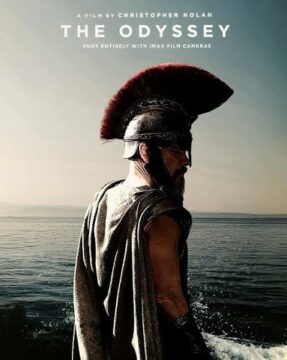
According to Methven, the phrase is used by young people to describe the unmoored decade of their twenties: the job-hopping, the city-switching, the marriages and mortgages deferred. Borrowed from a 2007 David Brooks column in the NYT, it dignifies aimlessness by reaching for Homer. You are not lost, it whispers; you are Odysseus, and somewhere out there an Ithaca awaits.
I love the phrase. Trying to think of a Japanese equivalent, even after two decades in Japan, I came up strangely empty. And the more I thought about it, the more intrigued I felt.
Start with Homer’s epic itself, which never quite landed in Japan the way Shakespeare did. Japanese readers encountered summaries and adaptations of the Odyssey in the early twentieth century, but the first complete translation from Greek appeared only in 1939.
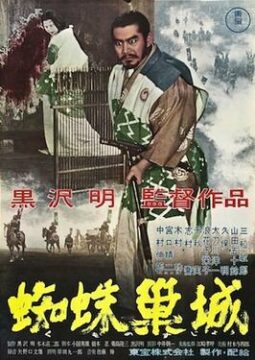
The Meiji man of letters Tsubouchi Shōyō, by contrast, completed his forty-volume translation of Shakespeare in 1928. Kurosawa later remade Macbeth as Throne of Blood, King Lear as Ran, and Hamlet as the corporate revenge drama The Bad Sleep Well. Shakespeare was adopted. Homer remained a classic admired from a polite distance.
But as I was poking around, I found a story that I had not heard of before: Tsubouchi himself believed the Odyssey had actually reached Japan centuries before the Meiji era, carried perhaps by Portuguese missionaries and absorbed into the folk tale of Yuriwaka, which tells of a warrior stranded on an island who returns home to find his place usurped and his faithful wife holding out against the very man who betrayed him. The Penelope echo is unmistakable. Yuriwaka, unrecognized on his return, proves his identity by drawing the great iron bow that no other man can bend — just as Odysseus, disguised as a beggar, is the only man who can string his own bow. And so, scholars continue to argue: was this an early borrowing of the epic poem? Or was there a common root to both stories to be found somewhere perhaps on the Central Asian grasslands? Read more »