by Laurie Sheck
1.
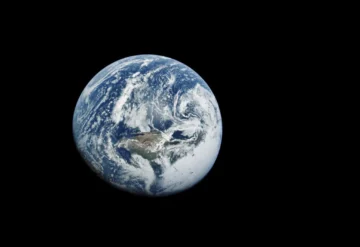
It has been almost 58 years since astronaut William Anders lifted his Hasselblad camera toward the window of Apollo 8 and captured the now-iconic image of Earth hovering beyond the gray, desolate edge of the moon, blue-white and small and fragile, hanging in the pure blackness of space. How beautiful it looked, how vulnerable and unprotected. As if emptied of political borders and human strife. As if we had never touched it after all. Unbuilt, unpolluted. Familiar and strange at the same time.
“We came all this way to explore the Moon,” Anders said, “and the most important thing is that we discovered the Earth.”
And yet how secretive it looks from a distance, how beyond human knowing.
My online searches tell me there are now over 942,562 CCTV surveillance cameras in London; in Shanghai there are 12,825, 589; in Hyderabad, 900,000; that in a single day a human being in London could expect to be captured on CCTV an average of 70 times.
But in Anders’ photo the Earth looks mysterious, un-warlike, uninhabited, unpoliced.
2.
In the astronauts’ descriptions of Earth, the word fragile recurs often.
“It looked so fragile, so delicate, that if you touched it with a finger it would crumble and fall apart”—this from James Irwin, crew member of Apollo 15. Lauren Acton spoke of seeing it “contained in the thin, moving, incredibly fragile shell of the biosphere.”
To Alexi Leonov, the first person to walk in space, Earth looked “touchingly alone.”
When cosmonaut Vitali Sevastyanov was asked by ground control what he saw, he replied, “Half a world to the left, half a world to the right. I can see it all. The Earth is so small.” And Neil Armstrong remarked, “I put up my thumb and shut one eye, and my thumb blotted out the planet Earth. I didn’t feel like a giant. I felt very, very small.”
Ulf Merbold said: “For the first time in my life I saw the horizon line as curved, accentuated by a thin seam of dark blue light. I was terrified by its fragile appearance.”
For those of us who’ve never been to space, the reality of Earth’s vulnerability can be harder to hold onto. The way its beauty is inseparable from its vulnerability. How in a sense they are the same thing. Read more »

 The recent show
 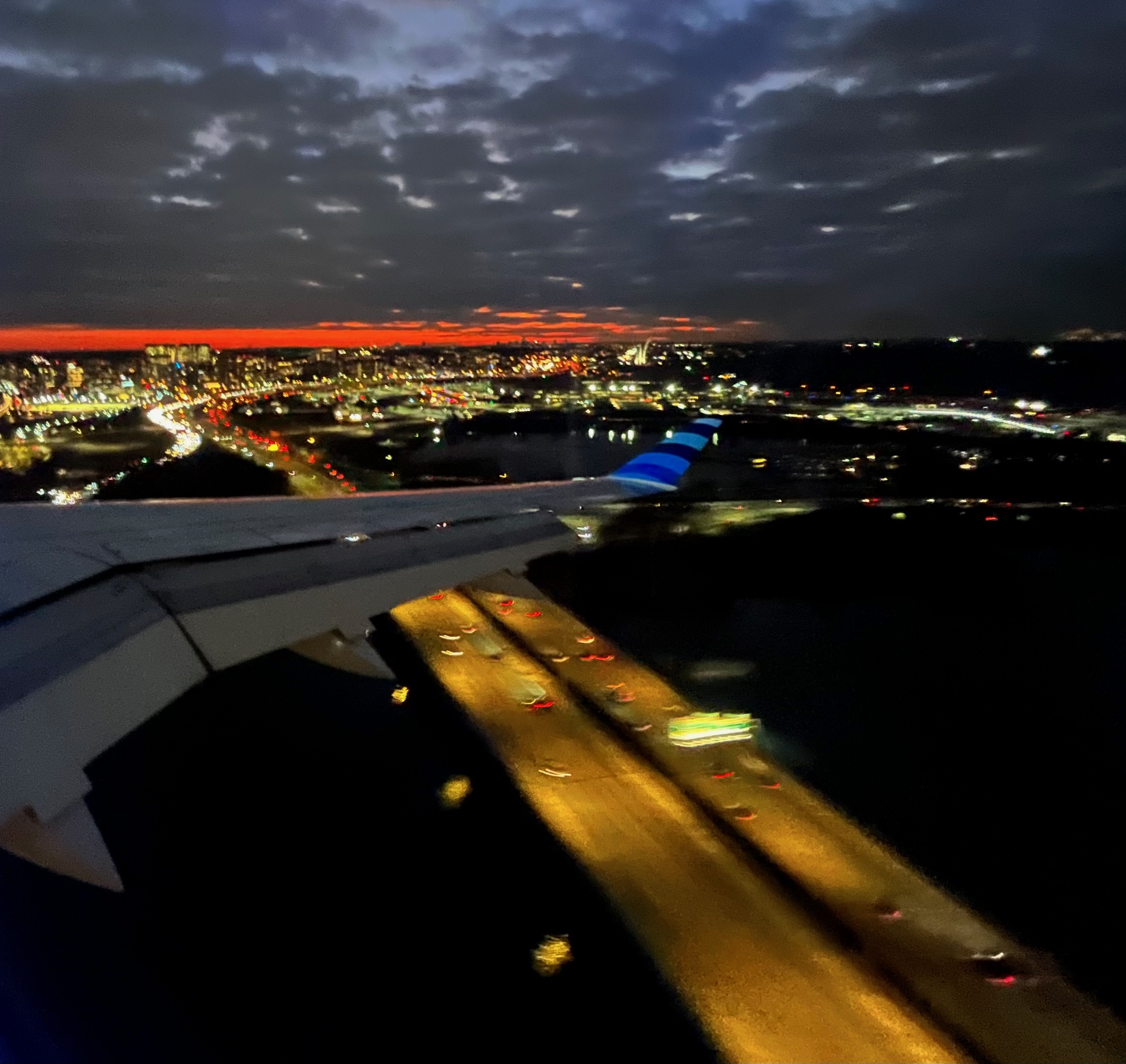 Sughra Raza. Landings, Dec 23, 2025.
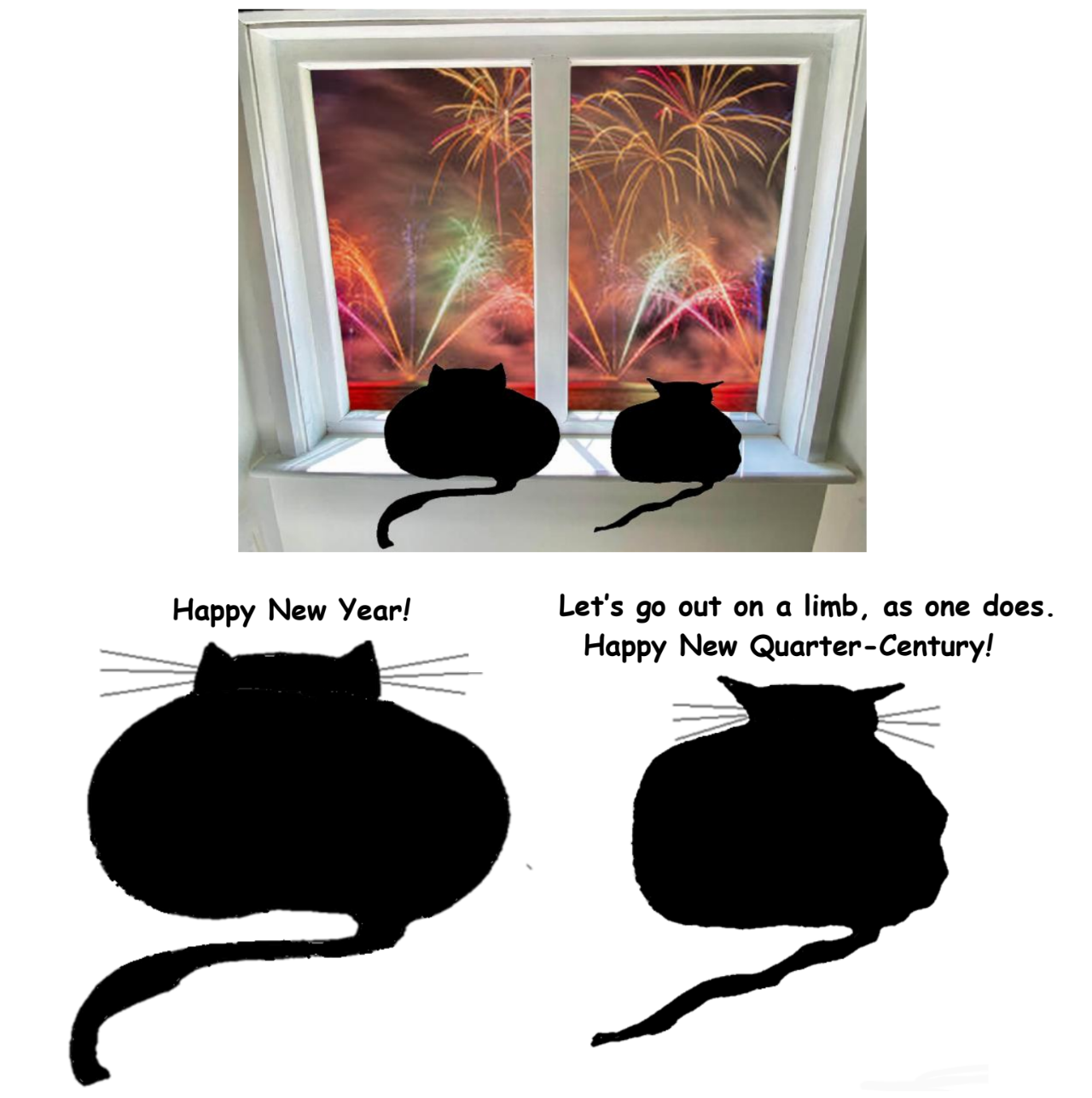
 At the end of each of the past twelve years I have written a long rhyming ballad, reviewing the period coming to a close, giving thanks for some events and lamenting others. I began in December 2013, while I was recovering from a lengthy illness; and I recited what would be the first of a series at a family New Year’s Eve party, among some of those whose support had been indispensable to the recrudescence of my health, and to whom I therefore wished to express my gratitude.