
by Andrea Scrima
 I moved to Berlin in 1984, but have rarely written about my experiences living in a foreign country; now that I think about it, it occurs to me that I lived here as though in exile those first few years, or rather as though I’d been banished, as though it hadn’t been my own free will to leave New York. It’s difficult to speak of the time before the Wall fell without falling into cliché—difficult to talk about the perception non-Germans had of the city, for decades, because in spite of the fascination Berlin inspired, it was steeped in the memory of industrialized murder and lingering fear and provoked a loathing that was, for some, quite visceral. Most of my earliest friends were foreigners, like myself; our fathers had served in World War II and were uncomfortable that their children had wound up in former enemy territory, but my Israeli and other Jewish friends had done the unthinkable: they’d moved to the land that had nearly extinguished them, learned to speak in the harsh consonants of the dreaded language, and betrayed their family and its unspeakable sufferings, or so their parents claimed. We were drawn to the stark reality of a walled-in, heavily guarded political enclave, long before the reunited German capital became an international magnet for start-ups and so-called creatives. We were the generation that had to justify itself for being here. It was hard not to be haunted by the city’s past, not to wonder how much of the human insanity that had taken place here was somehow imbedded in the soil—or if place is a thing entirely indifferent to us, the Earth entirely indifferent to the blood spilled on its battlegrounds. Read more »

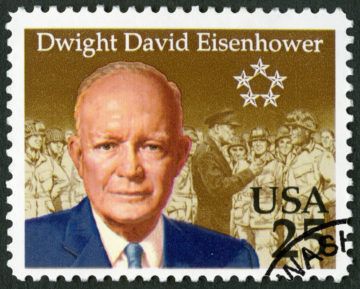 A Republican used to be someone like Dwight Eisenhower, a moderate who worked well with the opposing party, even meeting weekly with their leadership in the Senate and House. Eisenhower expanded social security benefits and, against the more right-wing elements of his party, appointed Earl Warren to be the Chief Justice of the Supreme Court. Warren, you’ll remember, wrote the majority opinion of Brown v Board of Education, Miranda v Arizona, and Loving v Virginia. If Dwight Eisenhower were alive today, he would be branded a RINO and a communist by his own party. I suspect he would become registered as unaffiliated.

 It’s not about dying, really—it’s about knowing you’re about to die. Not in the abstract way that we haphazardly confront our own mortality as we reach middle age and contemplate getting old. And not even in the way (I imagine) that someone with a terminal diagnosis might think about death—sooner than expected and no longer theoretical. It’s much more immediate than that.
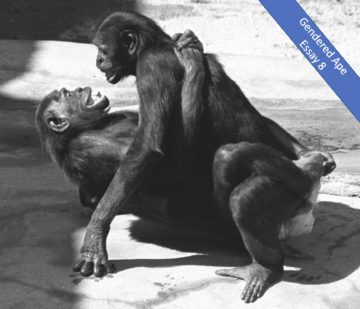



 Carlos Donjuan. Together Alone.
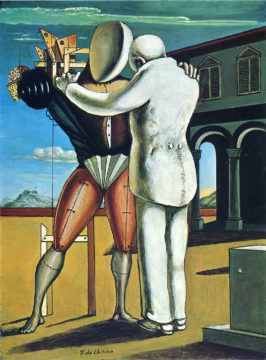 A philosopher and a stand-up comedian walk into a bar…the beginning of a joke? Or perhaps a history of humanity from the margins. The philosopher and the stand-up comedian are two figures that keep reappearing across the ages, cutting familiar silhouettes of odd bodies making odd claims about the world and its inhabitants.

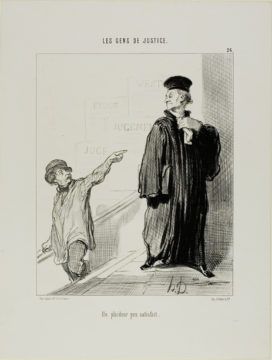

 First, because Moses, or the prophet Musa as we know him in the Quran, is an unusual hero— a newborn all on his own, swaddled and floating in a papyrus basket on the Nile— my brothers and I couldn’t get enough of his story as children. Second, it is also a story of siblings: his sister keeps an eye on him, walking along the river as the baby drifts in the reeds farther and farther away from home, his brother, the prophet Harun accompanies him through many crucial journeys later in life, another reason the story was relatable. Returning to the narration as a young woman, a mother, I found myself more interested in the heroines in the story: Musa’s birth-mother whose maternal instinct and faith are tested in a time of persecution, the Pharaoh’s wife Asiya who adopts the foundling as her own, confronting her megalomaniac husband’s ire and successfully raising a child of slaves and the prophesied contender to the pharaoh’s power under his own roof. As a diaspora writer, especially one wielding the colonizer’s tongue and negotiating the contradictory gifts of language, I have yet again been drawn to Musa. He is an outsider and an insider— one who carries a “knot on his tongue”— the burden of interpreting and speaking, not entirely out of choice, to radically different entities: God, the Pharaoh and his own people. Among the myriad facets of the legend, the most enduring is the innocence at the heart of his mythos, the exoteric quality of wisdom explored beautifully in mystic writings and poetry as a complementary aspect of the esoteric.