by Kevin Lively
The re-election of Donald Trump has prompted a spectrum of reactions among those who are . . . unenthusiastic . . . at this outcome. One common reaction I’ve observed among progressive friends and those who enthusiastically rather than grudgingly vote Democrat is confusion. Many reactions are understandable: dread about the implications for climate change, concern for the human rights of undocumented migrants in the US, or a low-grade panic over the fact that the Supreme Court has literally vested the office with immunity against legal persecution for assassinations, although apparently Obama’s assassinations of US citizens get a pass. Confusion, however, is only explicable as a consequence of a media ecosystem which rarely manages to coherently discuss many of the serious issues in American society, and crucially the role of policy choices by the government under both Democratic and Republican leadership which either failed to address or directly exacerbated these problems.
As any very stable genius glancing at a red hat in public can tell you, the appeal which won Mr. Trump his first democratic victory is ultimately rooted in nostalgia. But nostalgia for what exactly? Was American really greater in the past than it is now? And if so what changed and why?
Well this is a layered question. There is of course the obvious fact that for a non-negligible share of Trump voters this nostalgia is rooted in a time before the Civil Rights Act extended de jure if not de facto equal rights to non-white, non-christian, non-heteronormative non-men. If nothing else one can look at the day one rescinding of Diversity, Equity, Inclusion and Accessibility programs across the federal government and its contractors as an appeasement to that crowd. However, while this discrimination is indisputably a crucial aspect of American society and will continue to severely negatively affect human rights in the US, it is also not the only reason for Trump’s election. This in evidence from the increases Trump made among non-white voters, although the total numbers are still biased towards white men.
For the moment however, I do not want focus specifically on the very important issue of racism and discrimination, and instead look to other causes for support for Trump, although the USA being what it is, it will still permeate the discussion. Let’s start with the short term. Assuming there was a modicum of greatness in Trump’s first term we can look to an April 2024 New York Times / Sienna poll for what voters remembered about 2017-2021. Read more »
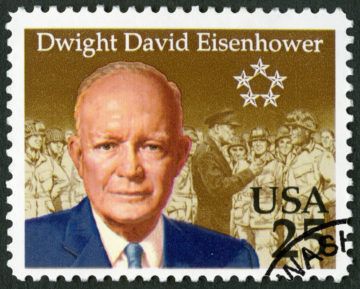 A Republican used to be someone like Dwight Eisenhower, a moderate who worked well with the opposing party, even meeting weekly with their leadership in the Senate and House. Eisenhower expanded social security benefits and, against the more right-wing elements of his party, appointed Earl Warren to be the Chief Justice of the Supreme Court. Warren, you’ll remember, wrote the majority opinion of Brown v Board of Education, Miranda v Arizona, and Loving v Virginia. If Dwight Eisenhower were alive today, he would be branded a RINO and a communist by his own party. I suspect he would become registered as unaffiliated.
  During the 1990s, the impossibility of a black president was so ingrained in American culture that some people, including many African Americans, jokingly referred to President Bill Clinton as the first “black president.” The threshold Clinton had passed to achieve this honorary moniker? He seemed comfortable around black people. That’s all it took.
 In 1790, shortly after the 13 states ratified the U.S. Constitution, the new federal government conducted its first population census. Its tabulations revealed an astonishingly rural nation. No less than 95% of all Americans lived in rural areas, either on a fairly isolated homestead (typically a farm) or in a very small town. How small? Fewer than 2,500 people. Meanwhile, just 1/20 of Americans lived in a town with more than 2,500 people. All told there were only 26 such towns, only half of which had so many as 5,000 people