
by Mark Harvey
“It is certain, in any case, that ignorance, allied with power, is the most ferocious enemy justice can have.” —James Baldwin
The election a couple of weeks ago came as a relief to many of us. It was not a feeling of happily getting back on track again but rather a sense of relief that we hadn’t entirely lost our democracy to shrill lunatics intent on building a bargain-bin version of American fascism. The Republican Party today is unrecognizable even to rock-ribbed Republicans. When someone from the Cheney family threatens to leave the party for its cowardice and extremism, you know you’re dealing with a party that has completely lost its way.
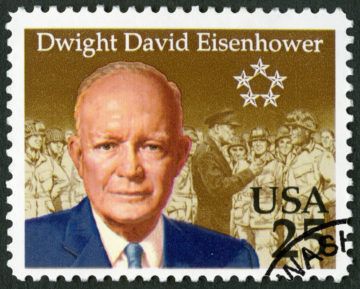 A Republican used to be someone like Dwight Eisenhower, a moderate who worked well with the opposing party, even meeting weekly with their leadership in the Senate and House. Eisenhower expanded social security benefits and, against the more right-wing elements of his party, appointed Earl Warren to be the Chief Justice of the Supreme Court. Warren, you’ll remember, wrote the majority opinion of Brown v Board of Education, Miranda v Arizona, and Loving v Virginia. If Dwight Eisenhower were alive today, he would be branded a RINO and a communist by his own party. I suspect he would become registered as unaffiliated. Read more »
 In the game of chess, there are dramatic moves such as when a knight puts the king in check while at the same time attacking the queen from the same square. Such a move is called a fork, and it’s always a delicious feeling to watch your opponent purse his lips and shake his head when you manage a good fork. The most dramatic move is obviously checkmate, when you capture the king, hide your delight, and put the pieces back in the box. But getting to either the fork or checkmate involves what’s known in chess as positioning, and for the masters, often involves quiet moves long in advance of the victory.
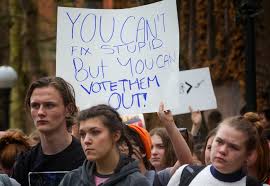 Some people whose political views are liberal and progressive say they will not vote in the 2020 US election. They detest Donald Trump and his Republican enablers like senate leader Mitch McConnell; they oppose Trump’s policies on most issues–the environment, immigration, health care, voting rights, police brutality, gun control, etc.; but they still say they won’t vote. Why not?