
by Christopher Hall
This past October saw a peculiar heat wave in my corner of Ontario. 30 degree Celsius (around 86 degrees for those of you still using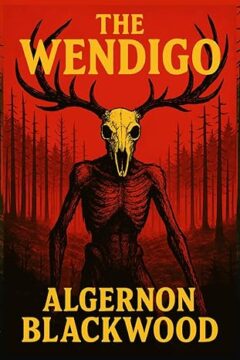 unenlightened temperature scales) is a kind of touchstone temperature for Canadians – a midsummer sort of heat, usually restricted to July and August, permissible in June and September, but out of its proper place elsewhere. (Its mirror image, -30 degrees (-22 degrees F) is likewise to be restricted to the depths of January and February – though increasingly infrequent even there.) These 30 degree days at the beginning of October had intruded on a moment when every instinct was attuning itself to the coming rituals of autumn, and it thus accorded jarringly, like the rhythm section had suddenly lost its way in the middle of the song.
What followed was weeks of drought; my parents, living off a well, had to restrict water use for the first time in the many decades they’ve been living on their lake-front property. As in any good scary story, these anomalies creep on our attention slowly and portend, at first, no great crisis. The rain eventually came, and temperatures in November have been acceptably normal – even perhaps a little colder than usual. There isn’t, and there usually isn’t, a definite reason to attribute any singular aberration to the larger motions of climate change. But the signs accumulate and intrude more forcefully on our attention; something is near and approaching.
But is it the monster itself? As Quico Toco notes recently in Persuasion, we have come to a point where we don’t actually know where we are, where we are going or, most importantly, what’s coming for us. Renewable power is growing at a stunning rate, but coal-fired power plants are surging in the industrializing world. The complete collapse which would seem unavoidable once we hit temperatures 4, 5 or 6 degrees beyond the baseline now seems, as Toco notes, “no longer plausible.” But the Paris Agreement’s target of an increase below 2 degrees likewise seems out of reach. And the fact is, we don’t know what a world 2.5 or 3 degrees warmer looks like:
A three-degree-hotter world may do away with summer Arctic sea ice altogether[…]or it may not. It might cause a collapse in agricultural productivity across the Sahel. Or it might not. It might send the warm ocean currents that keep Europe livable in winter in irreversible decline. Or it might not.
The monster’s true nature is rarely revealed in the middle of the horror story, and in a lot of the better ones, it’s never revealed at all.
Climate change is a psychic phenomenon as much as it is an environmental one. It is, to borrow terms from Mark Fisher, weird territory. Fisher makes a key distinction between what is weird and what is, in Freud’s term, the unheimlich, best (though awkwardly) translated as “the unhomely.” For Freud what is strange is “strangely familiar” – the return to us of what our conscious minds have estranged. Strangeness becomes, then, ultimately human- centered, a distorted reflection ultimately to be resolved under better resolution (in other words, psychoanalysis) into something recognizable. This isn’t enough to exhaust the possibilities of the strange for Fisher:
The weird and the eerie make the opposite move: they allow us to the inside from the perspective of the outside[…]the weird is that which does not belong. The weird brings to the familiar something which ordinarily lies beyond it, and which cannot be reconciled with the “homely” (even as its negation.)
Fisher seeks to preserve the undomesticatable nature of weirdness. For him, thus, H.P. Lovecraft, the father of the modern weird tale, writes not about a distorted human image but rather about an “irruption into this world of something from outside.” “Lovecraft’s tales,” continues Fisher, “depend for their power on the difference between the terrestrial-empirical and the outside.” Freud’s touchstones were the distorted human images of the typical 19th century monster – vampires, werewolves, aberrations constructed from human bits, Mr. Hydes emerging from Dr. Jekylls, etc. Lovecraft doesn’t merely distort the human image; when it comes time to put some kind of description to his monsters, his Mi-Go and Shoggoths and Outer Gods, he “[does] not allow the reader to synthesize the logorrheic schizophony of adjectives into a mental image…” We are left with pure distortion out of which nothing recognizable can be seen under any resolution.
It’s possibly that what we are seeing in climate change is, in some sense, unheimlich, the human image coming back to us in distorted form. We have attempted to work our wills onto nature and, as usually happens in such stories, are caught now in the consequences. But there is a deeper sense in which Fisher’s weird makes better sense of the psychic comportment of climate change. There is a gulf between nature and humanity that simply isn’t bridgeable. We are of and in nature, but human consciousness entails a rupture between our interiors and “the outside,” which we may presume (the consequences are the same) to be non-consciousness or possessed of “something” which the name of consciousness cannot entirely define or exhaust. What’s coming to us, if it comes to us, comes from this outside, and what we will or will not suffer arises from entering territory we have no hope of comprehending.
Perhaps in order to clarify this we should turn to an author who is a little better attuned to “nature” in the normal sense than Lovecraft. Lovecraft, after all, was a consummate indoorsman, and the New England interiors where his stories usually end up – despite occasionally starting, as The Color Out of Space does, in “woods that no axe has ever cut” – are literally an “inside” for the outer powers to intrude into. Algernon Blackwood, a writer Lovecraft greatly admired, had great experience with the outdoors and centered his writing, as S. T. Joshi notes, precisely on this capital-N Nature. Blackwood’s weird tales, in short, begin outside and then progress farther into the exterior. In his greatest story, The Willows, two travelers down the Danube find themselves stranded on a crumbling island covered with willows. As their literal purchase on land dissolves into the river, entities from an outside order of being intrude, or rather, resent the intrusion on their territory, thus demanding a sacrifice.
As good as The Willows is, I want to focus on another of Blackwood’s tales, The Wendigo, for no better reason than it takes place in Ontario – the north of Ontario specifically, where, mind you, I’ve never been myself. Blackwood, born in 1869 in Kent, was an extensive traveler, and had lived for a time in Canada, unsuccessfully running first a farm and then a hotel. He knew and loved the Canadian wilderness, and thus his stories better accord with our general sense of what Nature is supposed to be. But Blackwood’s tales are weird; they work not by trying to attune us better to the outside world, as a nature writer might, but to rather emphasize the permanence of the gulf between.
In The Wendigo, the contrast between the distorted human image and the outside snaps into clarity. The latter can indeed create the former, but the fundamental distance between it and the human remains unchanged. The story details a moose hunting expedition out of Rat Portage (now Kenora) near the Manitoba border. The hunters, Dr. Cathcart and his guide Hank, and Cathcart’s divinity student nephew Simpson and his French-Canadian guide Défago, separate after they find no success in their usual grounds. Simpson and his guide head to Fifty Island Water, Défago with some reluctance. The territory impresses Simpson, a Scot prepared by nothing from the “Old Country” for what he encounters:
In front, through doorways pillared by huge straight stems, lay the stretch of Fifty Island Water, a crescent-shaped lake some fifteen miles from tip to tip, and perhaps five miles across from where they were camped. A sky of rose and saffron, more clear than any atmosphere Simpson had ever known, still dropped its pale streaming fires across the waves, where the islands – a hundred, surely, rather than fifty – floated like fairy barques of some enchanted fleet[…]Yet, ever at the back of his thoughts, lay that other aspect of the wilderness: the indifference to human life, the merciless spirit of desolation that took no note of man.
Défago is alerted to some unseen danger by the presence of an odd smell, which throughout the story indicates the presence of – well, something. The crisis comes at night, as both men are sleeping in a tent:
Défago had huddled down against him for protection, shrinking away from something that apparently concealed itself near the door-flaps of the little tent[…]the profound stillness of dawn outside was shattered by a most uncommon sound. It came without warning, or audible approach; and it was unspeakably dreadful. It was a voice, Simpson declares, possibly a human voice…It rang out, too, in three separate and distinct notes, or cries, that bore in some odd fashion a resemblance, far-fetched yet recognizable, to the name of the guide: “Dé-fa-go!”
Défago is taken, and what follows is Simpson’s desperate search to find him. He is able to find human tracks, beside which are strange animal tracks; the human prints slowly transform until they are nearly identical to the others. Simpson is able to locate Dr. Cathcart and Hank, and they join in the search; they have no success until Défago himself, or something like him, finds them instead:
Nothing really can describe that ghastly caricature, that parody, masquerading there in the firelight as Défago. From the ruins of the dark and awful memories he still retains, Simpson declares that the face was more animal than human, the features drawn about into wrong proportions, as though he had been subjected to extraordinary pressures and tensions.
“I seen that great Wendigo thing” the pseudo-Défago declares, and “Now you seen it too.” What exactly this “Défago” is is not made clear – the actual Défago transformed, some kind of hybrid, or the Wendigo in Défago form. The story ends as the rescue party returns to their base camp, only to find that “the true Défago” has likewise returned:
Exhausted to the point of emaciation, the French Canadian – what was left of him, that is – fumbled among the ashes, trying to make a fire. His body crouched there, the weak fingers obeying feebly the instinctive habit of a lifetime with twigs and matches. But there was no longer any mind too direct the simple operation. The mind had fled beyond recall. And with it, too, had fled memory. Not only recent events, but all previous life was a blank.
As readers, we never do quite “see” the Wendigo; the closest we get is something concealed behind a tent-flap. The weird is a matter of deflection and permanent delay, not return and recognition, as in the case of the unheimlich. We can approach it only as a polygon of many sides approaches a circle – never quite there. We progress backwards through the story – from the desiccated but human Défago at the end, to the hybrid-thing, to the unseeable monster itself, and finally to the setting in which no human form exists and into which any human entrance is an intrusion. There is no straight road, in other words, of transformation from the human to the non-human, and no route back. As in most weird stories, there is no possibility of a restoration to order, because there was never an underlying order to begin with – not one comprehensible to humanity, at any rate.
As I, like I imagine a good many others, try to acclimate to the general anxiety of the current moment, I spend a fair amount of time trying to articulate its source. That source may simply be that I can no longer understand the future as a continuation of the past; a radical disconnection seems to be in store. And the deeper disconnect is that the future no longer looks human. Whatever Nature has accommodated us to this point, it has done only that – never precisely assimilating or even entirely welcoming us. It’s that deep otherness of Nature, the one Blackwood saw in the Ontario wilderness, that I see in another guise in climate change. It is not the return of a human distortion we have enacted on the world. It is a reassertion of something ancient, inhuman, and more permanent than anything we will ever create. When Nature comes to whatever equilibrium it is going to reach, it will hardly be the first time such a transformation has occurred. It reacts to our complaint that we may not be able to live there with a shrug.
But an extra, maddening part of the anxiety is that I’m not even able to know any of that for certain. To be anxious is one thing; to be anxious because one’s anxiety may be made up of illusions and delusions is another. Technology and mechanisms we don’t yet understand may make the climate crisis little more than an increased inconvenience to the weather. The other anxieties of the moment – democratic collapse, AI, the tribulations of late capitalism – may yet dissolve into the utopia of commercialized perfection some could still talk about at least semi-seriously a few decades ago. But whatever is coming, I’d like to be able to properly contextualize it. My sense that weird fiction, and speculative fiction in general, is better suited to the needs of the moment than realist fiction emerges from this sense that the future, when it comes, may no longer be said to reflect our own image back to us – however distorted. Weird territories do something we aren’t often capable of doing – immerse us in a universe not merely colored by our absence, but entirely ignorant of even the possibility of our existence.
Like Lovecraft, I prefer the indoors. My last camping trip, when I was a teenager, took place during an immiserating three-day downpour and left me unwilling to venture too far off a well-marked path again – preferably one with a bar nearby. But I’ll agree with Blackwood that we get the best sense of the Outside when we’re outside. And that moment exterior to human knowledge taunts me as it increasingly seems I won’t escape all of its potentially brutal forms by reaching the end of my lifespan – the hope that I might being the only real consolation I’ve allowed myself to this point. What do we do with a future where not only You and I, but We, might be erased? We don’t see the Wendigo, but we do recognize its scent.
Enjoying the content on 3QD? Help keep us going by donating now.