
by Ken MacVey
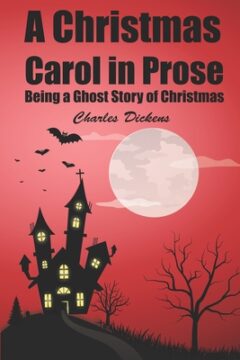 The full title of Charles Dickens’ 1843 classic is “A Christmas Carol in Prose: Being a Ghost Story for Christmas.” Inspired by a report on child labor, Dickens originally intended to write a pamphlet titled “An Appeal to the People of England on behalf of the Poor Man’s Child.” But this project took a life of its own and mutated into the classic story about Ebenezer Scrooge that virtually all of us think we know. It’s an exaggeration to say that Dickens invented Christmas, but no exaggeration to say that Dickens’ story has become in our culture an inseparable fixture of that holiday.
Some take the story as a mere entertainment or a simple allegory to inspire Christmas cheer. But it poses a heavy question: is it possible for someone who has lived a long, narrow, nasty, obsessive, compulsive, solitary and essentially meaningless life to still live a fulfilling, worthwhile, and meaningful one? Dickens’ answer, with humor, pathos and gripping storytelling, was yes, which offers hope and direction for the rest of us however bad or sad our lives have become by our own doing. In the unfolding of his story Dickens also provides a societal critique that unfortunately still rings true today.
It is perhaps for these reasons that so many of different backgrounds and differing beliefs have claimed A Christmas Carol as their own.
One way or the other, by movies, animations, or commercials, we are familiar with A Christmas Carol even without having read the novella. The setting is Christmas Eve in 1840s London. Scrooge is a solitary, mean-spirited miser and businessman who dismisses the poor as “surplus population,” rejects Christmas as “humbug,” and hands out disrespect and low wages to his one employee, clerk Bob Cratchet. As Scrooge on Christmas Eve finally makes way from his dreary workplace to his dreary abode, he is visited by four ghosts, who are ambiguously presented in the story as supernatural or possible hallucinations. The first ghost is Scrooge’s dead partner, Jacob Marley, who is weighted down by chains forged by his lifetime of cultivated greed. Chained, Marley is doomed to roam the earth as a ghost and warns Scrooge faces the same fate. Scrooge is then visited by another ghost, the Ghost of Christmas Past. The ghost and Scrooge travel back in time to visit Scrooge’s lonely childhood and his subsequent rejection by his betrothed because of his exclusionary and relentless pursuit of money. Scrooge is painfully forced to confront how he became what he is. The Ghost of Christmas Present then appears and takes Scrooge as an invisible observer to see how others can lovingly and joyfully spend Christmas, including his nephew and Bob Cratchet with their respective families. The Ghost of Christmas Yet to Come, forces Scrooge to foresee his future dismal death and worthless legacy if he does not change his ways.
In modern parlance, this is what is called an “intervention” and in Scrooge’s case it works and ultimately leads him to his meaningful and joyful engagement with life and the human race.
Of course, this crude summary does not do justice to the story. The story has resonated for over 180 years because it is a cleverly told story, with emotion grabbing themes and fascinating characters, that also takes a stand about what is really important in everyday life. It is no surprise so many people of different stripes and types take the story as a personal affirmation of values they hold and things they deem dear.
For example, this can include Buddhists. Estafania Duque wrote “A Buddhist Reading of ‘A Christmas Carol’” in the Buddhist publication Lion’s Roar and explains how the story parallels Buddhist themes. Jacob Marley’s chains represent the playing out of karma. Karma includes the idea that what you do can become a chain of consequences that weigh you down and bind you. Duque further notes how meditation on one’s life can lead to insight, which in turn can lead to compassion for self and others, which in turn can lead to joy. Others could also point out how Scrooge’s sudden insight and transformation parallels certain Buddhist notions of sudden transformative enlightenment.
A Christmas Carol has also been claimed by existentialists. Shale Preston in “Existential Scrooge: A Kierkegaardian Reading of A Christmas Carol” in Literature Compass writes that the 1843 story anticipates Kierkegaard’s 1844 The Concept of Anxiety. In that work Kierkegaard asserted that anxiety about life and death can be transformative and redemptive. Preston finds parallels between Scrooge’s anxiety about life and death and Kierkegaard’s concept of anxiety and speculates that A Christmas Carol may have influenced Kierkegaard. Charles Atkins in “Dickens and Dasein: A Heideggerian Analysis of ‘A Christmas Carol’” finds it mirrors themes about authenticity and time in Heidegger’s 1927 magnum opus, Being and Time.
Contemporary self-described Pagans claim A Christmas Carol too. Meg Elison in “The Pagan Spirit of ‘A Christmas Carol’” focuses on Pagan themes in the story and argues it should be read as a Pagan story. Elison notes the Ghost of Christmas Present is “a huge jolly fellow, all in green and greenery.” Elison’s article reproduces the John Leech illustration in the original publication of A Christmas Carol, which shows the Ghost of Christmas Present as sensuous, joyful, lusciously enrobed in green, bearded, haloed by green holly, and surrounded by food for a feast. Elison’s assertion has academic support. The Ghost of Christmas Present is widely acknowledged, such as by Michael Patric Hearn in The Annotated Christmas Carol, to be traceable to ““the Green Man” and other themes and imagery in English folklore of Pagan origin.
Then there are secular humanists. Francis Wade in “The quiet subversiveness of A Christmas Carol” published in the New Humanist writes: “The redemption story of Scrooge is a deeply humanistic one, and as such, the book appealed to both church goers and agnostics.”
Not surprisingly psychotherapists can lay claim to A Christmas Carol. A. Zottola writes in “A Psychoanalysis of ‘A Christmas Carol’” in Counseling Directory how Dickens’ story reflects “the same process of self-discovery that takes place in the therapeutic process” and how the story, through Scrooge, addresses the healing of childhood trauma. Elif Batuman in her essay in The New Yorker, “The Ghosts of Christmas: Was Scrooge the First Psychotherapy Patient?” describes to the bemusement of her Jewish therapist that the Ghost of Christmas Past reminded her of him.
But a few, inadvertently and unknowingly, have disclaimed Dickens novella while possibly thinking it as something kindred. Bill O’Reilly and others in the early 2000s began to decry what they called a “liberal war on Christmas.” A movement also emerged to “put Christ back in Christmas.”
Ironically, O’Reilly could have dismissed Dickens as a “liberal.” A Christmas Carol showcases the plight of childhood poverty. Scrooge is also Dickens’ foil for attacking the Poor Laws passed in the1830s that set up de facto prisons to enforce workfare programs for the poor and in the process physically separated children from their parents. Unfortunately, such programs sound familiar today.
Also ironically, the words “Christ” or “Jesus” are never mentioned in A Christmas Carol. Nor are the Ghosts of Christmas Past, Present, and Yet to Be, portrayed as angels sent by a Christian version of God. In fact, the Ghost of Christmas Present, like the Yule log, holly, and mistletoe of wintertime display, is of Pagan origin. Dickens takes an indirect dig at organized religion when the Ghost of Christmas Present says to Scrooge: “There are some upon this earth of yours . . . who lay claim to know us, and who do their deeds of passion, pride, ill-will, hatred, envy, bigotry and selfishness in our name, who are as strange to us and all our kith and kin, as if they had never lived.”
On the other hand, one who did consciously and forcefully reject A Christmas Carol was prominent literary critic Edmund Wilson in a 1940 article in the New Republic called “The Two Scrooges.” This article became Wilson’s best-known writing. In that article he personally attacked Charles Dickens’ moral and psychological character as pathological and recounted his bad conduct with others. The two Scrooges, in other words, consist of the “bad” version of Scrooge in A Christmas Carol and Dickens himself in real life. Wilson found Dickens’ portrayal of Scrooge cartoonish and Scrooge’s purported redemption implausible and at best likely to be short-lived.
Interestingly, in 1993 in reviewing in The New Yorker Wilson’s last book of collected writings , John Updike in “The Critic of Winter” found it surprising that Wilson did not care for Tolstoy’s novella The Death of Ivan Ilyich, which Wilson rejected as implausible. This is in fact not surprising. If Wilson’s personality and way of seeing things as a critic compelled him to reject A Christmas Carol they would have also compelled him to reject Tolstoy’s The Death of Ivan Ilyich. Both tell a similar story despite their totally opposite tones.
Like A Christmas Carol, The Death of Ivan Illich raises the hard question as to whether it is too late for someone who has spent a lifetime living a meaningless life to find meaning. It’s a story about a bourgeois Russian magistrate in the late nineteenth century, whose life has been organized around status climbing and accumulation of material goods, who comes to realize during terminal illness that his life, and the lives of his acquaintances, family members, and wife who are similarly driven, have lived inauthentic, superficial, empty and meaningless lives. Shortly before dying, Ivan Ilyich finds meaning. Tolstoy writes:
“And all at once it became clear to him that what had been oppressing him and would not go away was dropping away one side, on two sides, on ten sides, on all sides. He felt full of pity for them, he must do something to make it less painful for them: release them and release himself from this suffering. . . .
“In place of death there was light.
“‘So that’s what it is!’ he suddenly exclaimed aloud. ‘What joy!’”
[translated by Rosemary Admonds, Penguin Classics, The Death of Ivan Ilyich and Other Stories]
The parallels between A Christmas Carol and The Death of Ivan Ilyich are striking. They are critiques of the relentless pursuit of money and material accumulation. They are stories about redemption and freeing oneself from obsessions and compulsions through engaged compassion and care. Both stories end with the protagonist finding joy. These are not stories about conversion. They are stories about transformation. Neither Scrooge nor Ilyich submit to a holy doctrine, text or personage that tells them what they should believe or what they should do. They are not persuaded by arguments or indoctrination. They are not persuaded at all. They are transformed into a new way of being, a new way of seeing. They are transformed by seeing for the first time what was always before their eyes: the emptiness of their way of being and the possible alternative of a meaningful way of being.
There are differences, of course. One story can be light and uplifting and often very funny; the other heavy and somber and devoid of humor. One you could gather family and friends around the fireplace to read out loud. The other – it would be unthinkable and ludicrous to do such a thing.
If you have not read A Christmas Carol, read it. If you have read it, re-read it. If neither works for you, watch a movie version, even the Muppets version, which captures much of the spirit of the tale. But when you do, maybe look at A Christmas Carol in a new light and in a new way. Maybe you will find it uplifting in a way you never thought about. Or maybe like Edmund Wilson you will in effect say “Bah, humbug.” The story can be like a Rorschach ink blot test in which we project something of ourselves in the reading. In that respect, A Christmas Carol is a story for everyone.