by David J. Lobina
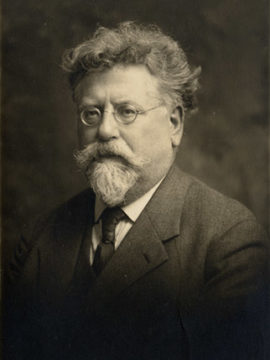
Is Ron DeSantis a fascist? Well, no, not really, and the question itself is not a little ridiculous, but I will come back to this properly next month (and, can you even pronounce his name properly?). In the meantime, I thought I would revisit some ideas of Rudolf Rocker briefly, the anarchist thinker and activist I wrote about last year – I wrote about his fascinatingly rich life as well as about his most important work, his 1937 book, Nationalism and Culture.
I must confess that I was a little gutted that the two entries I wrote in June and July last seemed to receive rather little attention, as I believe Rocker’s life experience and intellectual output have much to offer to us, not least to understand and properly situate some of the recent events on the (far) right political spectrum. Rocker lived through actually existing fascism and Nazism, after all, and what he had to say about the nationalist phenomenon then remains relevant to this day.
As the title of Rocker’s 1937 book indicates, and I stressed when I wrote about it, the study was focused on the relationship between nationalism and culture, and in particular, on the question of how cultural creativity can develop and flourish within modern nation-states, a topic Rocker devoted half of his book to. Rocker was most interested in the nature of the creative output given the pressures a nation-state imposes on individuals. Read more »
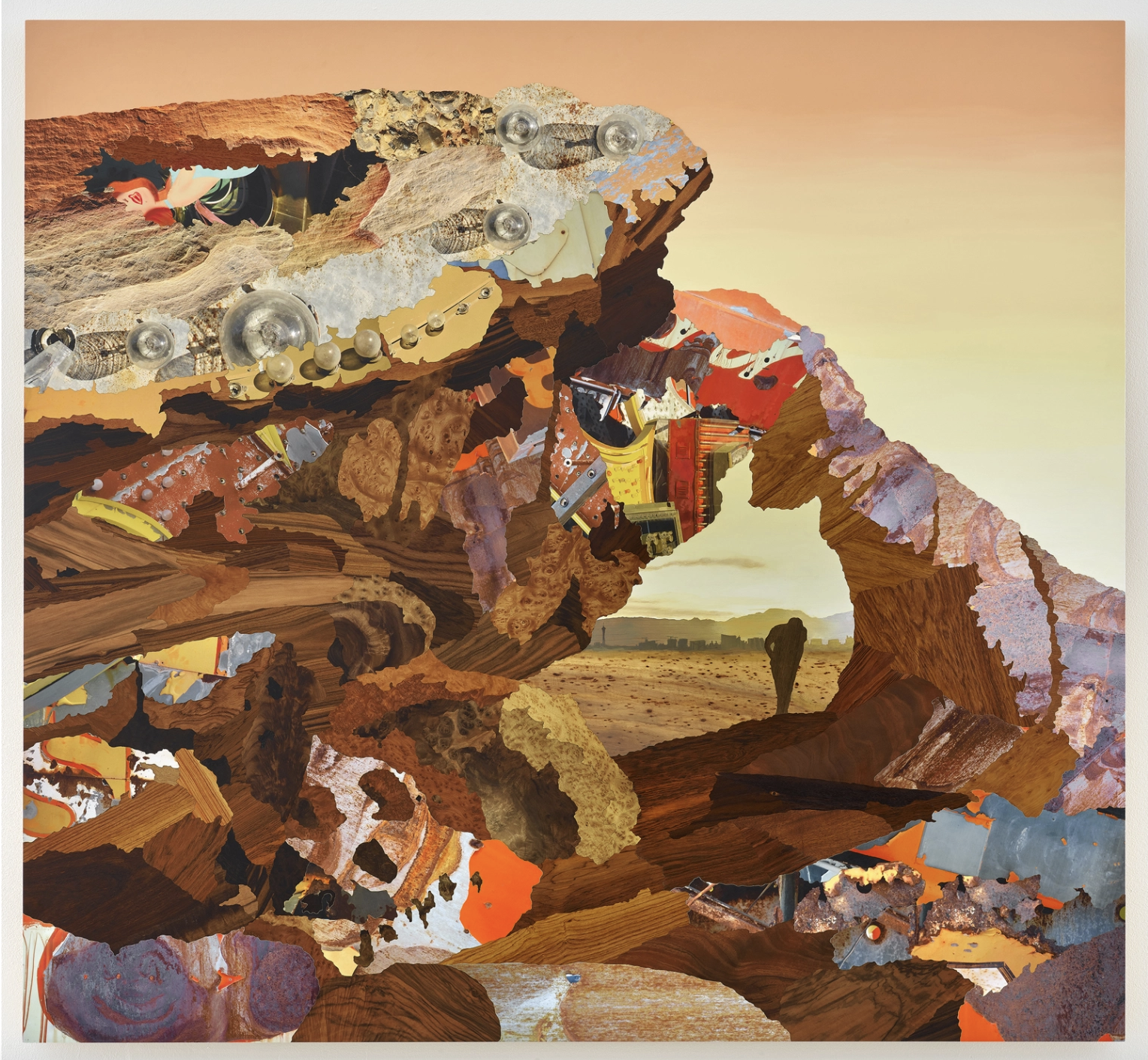 Allison Elizabeth Taylor. Only Castles Burning, 2017.
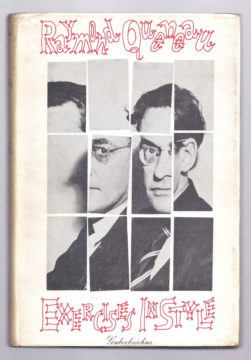 Raymond Queneau was a French novelist, poet, mathematician, and co-founder of the Oulipo group about



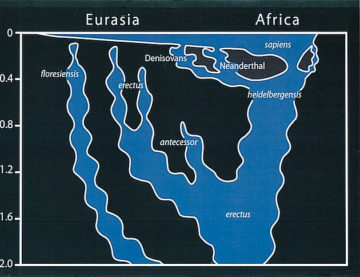
 Human minds run on stories, in which things happen at a human level scale and for human meaningful reasons. But the actual world runs on causal processes, largely indifferent to humans’ feelings about them. The great breakthrough in human enlightenment was to develop techniques – empirical science – to allow us to grasp the real complexity of the world and to understand it in terms of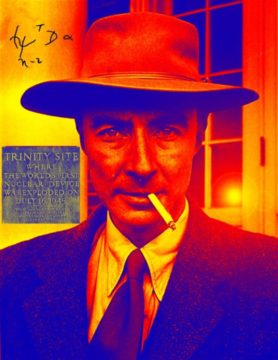
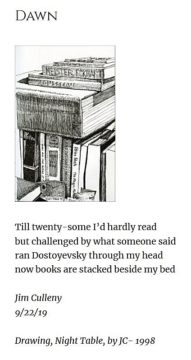
 One of the amusing things about academic conferences – for a European – is to meet with American scholars. Five minutes into an amicable conversation with an American scholar and they will inevitably confide in a European one of two complaints: either how all their fellow American colleagues are ‘philistines’ (a favourite term) or (but sometimes and) how taxing it is to be always called out as an ‘erudite’ by said fellow countrymen. As Arthur Schnitzler demonstrated in his 1897 play Reigen (better known through Max Ophühls film version La Ronde from 1950), social circles are quickly closed in a confined space; and so, soon enough, by the end of day two of the conference, by pure mathematical calculation, as Justin Timberlake sings, ‘what goes around, comes around’, all the Americans in the room turn out to be both philistines and erudite.
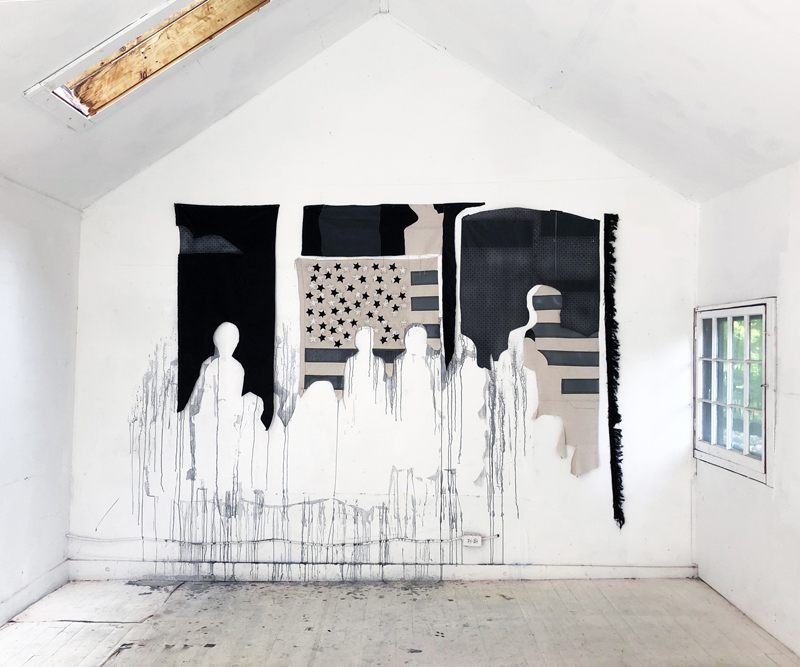 Sa’dia Rehman. Allegiance To The Flag on Picture Day, 2018.