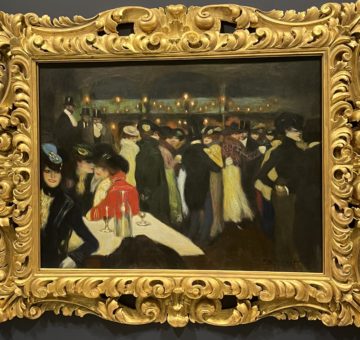
During the last half of the 20th century various groups of insiders and outsiders adopted mind-altering drugs and computer technology to create cultural spaces in which we imagined and realized new venues for the human mind. These spaces engaged fundamental issues of freedom and control, of emotion and reason, which have bedeviled humans everywhere, and elaborates them in the through modern science and technology. The psychoactive drugs which, in some sense, free us, have been synthesized through laboratory techniques we have invented, but only recently. The computers which extend our powers of control and order in often surprising ways embody logical forms that date back to Aristotle but where only recently brought to fruition in the late nineteenth century work of George Boole and others. Science and technology thus provide us with objective physical touchstones for the otherwise abstract powers and activities of our hearts and minds.
Taken together with that great Victorian invention, childhood innocence, the technologies of drugs and computers would constitute a cultural arena which served as incubator, nursery, and playground for some of the major lines of development in late twentieth century culture. For, if a society is to progress it needs cultural playgrounds where new ideas can be conceived, tested and developed. Psychedelic drugs and computing – and their associated cultures – functioned as such playgrounds in the latter half of the 20th century. They were, in fact, among the most important cultural playgrounds in America.
Given the fundamental differences between drugs and computers – what they are and how people use them, between Dionysian drugs and Apollonian computers – it is not surprising that different groups of people have been most interested in one or the other. What is most curious is that these people, and their creations, have often interacted, either directly or indirectly. In some cases, drug people and computer people are one and the same, as was the case in the San Francisco-Silicon Valley area during the 1970s. Read more »
 The second half of Frankl’s
  Human treatment of animals is a moral calamity at an outrageous scale, that I can get from zero to really quite worked up about in a matter of seconds. For fear of hurting the cause, I allow myself to take part in polite conversation about the dead bodies on the dinner table only if there is a more soft-spoken ally nearby. Two minutes into the conversation, when I find myself suppressing the urge to yell at a meat apologist how that kind of excuse might equally well be used to justify eating human babies, I am often grateful that there is somebody who can steer the conversation instead towards the socially acceptable topic of plant-based recipes.
 We’re here early this year. June has just gotten started, and after a day or two of intermittent rain with a blustery sky and a stiff wind off Lake Saimaa, fifty degrees Fahrenheit feels a lot colder than the same back in Atlanta. I’ve just learned that it hasn’t been this cold in June since 1968. It snowed today right down the road. The paper took the laconic approach and


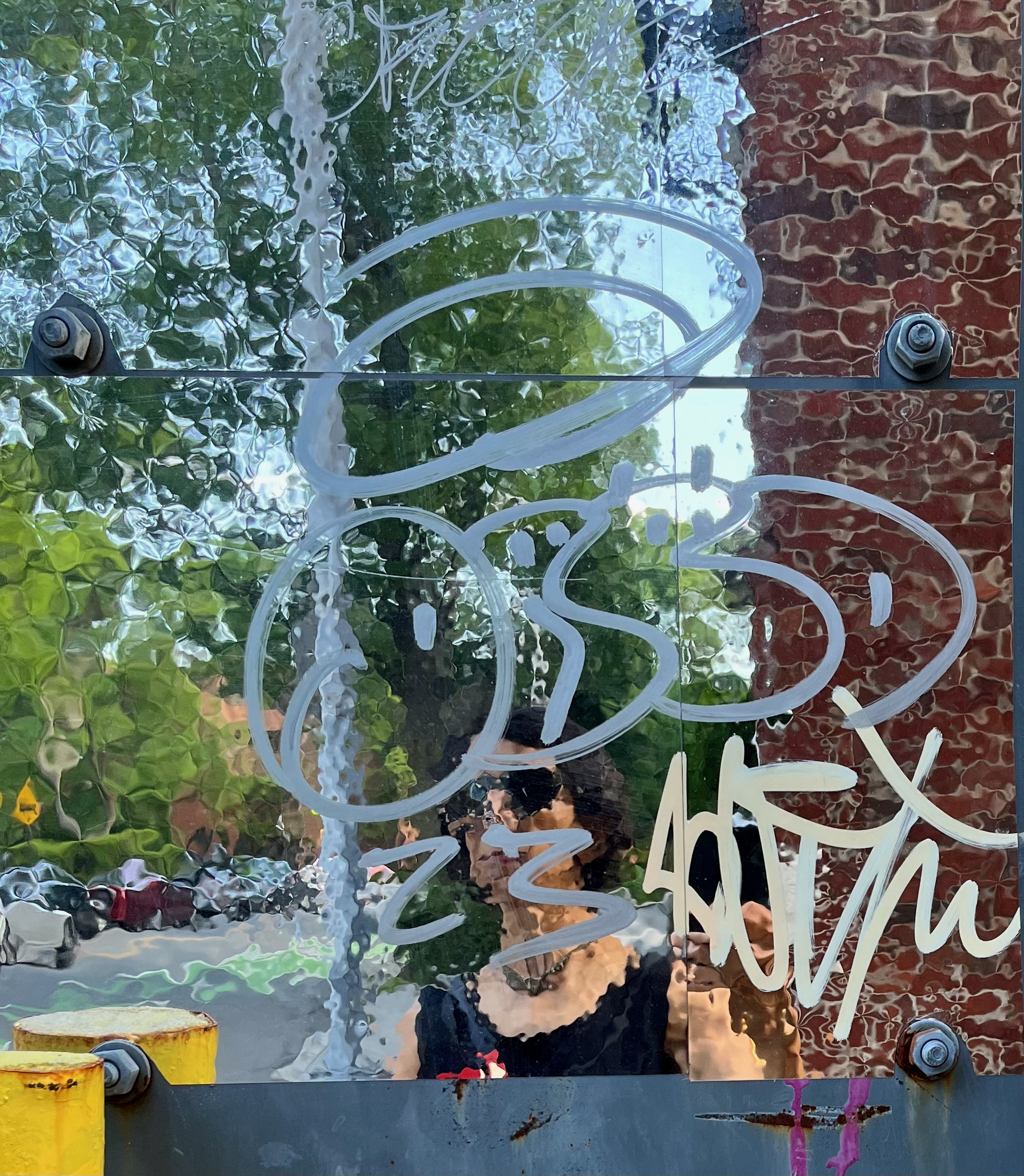 Sughra Raza. Self-portrait On Graffiti In The Rain. June 2023.
 But—let’s be honest—to me he’s Dad.
 Martyn Iles, a lawyer by training, was the managing director of the Australian Christian Lobby (ACL) from 2018 until he was