
by Barry Goldman
In my last piece I mentioned that the lawyers working on the FTX 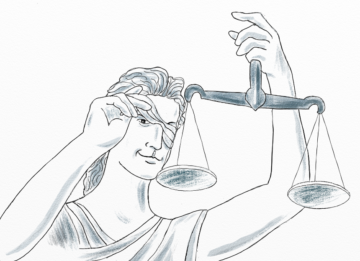 bankruptcy were billing at $2,165 an hour ($595 for paralegals). Since then we learned:
A legal team that forced Tesla’s directors to agree in July to return more than $700 million in compensation to the automaker for allegedly overpaying themselves… want[s] a judge to approve $229 million in fees, or $10,690 an hour, according to a Sept. 8 filing in Delaware’s Court of Chancery.
One of the points of my earlier piece was that the money to pay the lawyers in a civil case comes out of the deal. Lawyers, I said, eat pie. Admittedly, the FTX and Tesla cases are extreme examples, but the fact remains that our system of civil justice is an expensive one. And it is expensive not just in dollars but the way biologists use the term. It takes a great deal of time and effort, talent and resources simply to feed the apparatus. This raises the question of how such an expensive arrangement could have evolved. Wouldn’t society naturally gravitate toward a more efficient system? There are two concepts from social science that I think can help explain: agency capture and the Iron Law of Oligarchy.
Capture works like this. Suppose there is an opening on your local sewer commission. Are you going to apply? Of course not! I assume you are a responsible citizen, and you support efforts to see that public funds are expended in a careful and prudent way. No doubt. But there is no way you are going to sit on the sewer commission.
So who will volunteer to be on the sewer commission? Or the Road Commission or the Board of Manicurists and Nail Technicians? Or any of the dozens of other regulatory bodies in every political jurisdiction? The question answers itself. No one seeks those positions out of civic-mindedness. The only reason anyone serves on any of those bodies is that they have an interest in the actions they take. No one else cares enough to bother. As a result, regulatory bodies become controlled by the entities they were designed to regulate.
This is agency capture. Read more »

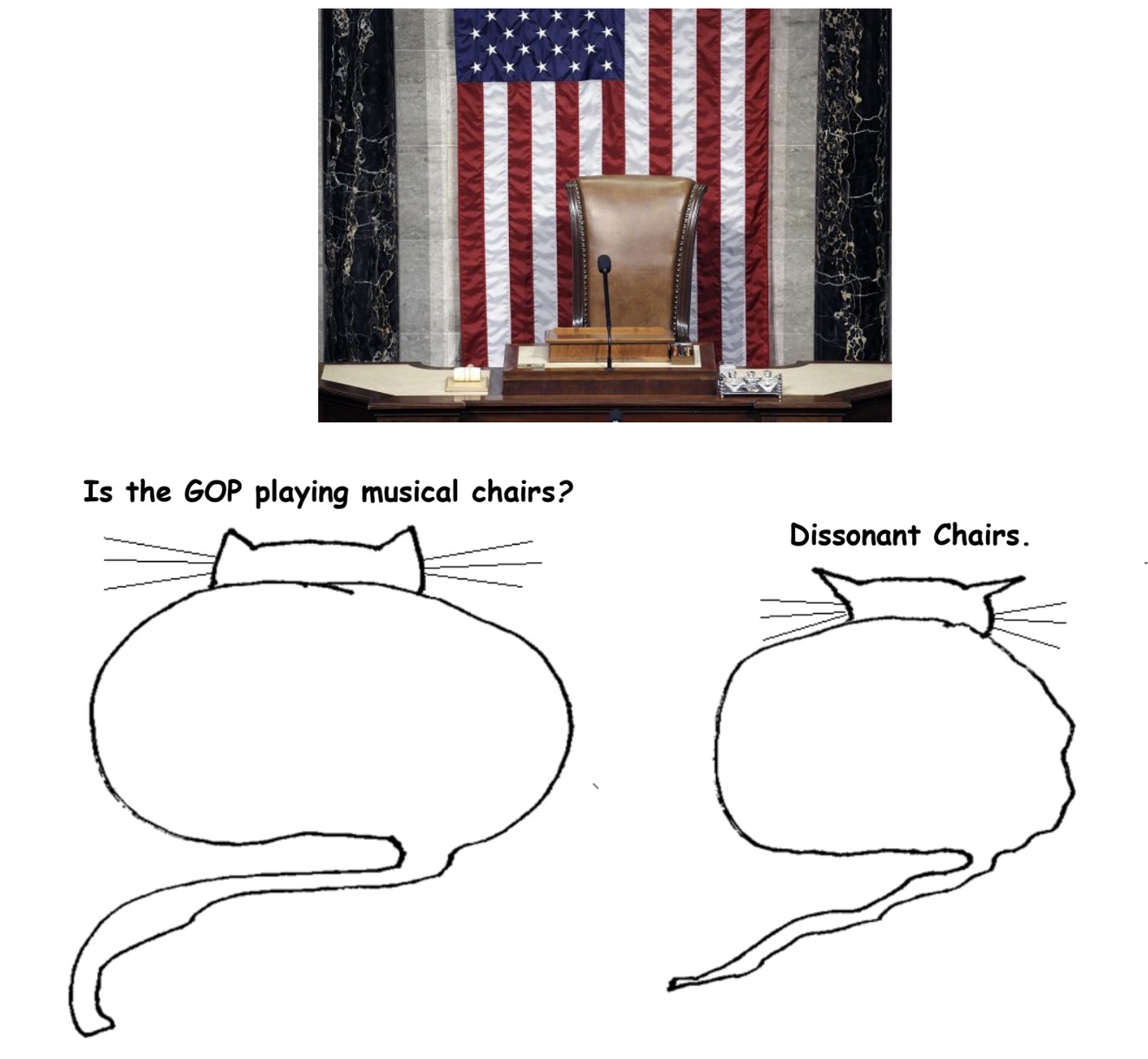
 Lightness comes in three F’s: finesse, flippancy and fantasy. The French are famous for the first. See how the delicate, sweet singer songwriter Alain Souchon transforms the heavyweight aphorism of André Malraux – the real-life French Indiana Jones who ended his career as minister for culture – from the desperate heroism of ‘I learnt that a life is worth nothing, but nothing is more valuable than life’ into the ethereal, refined song that even if you do not understand the words, you cannot help but feel the

 In 1970, Pier Paolo Passolini directed a film titled Notes Towards an African Orestes, which presents footage about his attempt to make a movie based on the Oresteia set in Africa. The movie was never made. In the same way, this article will be about a series of essays, or perhaps a book, that may never be written.
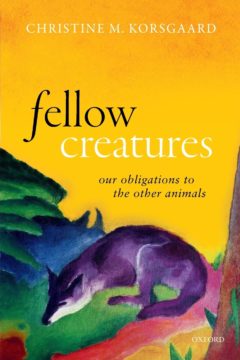 Without really looking into them, I have always felt sceptical of Kantian approaches to animal ethics. I never really trust them to play well with creatures who are different from us. Only recently, I cared to pick up a book to see what such an approach would actually look like in practice: Christine Korsgaard’s Fellow creatures (2018). An exciting and challenging reading experience, that not only made a very good case for Kantianism (of course), but also forced me to come to terms with some rather strange implications of my own views.

 The force of recent attempts to increase minority visibility in the performing arts, principally in the US, by matching the identity of the performer with that of the role—in effect a form of affirmative action—has been diminished by a series of tabloid “scandals”: the casting of Jared Leto as a trans woman in Dallas Buyers Club
  1.
1. Jeannette Ehlers. Black Bullets, 2012.
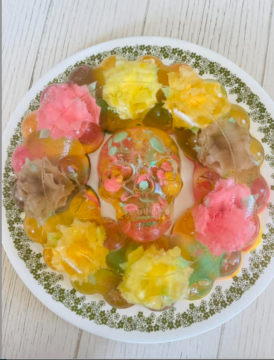 How plastic – really plastic – gelatin presents as a food. Not only in the “easily molded” sense of a pliable art material but also its transparency. Walnuts and celery, the “nuts and bolts” of gelatin desserts, defy gravity, floating amidst the cheerful jewel-like plastic-looking splendor of the 1950’s, when gelatin was the king of desserts. Gelatin’s mid-century elegance belies its orgiastic sweetness, especially the lime flavor, which is downright otherworldly. If you stir it up hot, half diluted, gelatin lives up to its derelict reputation with regard to the sickbed and sugar, being thick and warm, twice as intoxicatingly sweet, and surely terrible for an invalid’s teeth, if not metabolism. In my novel, Dog on Fire, I hypothesize that lime-flavored gelatin is the perfect murder weapon.
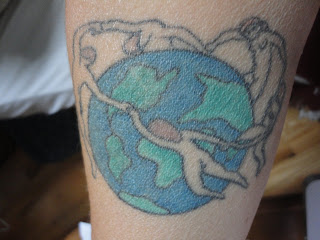 Barring that reality, and knowing this would be an ongoing, lifelong issue, I got a tattoo on my Visa-paying forearm to remind myself that my actions affect the entire world. I borrowed Matisse’s

 I am sitting on the couch of our discontent. The Robot Overlords™ are circling. Shall we fight them, as would a sassy little girl and her aging, unshaven action star caretaker in the Hollywood rendition of our feel good dystopian future? Shall we clamp our hands over our ears, shut our eyes, and yell “Nah! Nah! Nah! Nah! Nah!”? Shall we bow down and let the late stage digital revolution wash over us, quietly and obediently resigning ourselves to all that comes next, whether or not includes us?
 I first became aware of Miriam Lipschutz Yevick through my interest in human perception and thought. I believed that her 1975 paper,