My favorite tree next to the river Eisack in Franzensfeste, South Tyrol.
Enjoying the content on 3QD? Help keep us going by donating now.

My favorite tree next to the river Eisack in Franzensfeste, South Tyrol.
Enjoying the content on 3QD? Help keep us going by donating now.
by Katalin Balog
If the doors of perception were cleansed every thing would appear to man as it is, Infinite. For man has closed himself up, till he sees all things thro’ narrow chinks of his cavern. —William Blake, The Marriage of Heaven and Hell
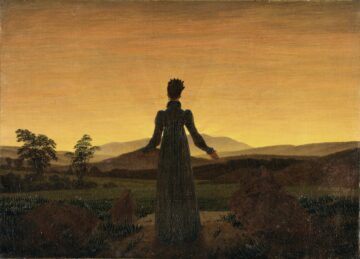
Laments about young people’s declining mental health, their inability to read novels, contemplate art, or simply pay undivided attention to anything at all have reached a panicky intensity lately. Not being particularly young, I can distinctly remember a time when things were less dire in this regard (except for the mental health part, having grown up in Eastern Europe…). We loved the films of Antonioni, Bergman, Tarkovsky, and Tarr, whose slow pace, for the most part, would be out of the question in today’s film industry. We were able to entertain ourselves without being entertained.
I propose that there is a common thread to these problems, and of course, they don’t only afflict the kids. We are all losing our ability to engage in a way of thinking I call contemplation. Young people are in an especially difficult place: whereas older people still remember and possess that ability to some degree, younger people have not had much opportunity to pick it up in the first place. And while it always required a certain amount of leisure and cultivation, a certain amount of groundedness and prosperity, today, contemplation is widely underappreciated and is in decline.
Contemplation is more than simply having experience; not all experiencing counts as contemplation – otherwise, we would all be automatically non-stop contemplators! In contemplation, experience is “held” in attention and explored without a particular goal in mind. This is different from other forms of attention deployed in thought or perception, which are fast-moving and task-oriented. Contemplation happens in small ways every time we stop to appreciate the world as we experience it, every time we are present for what is happening in a deliberate fashion, rather than breezing through in automatic pilot (or being absorbed in thought to the exclusion of experience). This could be a momentary lingering on someone’s body language or the way they express themselves. It could be an experience of merging with the natural environment. It could be a state of reflection reading a novel or poem. It could be just sitting and mulling over some experience of the day. Thomas Nagel said that there is “something it’s like” to have an experience. Contemplation then is attention to what it’s like. Read more »
by Mark Harvey
“Democracy is the theory that the common people know what they want, and deserve to get it good and hard.” –HL Mencken

I’ve always loved Winston Churchill’s comment about his political rival Clement Attlee: “He’s a modest man, a lot for which to be modest.” Churchill himself was not a modest man, and when asked how he thought history would treat him, he responded, “History will be kind to me, for I intend to write it.” He did go on to write a significant historical tome titled The History of the English Speaking People and even won the Nobel Prize in literature for his writing and oratory. You could turn the phrase on its head to describe Churchill, the man who saw Hitler’s evil early on and helped lead the allies through World War II: he’s an arrogant bastard, and a lot for which to be arrogant.
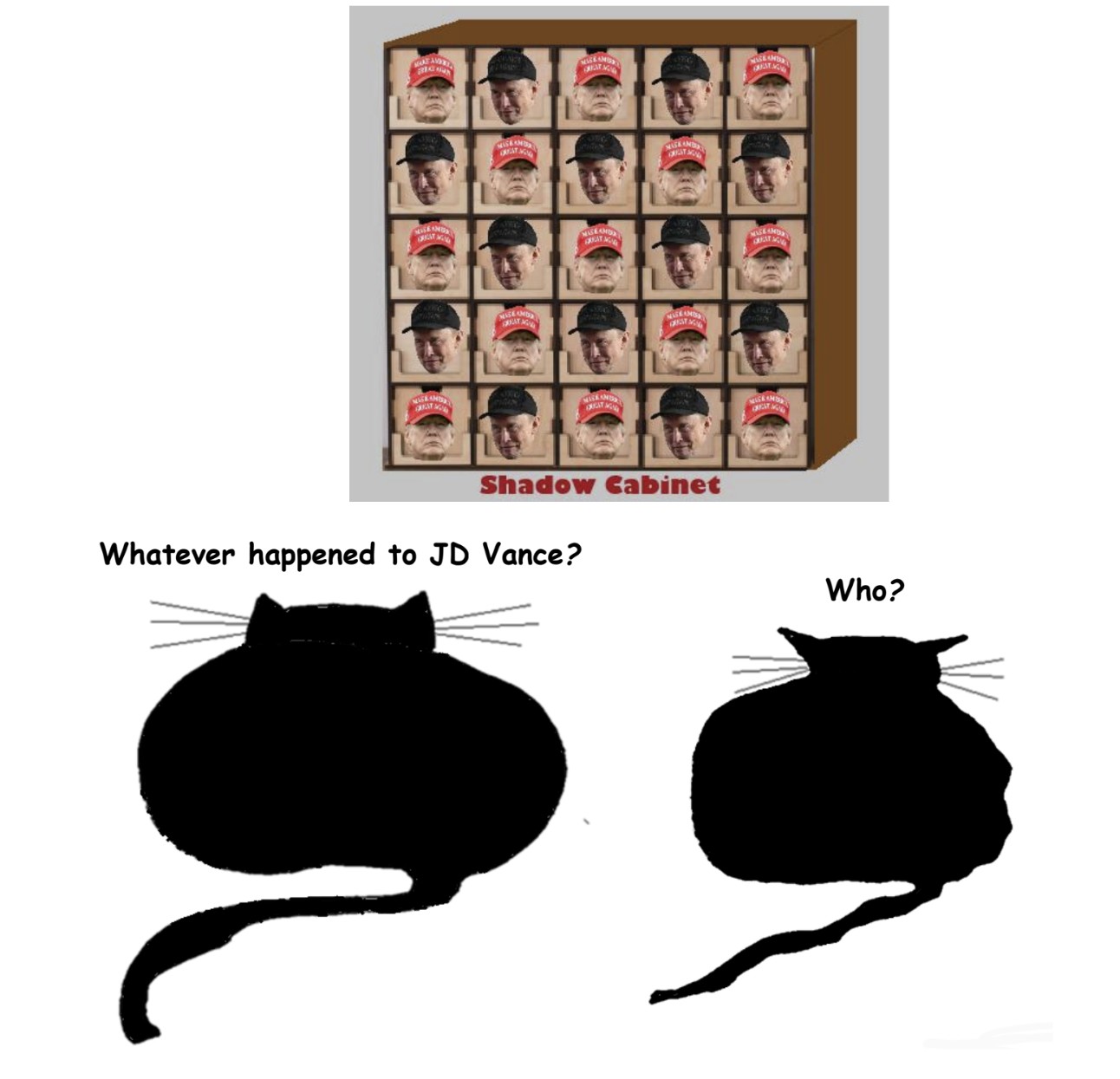
America’s arrogance and individualism seem to be at a grotesque peak right now with our choice of president in the recent election. We’ve chosen perhaps the most arrogant man in history for a second term in the Oval Office. This is a man who compares himself to Lincoln and Washington, hinting that he might be greater than either one. Take a seat, Jesus Christ, your miracle work pales in comparison to his Eminence at Mar-a-Lago.
But it hasn’t always been so, and it’s good to remember those great American leaders who exhibited a healthy modesty, even those who had nothing to be modest about.
Our very first president, George Washington, though a snappy dresser, was modest to a fault. Upon being made commander of the Continental Army in 1775, he said, “I beg it may be remembered, by every gentleman in this room, that I this day declare, with the utmost sincerity, I do not think myself equal to the command I am honored with.” Washington was, of course, up to the task, probably more than any man alive at the time. Without his warring capacity, we might all be eating mince pies and Cornish pasties.
But he truly had little stomach for public appointments and certainly did not seek the presidency. After the long and bloody war fighting the British, Washington’s sole desire was to return to his wife, Mount Vernon, and his love of farming, or, as he put it, “to the shades of my own vine and fig tree.” Read more »
 Julya Hajnoczky. Boletinellus Merulioides, 2021.
Archival pigment print.
Enjoying the content on 3QD? Help keep us going by donating now.
by Bill Murray
 Maybe it’s defeat in a short, sharp war far from home. Maybe Russia captures Ukraine, or China attacks Taiwan. Maybe nothing happens yet, maybe it’s four or eight years away, but however the big change comes we’ll all agree the signs were there all along.
Our executive branch is hobbled by an exhausted leader. Our legislative branch is unable to legislate and our Supreme Court has found sudden delight in partisanship.
This election was exhausting. We just got a lesson in how riven America is, culturally and politically. Until President Biden stood down, our political parties had both put up candidates unfit for the presidency. And yet one of those candidates is now set to govern.
After months of total immersion in the campaign, and in place of recriminations and hand wringing, this might be a good time to put down our partisanship and consider America’s place in the world.
As soon as we raise our heads from our screens it’s clear: the United States is promising the world more than it is prepared to deliver. It has no business claiming it can defend Europe against Russia and Taiwan against China at the same time. You know it, every international player knows it, and if America continues to claim that it’s so it will be called out soon enough.
So we need to make some changes. This was going to be true whichever party won the election, and if America gets the coming decade wrong, time-tested elements of the US-underwritten world operating system (US OS) will struggle to endure.
I argue not from ideology but from pragmatism, and maybe a bit of dated idealism. Read more »
by Carol A Westbrook

This autumn we had to buy two cars.
If you are a typical, average, middle-class American, there are times in your life when you have to buy a car. Americans take car ownership—and car buying—very seriously. Since cars and their accessories (insurance, maintainence, repair, e.) occupy such a large part of the family budget, selecting the right one becomes one of the most important decisions that you can make as a family or an individual. And there are many sources of help, from innumerable magazines like Car and Driver, Consumers’ Report, etc., television review shows, friends and relatives. We were fortunate to have a guardian angel in our quest—Chris, a longtime friend who happens to be an automotive engineer who works for General Motors’ building the infotainment systems in their electric vehicles.He was a great source of information for us, and convinced us to look at electric vehicles (EV’s).
We needed two vehicles to keep up with our family and work obligations. Rick needed a new car as the cost of upkeep for his 13-year-old BMW was almost as much as the cost of the car itself. And I was recovering from a motor-vehicle accident which left my 3-year-old SUV so damaged that my insurance company declared it totaled—and provided me with a comfortable settlement that would allow me to purchase a moderately priced car. After much discussion we decided it was time to go electric. We would each purchase electric vehicles (EV’s). And I was insistent that our cars had to have color—no more white, black or gray.
We shopped carefully to get the best deals. Rick found that Hertz was selling off its fleet of Tesla Model 3 EV’s. Although Teslas were considered luxury cars, they were not popular with Hertz customers, most of whom had no experience with EV’s. As for myself, I did not see myself driving the sport-car-like Tesla with its fast acceleration; I preferred a replacement SUV that was sedate, safe and stylish. I scoured used-car sites to find a Chevy Bolt. A red Chevy Bolt. There were government incentives in the form of tax rebates for purchasing a used EV. We also learned that EV’s do not age like Internal Combustion Engine (ICE) autos, because EV’s have so many fewer moving parts than ICE autos. One hundred thousand miles on an EV is not the same as it is on a ICE auto. It is possible to get a good deal on a car with high mileage because the seller does not understand this!
Soon we had two shiny, almost-new, red cars in our driveway. There was my 2022 Chevy Bolt EUV, and Rick’s 2023 Tesla Model 3. At first glance, they look like any other cars. But look carefully—no exhaust pipes! Read more »
Are you looking at me? I say to the mountain
which moves as I run the tiller down the row.
But it may not be the mountain I engage.
Are you talking to me? I say to the pale moon
which sits upon the mountain like a ghost ball.
But maybe the moon is not the ghost in this conversation.
The Briggs and Stratton snorts. The Troy’s deep-treaded
rubber turns. The Buddha in the engine barks. The tines
lift clumps of secret earth buried beneath hard sod.
Are you censuring me? I say to the crow
who stands off like an incriminating shadow.
But the crow may not be the shade to whom I speak.
Soon spinach will be sprouting in these rows.
The prints I leave in the soil behind the tiller
will have been smoothed over by a rake.
Are you rattling my cage? I say to no one in particular
who is mute as the scent of dark humus overturned.
Jim Culleny, 4/7/2010
by Barry Goldman
“Who is rich?” the Talmud asks. “He who is satisfied with what he has.”
By that measure, I’m richer than Musk and Bezos. I’m richer than Stephen Schwartzman, head of the Blackstone Group. Far richer than Trump. It’s a nice feeling.
Part of the explanation for this is that I am an old man. Getting and spending is a young man’s game. I have no interest in new toys. Part of the explanation has to do with my particular circumstances. I have been very lucky. But the bulk of the explanation has less to do with how much I have than with how little I want.
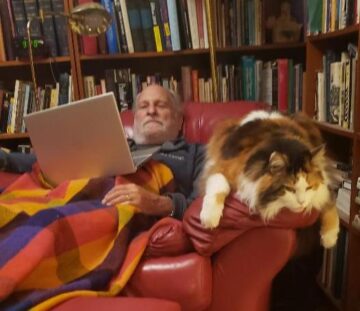
I like to sit in my reclining chair with my feet on the footrest and Gracie, one of our Maine Coons, on the arm rest. We are in precisely this configuration as I write. I don’t see how my condition would improve if I had a 25-room house. Or a private island in the Caribbean.
There is a wonderful story about Diogenes the Cynic and Alexander the Great. It seems Diogenes was relaxing in the sunshine one afternoon when Alexander walked over. He said, “I’m Emperor Alexander the Great, ruler of the known world. I control limitless wealth of every description. They tell me you’re Diogenes, and you’re very wise. What can I do for you? Name it and it’s yours.” Diogenes said, “Could you move over, you’re blocking my light.”
I feel like that. I don’t want Jeff Bezos’ yacht or Stephen Schwartzman’s mansion. I don’t see the point. I can only sit in one chair at a time, and I’m already sitting in one.
I am not saying this to brag about my virtue. My attitude isn’t virtuous. Bezos’ and Schwartzman’s attitude is pathological. Read more »
by Eric Schenck

Rowing is a sport that you naturally underestimate. You think of canoes, of guys with perfect hair, of leisurely strolls on a lake while the glorious sun shines down.
From my experience, that’s not even close to the truth.
In reality, it’s brutal. If you’re doing it right (going fast) rowing is torture for the body. Not canoes, but long shells that only move if you do. Not perfect hair, but blacked out vision and legs on fire. Not a glorious sun, but on the water by 6 AM and a January river that doesn’t care how freezing you are.
Rowing will chew you up and spit you out.
And it’s worth every second. Read more »
by Philip Graham
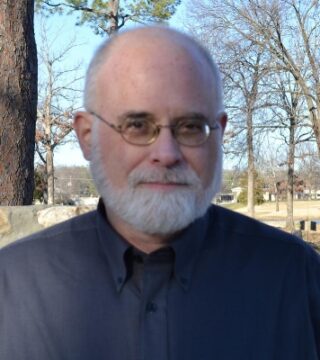 For over twenty years I have been in awe of David Jauss as a writer, as a colleague and teacher, and above all for his insight into the contradictory human heart. His short stories have been gathered together in two essential collections, Glossolalia and Nice People, and many of these stories, I believe, take their rightful place among the best short fictions in American literature. He is a master of the precise, illuminating moment, and the clarity of his prose is deepened by his parallel work as a poet.
It’s not surprising that his poetry collections, Improvising Rivers and You Are Not Here, are, in turn, informed by his work as a fiction writer. Jauss’s poems aren’t afraid of the tug of narrative. And because of his love of music, particularly jazz, he is more attuned than most writers to the importance of rhythm, unexpected harmonies, and structural invention in writing, whether prose or poetry.
Jauss is also the author of two important collections of craft essays, Alone with All that Could Happen, and, most recently, Words Made Flesh. David and I were colleagues for ten years at the Vermont College of Fine Arts, and I remember quickly learning to attend his craft lectures. David knew how to see through the common clichés of creative writing advice, whether it might be the accepted modes of characterization, the “flow” of prose rhythm, use of epiphanies in short fiction, or constricting notions of what constitutes a plot. The audiences for his lectures were always filled with both students and fellow faculty members because we knew that, when David spoke, we would all become his apprentices, and happily so. Read more »
by Gary Borjesson
Dwell as near as possible to the channel in which your life flows. —Henry David Thoreau
What does being true to ourselves feel like? The question goes to the heart of authenticity. Rousseau viewed our innermost feelings—the feeling of our existence (“le sentiment de l’existence”)—as a guide to authenticity and contentment. Nowadays we’re familiar with the notion that to find our way in love and work, we need to get in touch with our true feelings. Authenticity has even been equated with feelings, as if our felt sense were the only trustworthy guide to our lives.
In fact, authenticity is not a feeling, but an active way of being defined by conscious attention to the fit between who we are and the situation(s) in which we find ourselves. (See my previous essays in 3QD, here and here, for more on the meaning and practice of authenticity as an ethical ideal.) That said, our feelings do crucially guide our (ongoing) discovery of what it means to be true to ourselves.
But in order to be good guides, we need to know a few things about them. Here’s a big one: feelings are not as much “our own” as we might think. Our brain and the rest of our body evolved for engaging with our surroundings, meaning that our feelings are shaped and prompted partly by external factors. We’ll see that we cannot even know where our feelings are coming from unless we examine them.
To do that, and to start exploring how feelings inform authenticity, let me ask you to notice what you’re feeling right now. What word or words best describe this feeling? I’ll come back to why I ask. Read more »
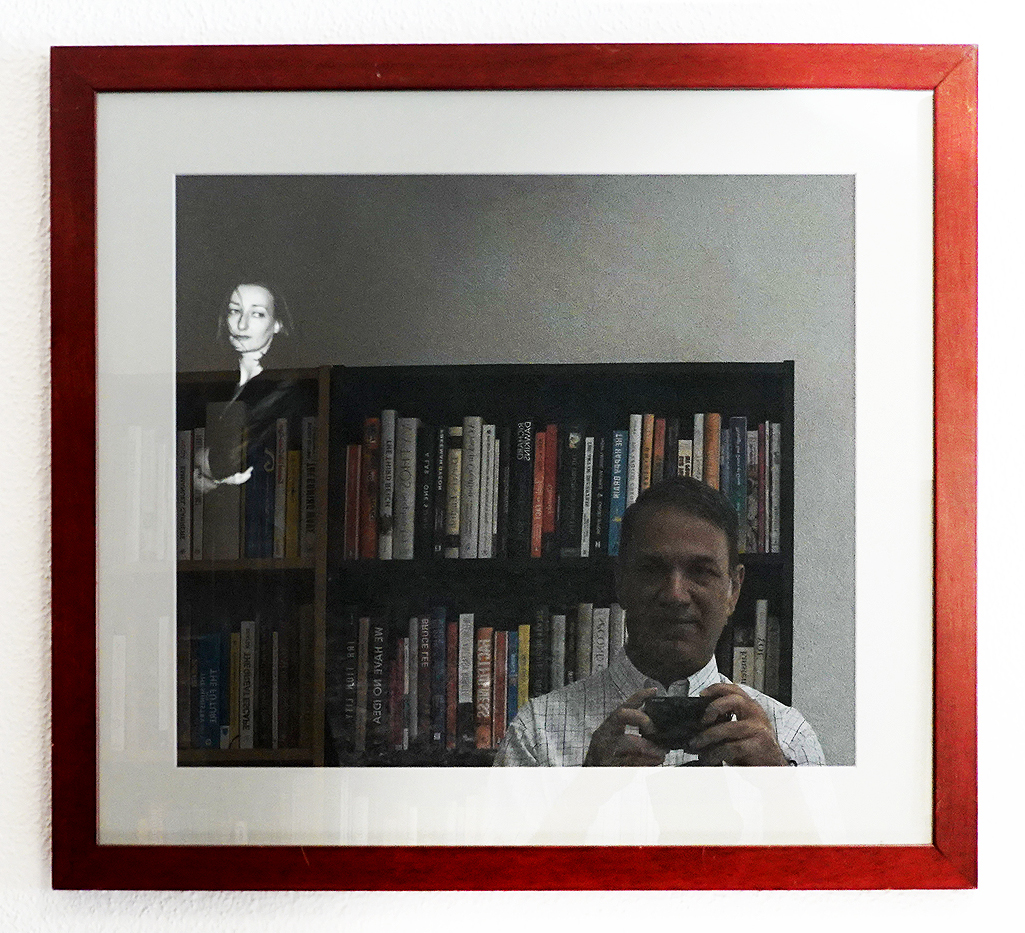
I went a bit “meta” this week with this self-portrait by reflection in a framed photograph of my wife taken by Tanyth Berkeley which hangs in my office.
Enjoying the content on 3QD? Help keep us going by donating now.
by Rebecca Baumgartner
A seat by the fire
I remember listening to President Obama’s first Inaugural Address fifteen years ago because of something Obama said which, according to the political pundits, had never been expressed in a Presidential speech before. This was the moment in question:
“For we know that our patchwork heritage is a strength, not a weakness. We are a nation of Christians and Muslims, Jews and Hindus, and non-believers. We are shaped by every language and culture, drawn from every end of this Earth; and because we have tasted the bitter swill of civil war and segregation, and emerged from that dark chapter stronger and more united, we cannot help but believe that the old hatreds shall someday pass; that the lines of tribe shall soon dissolve; that as the world grows smaller, our common humanity shall reveal itself…” (italics added)

I had never heard a politician mention non-believers before. Nor had the rest of the country. Obama was stretching the definition of American pluralism further than it had typically been stretched, certainly further than it had ever been stretched in a mainstream political speech. A few journalists commented on it in the days following the speech, but the nod to non-believers was hardly the most significant moment of that day.
Unless, that is, you were one of those non-believers, inured to years of prayers and biblical references in every public speech and ceremony (including elsewhere in Obama’s own speech); inured to saying “One nation under God” in school; inured to all the ways that the Establishment Clause and Free Exercise Clause of the First Amendment are routinely violated in public buildings and by those in elected office.
These speeches, buildings, and laws are for all of us, but in practice they are treated as belonging to only those Americans who hold specific religious beliefs. Here, at last, was a President explicitly welcoming non-religious citizens to a seat by the fire: my fellow Americans. Read more »
by Mike O’Brien

It has been a busy few months in the field of animal studies. It seems like every month is a busy one for animal studies these days, which is salutary. As a hobbyist follower of this area of study, every time I turn around there is a new line of research to catch up on. All the better for me, as it eats up reading time that might otherwise be spent doom-scrolling through the latest outrages and tragedies. Save me from myself, you heroes of scholarship.
The first item of note is the honouring of Lori Gruen as “Distinguished Philosopher of the Year” by the Eastern division of the Society for Women in Philosophy, an American organization that has been supporting and promoting women philosophers for over fifty years. Gruen is a prolific and influential figure in the ecofeminist tradition, focusing mainly on environmental and animal ethics as well as on the ethics of incarceration, and has published extensively over the last three decades. She has also been a mentor, collaborator and co-author with many other people in the field, and I have come across her work several times over the last few years while reading through other researchers’ bibliographies.
I haven’t read enough of her work or ecofeminist work generally to have a well-informed opinion of it, but my not-well-informed sense is that it leans towards normative ethics and elaborating the entailments of posited moral facts, which is outside of my preferred meta-ethical wicket. (Once the worm of Nietzschean critique gets into your brain, it becomes difficult to find any enthusiasm for the discovery or analytical definition of moral facts). I also have some general misgivings about the essentialist bent of much of the ecofeminist work that I’ve encountered (e.g. relational ethics is feminist, empiricist science is patriarchal), which has kept me from engaging with that literature more than incidentally. I nevertheless remain open to the possibility that these impressions are mistaken and, given that most of the targets of ecofeminist critique are certainly real and disastrously powerful, I am glad that they have their oars in the water, paddling in roughly the right direction. This is a common muddle in normative ethics, where some things are so obviously wrong (animal cruelty, systemic racism, environmental destruction) that a very wide swath of viewpoints can converge on a common conclusion despite profound disagreements about facts, values and methods.
Coincidentally, Gruen co-authored an entry in the Stanford Encyclopedia of Philosophy (the Wikipedia of academic philosophy) on “The moral status of animals” with another animal philosopher who has been in the news of late. Susana Monsó, whom I have mentioned in earlier columns owing to her co-authorship with Kristin Andrews of several works, has been hitting the interview circuit to discuss her book “Playing Possum: How Animals Understand Death”, newly translated to English. The book explores the experience and understanding of death among non-human animals, using examples from wild and captive creatures to argue that many animals do in fact have a concept of death. Read more »
by Rachel Robison-Greene

In 524, the Roman philosopher Boethius was imprisoned in exile awaiting his execution. He was used a as a political tool and was convicted on false charges, including the charge of sorcery. In these dire conditions, he wrote The Consolations of Philosophy in which his muse, Lady Philosophy, appears to him to provide her “doctor’s help” for his anguish. She speaks to him in verse,
Why then are miserable men in awe
When tyrants rage impotently?
If you first rid yourself of hope or fear
You have disarmed the tyrant’s wrath
But whosoever quakes in fear or hope
Drifting and losing mastery
Has cast away his shield, has left his place
And binds the chains with which he
Will be bound.
The advice that Lady Philosophy imparts to Boethius resembles that offered by the Stoics—we cannot control external circumstances. We can’t prevent people from being ignorant and cruel. We can’t stop tyrants from manipulating and harming people in pursuit of power. Chaos, suffering, and death are inevitabilities. In challenging times, we must focus only on what we can control—what is in our own minds. For Boethius and for the Stoics, desperate times (and all other times) call for a turn toward philosophical reflection on the nature of virtue and of the good life.
In The Enchiridion, the former slave turned Stoic philosopher Epictetus takes the idea that we ought not to be concerned with what is outside of our control to an extreme. He says,
With regard to whatever objects give you delight, are useful, or are deeply loved, remember to tell yourself of what general nature they are, beginning from the most insignificant things. If, for example, you are fond of a specific ceramic cup, remind yourself that it is only ceramic cups in general of which you are fond. Then, if it breaks, you will not be disturbed. If you kiss your child, or your wife, say that you only kiss things which are human, and thus you will not be disturbed if either of them dies.
Most people in search of a philosophy for hard times would be unlikely to go this far. What is needed is a path forward that allows us to cope with tragedy and injustice without abandoning the value of people we care about or the issues we find important. We long for solutions that ease our anxiety but also provide us with reasons to live. Read more »
by Derek Neal
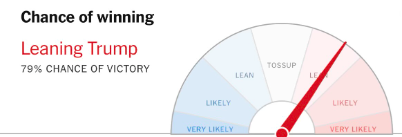 On November 5, 2024, at around 10:30 pm, I walked into a bar, approached the counter, and sat down on the stool second from the right. I ordered a stout because there was a slight chill in the air. As this was the night of the American presidential election, I pulled out my phone and checked The New York Times website, which said Donald Trump had an 80% chance of winning. This was my first update on the election, and it seemed bad. I put my phone back in my pocket and took a sip of the stout. A man entered the bar and sat down next to me, on my right. There was a half-drunk glass there, and I realized he’d gone out to smoke but had probably been at the bar for a while. Besides us—two solitary men at the bar—the rest of the place was busy, full of couples and groups who seemed to be unconcerned with the election. This may have been because I was in Canada, but my experience of living in Canada for the past four years has shown me that Canadians are just as interested in American politics as Americans are, if not more so. My work colleagues had been informing me of the key swing states, for example, while I had simply mailed in my meaningless Vermont vote and returned to my life. I had no idea who would win this election.
Over the course of my two and half hours at the bar, I ended up in conversation with three different men. M. was the man to my right. I’m normally not much of a talker, but the election provided an easy conversation starter. “Are you following the election?” I asked him. It was loud and I had to repeat my question. M. mumbled that he wasn’t but asked how it was going. “Looks like Trump might win,” I said. M. raised his eyebrows, which were flecked with grey, and said something along the lines of, “Well, he has some ideas.” I had trouble making out what M. was saying, partly because of the noise in the bar, but also because M. spoke so softly. It was as if he didn’t believe in the importance of his own words. Talking or not talking, it didn’t seem to matter to him.
I pulled out my phone again. Trump was at 82%. I showed M. Then he took out his phone, a flip phone. “I’ve still got this old thing,” he mumbled. This seemed like an opening for a new conversation—a discussion on the merits of “dumb” phones versus smartphones, on phone addiction, on attention. “Why’d you get one of those?” I asked M., gesturing at his phone. He looked away and started talking about privacy with smartphones, and how he didn’t want people tracking him, or something along those lines. “How do you like the flip phone? How long have you had it?” I asked. M. said he’d had it since 2016, and that it didn’t cause him any problems because he didn’t have a job, but it sure made meeting women difficult. Read more »
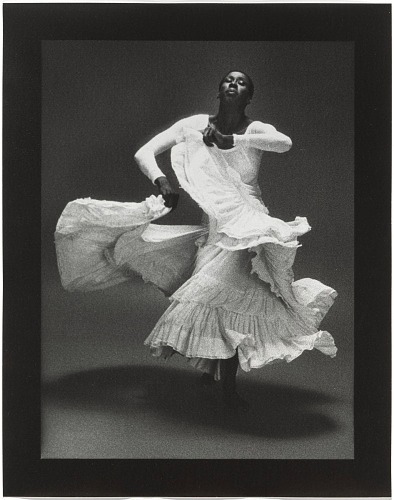 Max Waldman. Judith Jamison in “Cry”, 1976.
“This 1976 portrait by Max Waldman shows Judith Jamison dancing her signature role in “Cry,” a ballet described as “a hymn to the sufferings and triumphant endurance of generations of black matriarchs.” – Smithsonian.
Legendary dancer Judith Jamison died on Nov 9, 2024. She was incredible to watch!
Enjoying the content on 3QD? Help keep us going by donating now.
by Martin Butler
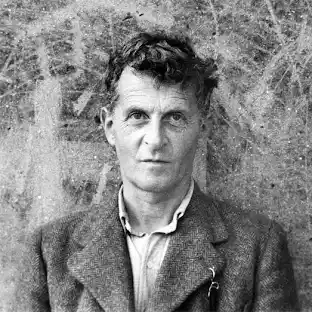
Fewer than half the population in the UK believe in God according to the latest surveys, even though religious belief is growing globally and the heady days when the ‘new atheists’ were in full flight are now behind us. The internet has given those on opposite sides of the fence the opportunity to lock horns continually, each side determined to show the irrationality if not downright stupidity of their opponents. I wouldn’t expect the level of debate to be particularly high, but what I do find slightly depressing is the complete absence of anything but the crudest understanding of what belief in God and religious belief in general actually means. Both sides mostly embrace the ‘God of the gaps’ theory – science cannot explain everything, runs the argument, and God serves as a kind of backstop to account for the unexplained.
Ludwig Wittgenstein, one of the most important philosophers of the 20th century can, I think, help us to develop a more sophisticated conception of religious belief.[1] Despite never producing anything close to a philosophy of religion, the religious point of view was clearly important to him throughout his life: ‘I am not a religious man but I can’t help but seeing every problem from a religious point of view’ (RW p79). Although, Elizabeth Anscombe, a devout Catholic and one of his most famous pupils, once declared that ‘nobody understood Wittgenstein’s views on religion.’[2]
Wittgenstein famously produced two quite distinct approaches to philosophy, the first in the only book he published in his lifetime, Tractatus Logico-Philosophicus, and the second in the Philosophical Investigations, published posthumously; although there have been many other publications over the years of his extensive notebooks and conversations. Towards the end of the Tractatus several important remarks set the stage for his approach to religious belief through both periods of his philosophy. ‘We feel,’ he says, ‘that even when all possible scientific questions have been answered, the problems of life remain untouched’ (TLP 6.52).
It is with these ‘Lebensprobelme’, which cannot be ‘solved’ through science, that religious belief is concerned. The problems of life cannot be stated as genuine questions since if they could, factual answers describable by science could be given: ‘If a question can be framed at all, it is also possible to answer it’ (TLP 6.5), whereas the problems of life are concerned with what cannot be said – what he refers to elsewhere as the mystical. Read more »