by Anton Cebalo
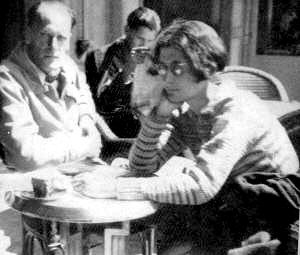 In the past decade, the writer Simone Weil has grown in popularity and continues to provoke conversation some 80 years after her death. She was a writer mainly preoccupied with what she called “the needs of the soul.” One of these needs, almost prophetic in its relevance today, is the capacity for attention toward the world which she likened to prayer. Another is the need to be rooted in a community and place, discussed at length in her last book On the Need for Roots written in 1943.
The question of “rootedness” was a pressing problem, particularly for the first half of the 20th century. In the preface to The Origins of Totalitarianism, philosopher Hannah Arendt noted that the two world wars had produced “homelessness on an unprecedented scale, rootlessness to an unprecedented depth.” As empires and homelands collapsed after WWI, so many were uprooted from the only worlds they had known. And their newfound superfluous condition led many of them toward “fictitious homes” in the postwar years to disastrous results. Indeed, abstract loneliness had become “an everyday experience of the ever-growing masses of our century,” wrote Arendt, which had rendered them vulnerable to totalitarianism. Uprootedness, it seemed, was partly to blame for Europe’s destruction.
Writing earlier than Arendt in 1943, Weil arrived at a similar conclusion in asserting that “rootedness” was a fundamental need of the soul. In On the Need for Roots, she begins her re-rooting of humanity by outlining a few vital ingredients that are required for healthy nourishment. Yet, the key to her idea of rootedness lies in it establishing linkages to the past and future, forming an assemblage of parts that together provide one with necessary meaning. Such relational thinking often appears in Weil’s writing, as does the Greek word “metaxy” which means an “intermediary” or an “in-between place.” Of course, roots can so often be distorted, manipulated for nefarious ends, and imagined as myth. But given that we are intrinsically social beings, the need for roots as a fundamental fact of life remains sacrosanct. Read more »

 In debates about hedonism and the role of pleasure in life, we too often associate pleasure with passive consumption and then complain that a life devoted to passive consumption is unproductive and unserious. But this ignores the fact that the most enduring and life-sustaining pleasures are those in which we find joy in our activities and the exercise of skills and capacities. Most people find the skillful exercise of an ability to be intensely rewarding. Athletes train, musicians practice, and scholars study not only because such activities lead to beneficial outcomes but because the activity itself is satisfying.

 I’m excited about the imminent Halloween publication date of
  South Asian literature. As part of this, I was delighted to be sent


 The most intimidating item by far was


 Shilpa Gupta. Untitled 2009.