
Brave Horses and Insufferable Horsey People

by Mark Harvey

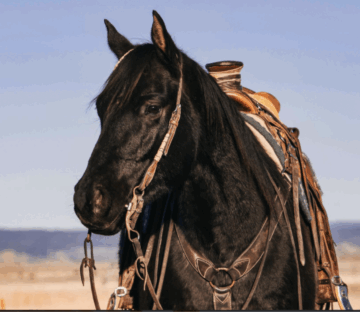
Mexico, the Horse

I have a horse named Mexico that tore one of his legs to shreds last week when he got caught in a wire fence. It was a bit of a fluke because we try to keep our fences tight and well-maintained. But one morning, a herd of 50 elk ran straight through the fence, leaving a twisted mess of wire. Mexico was grazing in that pasture and innocently stepped into the wire and then fought like hell to get out. He’s a horse with the sound temper of a saint, but any horse that gets a leg trapped will fight with all the force taught them through a million years of evolution. He was a mile from any trailer, and we had to limp him slowly off the meadow.

When we got him down to the barn, we loaded him up with three grams of phenylbutazone, better known as bute in the horse world, to ease the pain and give us a fighting chance of getting him in the trailer. Even with the bute running through his veins, he had a hard time bearing weight on the injured leg, and it took a long while to load him.

This is an animal with one instinct: to please. He is an ears-always-forward horse, seems to enjoy human company as much as the company of his hoofed friends, and rarely spooks at anything. He stands patiently when being shod, occasionally bending his neck as if to check on the quality of the farrier’s work.

He was sweating profusely through the pain and trauma, and it hurt all of us to watch him try to get into the trailer, even with the help of a ramp. Somehow, when animals get injured, we take it more personally than when human beings get hurt. At least I do. I joked to my ranch foreman that if it was him who had gotten cut up in the wire, I’m not sure I’d bother taking him to the vet—even if I could get him in the trailer. Read more »
Monday, October 23, 2023

Remembering Rey

by Mark Harvey

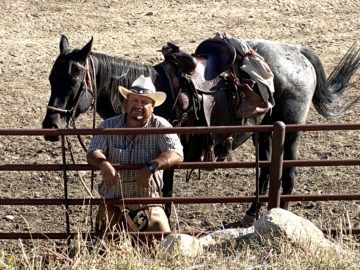
Rey Rodriguez, photo by Mark Harvey

A week before he died, I drove my good friend and ranch foreman, Rey Rodriguez, to Denver to catch a bus to Chihuahua, Mexico. He was taking a two-week vacation to visit his family there. On the three-hour drive to Denver, we practiced answering questions for the test given to immigrants applying for US citizenship. He had downloaded 100 potential questions onto his phone and had been studying for more than a year to take the test. I often wondered why he didn’t take the test sooner because he had the questions down. Most of the test is composed of the sort of useless memorization you’d find in an American high school in 1950.

Who was Benjamin Franklin? What do the fifty stars on the American flag represent? Where is the Statue of Liberty? Who wrote the Declaration of Independence?

I have no idea how this test ensures that an immigrant will make a good citizen other than ensuring that the applicant knows far more about American history than the complacent homeowner in Pasadena, California, going all red-faced about keeping “illegals” out of ‘America—between bites of avocado that the “illegals” planted, picked, and packed.

We probably went through 60 questions and Rey didn’t miss one. My suspicion is that Rey had very mixed feelings about becoming an official gringo. Like many Mexicans, he had done the Mexico-America dance for years. Traveling great distances from Chihuahua to places like Yuma, Colorado, to work on a giant feedlot, the Central Valley of California to harvest vegetables, or western Colorado to work on our ranch.

He liked America okay and admired certain things about gringos. But his heart and soul were in Mexico. America was a way to stay afloat financially. I asked him what the average wage of a ranch worker in Mexico was and I reckon American ranch workers make in the neighborhood of 10 times as much. Read more »