
by Mark Harvey

The biggest hazard on my one trip to Minneapolis was being invited to too many family picnics and possibly dying from an overdose of mayonnaise. You have to go to Minnesota to really experience what’s known in the vernacular as Minnesota Nice. The term springs from the sincere desire those northern people have that you’ll take a second helping of bratwurst and potato salad, then get home safely, and call your host or your family when you do. It’s kind of wonderful and kind of smothering, akin to having one too many comforters on your bed.
So I don’t think too many of us were expecting Minnesota to be our modern-day Gettysburg, when all those nice people came out onto the streets to fight Trump’s reviled brand of fascism. Minnesota was largely out of my news feed until these past few weeks when the jackbooted thugs from ICE began to tear apart the famously neighborly city of Minneapolis. Occasionally I’d hear about a brutal cold front coming down from the arctic or an exceptional year for the Vikings, but there just weren’t that many sensational stories coming down from the Land-O-Lakes.
Before Trump and Kristi Noem sent their band of thugs up to Minnesota, the people there were busy carrying on what appeared to be, on the whole, enviable lives. Statistics never tell the whole story, but when it comes to quality of life, Minnesota consistently ranks in the top five US States based on metrics like poverty levels, health care, safety, education, and fiscal stability. Its consistently high safety ranking—factors like crime rates, quality of hospitals, quality of roads, and speed of emergency medical services—certainly took a blow when the masked goons dispatched to “make cities safe again,” showed up and wiped their boots on the Constitution.
We all saw the grotesque murders of Renee Good, a young mother, and Alex Pretti, a young ICU nurse, by trigger-happy ICE agents just weeks apart from each other. Even with all the other violence going on in the world—Ukraine, Gaza, and the rest—those murders were hard to watch. Whether it was the stuffed animals in Good’s car or the mournful version of Taps played as co-workers wheeled Pretti’s coffin down the hall of the Vets’ Hospital where he worked, there were poignant emblems and imagery reminding us that those two never should have been shot dead.
The immediate response of Homeland Secretary Kristi Noem to the killing of Renee and Alex was morally detestable. Before knowing any of the details of Good’s shooting, Noem called her a “domestic terrorist.” What kind of domestic terrorist drives a Honda Pilot to drop her kids off at school, wins awards for her poetry, and plays the guitar for a hobby?

Noem’s response to Pretti’s death was to frame him as a would-be assassin intent on killing ICE agents. Her reasoning was that because he was armed with a concealed pistol (legally), he was not just on the streets to protest, but a deadly threat to ICE agents. Many have already pointed out the hypocrisy of Noem criticizing Pretti for carrying a concealed weapon when she has always been a baying-at-the-moon Second Amendment Rights advocate. In 2024, she said, “I will always be proud to stand for the God-given right of every American to keep and bear arms.”
Despite the reputation for kind people, Minnesota has a proud history of fighting for what’s right. Consider the Civil War.
About ten miles southeast of Minneapolis, the Minnesota River joins the Mississippi River at a confluence that is today a state park. Overlooking the confluence and sitting atop limestone bluffs is a military installation called Fort Snelling. The Fort is named after Colonel Josiah Snelling, who designed the fort himself and saw its construction completed in 1825. It was at Fort Snelling that the First Minnesota Regiment mustered and offered their soldiers to Abraham Lincoln in 1861 to fight the South. It was the first state to offer a volunteer army.
No regiment fought more heroically in the Civil War than the Minnesota First. When 1,500 Confederate troops attacked what is today called Cemetery Ridge during the Battle of Gettysburg on July 2nd, 1863, the tiny Minnesota regiment—just 262 men—were ordered to stop the confederates. In what had to have felt like a suicide mission, the Minnesota First ran down the hill, bayonets leveled, and staunched the attack. Eighty percent of their men, 215 of the 262, were killed or wounded in just 15 minutes.
That was 165 years ago and Gettysburg is 1,000 miles from Minneapolis. But I felt some of the same pride watching Minnesotans, young and old, facing the ICE agents and a new brand of American fascism that the commanders of the Minnesota’s First must have felt watching their men fight against the evils of slavery.

Not all the history of Fort Snelling is as bright as the heroism of the soldiers trained there and dispatched to Gettysburg. For the fort itself was built on limestone bluffs overlooking one of the most sacred sites to Dakota Indians, a place in their language called Bdoté. To the Dakota, Bdoté is a place of origin for their people, where they descended from the stars to the confluence and were then incarnated from the rivers’ silt into human beings. The Bdoté land is on a river bottom and is, covered in silver maple, cottonwood trees, blood root, big blue stem and 500 other plant species.
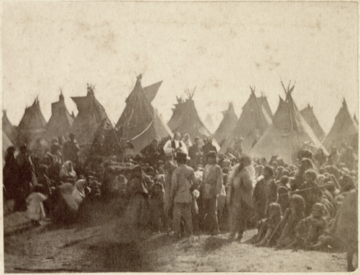
After the US-Dakota War of 1862, 1,600 Dakota Indians were marched 150 miles to the Bdoté where an internment camp was built. They spent the brutal winter of 1862-63 in terrible conditions and hundreds died of measles and cholera. The internment has parallels to what ICE is doing today.
That was a cruel chapter in Minnesota’s history, but there was one man of that place and time who had the same valor and humanity of today’s Minneapolis protesters, an Episcopal bishop named Henry Whipple. Well before the war with the Dakotas, Whipple began to lobby President Lincoln to stop the poor treatment and summary executions of Indians across the country. He asked for and got an audience with Lincoln in Washington D.C. in 1862.
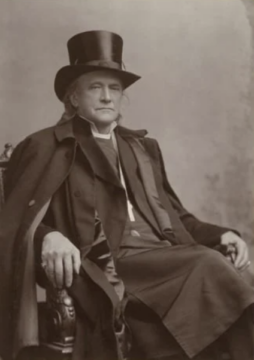
Whipple expounded on the inhumanity of the US Cavalry’s summary executions and the many broken treaties of the white settlers. Though consumed by the Civil War, after Whipple’s visit, Lincoln took the time to pardon several hundred Dakota prisoners scheduled to be executed and vowed to reexamine US policy to Native Americans after the war. His life was cut short before he could keep that vow.
Whipple visited the camp below Fort Snelling to minister to the Indians with food, blankets, and religion. To be sure, he had strong views on how Native Americans should live lives closer to Christian traditions—he was a creature of his time and faith—but there was no doubting his sympathy and humanity when it came to the Dakota.
In 1965, about a mile west of Bdote, where the Dakota Indians spent that terrible winter in an internment camp, Walter Mondale pushed a bill through congress to construct a building in Whipple’s Honor. The building is duly named the Bishop Henry Whipple Federal Building. In what is simply shameful, ICE is using the building to manage Operation Metro Surge in Minneapolis today, and also detaining immigrants plucked off the streets there. The agency desecrates the spirit in which that building was named with acts that completely contradict Whipple’s humanity. Several Episcopal ministers have asked that either ICE be removed or Whipple’s name be removed.
There is a real perversity in the former governor of South Dakota, now Homeland Secretary Kristi Noem, being the one to send the jackboots to Minnesota. South Dakota is the neighboring state and its capitol is only a six-hour drive from Minneapolis. Not all measures of a state’s health can be attributed to a governor, but there is real irony in one of the statistics. While Minnesota consistently ranks in the top ten states when it comes to safety, South Dakota comes in 35th. Yet Noem and her henchmen decided it was Minnesota that needed the men in masks and the pepper spray.
A good name for the Trump Administration might be The Empire of Optics and who better to serve as prom queen for that empire than cosplaying Noem with her near daily costume changes. Everything is fake about Noem except her cruelty and incompetence. Americans seem to be finally getting tired of what amounts to her multimillion-dollar Halloween party.
How some people grow up to be willing to march through the streets of Minneapolis in the arctic air, and get pepper sprayed in defense of people they’ve never met, while others grow up to be Kristi Noem and Steven Miller, is the stuff of dissertations. Some of it, I’m sure, is innate and some of it obviously has to do with a person’s upbringing. In an account of his own life, Whipple captures the instinct to stand up for the disenfranchised when he was just a boy. He wrote,
The one foreshadowing which I was to fight for my poor Indians was upon the occasion of a quarrel between a boy much older than myself and another half his size. Indignant at the unrighteousness of an unequal fight, I rushed upon the bully and in due season went home triumphant, but with clothes torn and face covered with blood.
These past several weeks have taught us a lot about Minnesota and some of her heroes, and stiffened our spines in the battle against an ever more fascist executive branch. It turns out that some of the nicest people are also the ones with the most guts and commitment in putting their lives on the line. They do so in defense of the soaring words of our nation’s founding. And also because they’re simply good people.
We don’t have to be as nice as Minnesotans, but let’s all show some of their courage.