
by Rebecca Baumgartner
The short stories in Kindergeschichten (Children’s Stories, 1969) by Swiss author Peter Bichsel are not actually for children. True, they are short, easy to read, and feel a bit like spare, minimalist fairy tales. But the moment you think you’ve grasped what they’re all about, they slip away. In the introduction to my German language edition, the stories are said to “seduce us, playfully, into thinking,”* and this was exactly my experience reading them. It’s not that they’re inappropriate for children, but more that children will likely only find them silly, whereas an adult will very likely see layers of meaning and existential crisis.
Some of the stories are about a person who takes an absurdly skeptical stance about something that is widely known. For example, in the story “Die Erde ist rund” (“The Earth is Round”), the protagonist knows intellectually that the Earth is round, but he doesn’t truly believe it, so he undertakes an absurd journey to prove it to himself.
The stories also feature characters who ridiculously imagine that they can live outside the confines of society and pursue radical autonomy. For instance, the protagonist of “Ein Tisch ist ein Tisch” (“A Table is a Table”), having grown bored with his humdrum life and grown frustrated with how things always stay the same, decides to give different names to everyday objects, with the result that no one can understand him when he speaks. He ends up forgetting the original names for things and eventually falls silent, able to talk only to himself. Read more »
 Sughra Raza. Self Portrait After Dark, Butaro, Rwanda, November 2023.
 Taiwan is an independent prosperous liberal democracy of 24 million free people that the Chinese Communist Party solemnly promises to annex to its empire by whatever means are necessary. Although Taiwan’s flourishing capitalist economy once allowed it to outgun and hence straightforwardly deter China from a military invasion, this military advantage has switched to China over the last 20 years. If Taiwan is to be kept free it must find another means to deter the CCP.

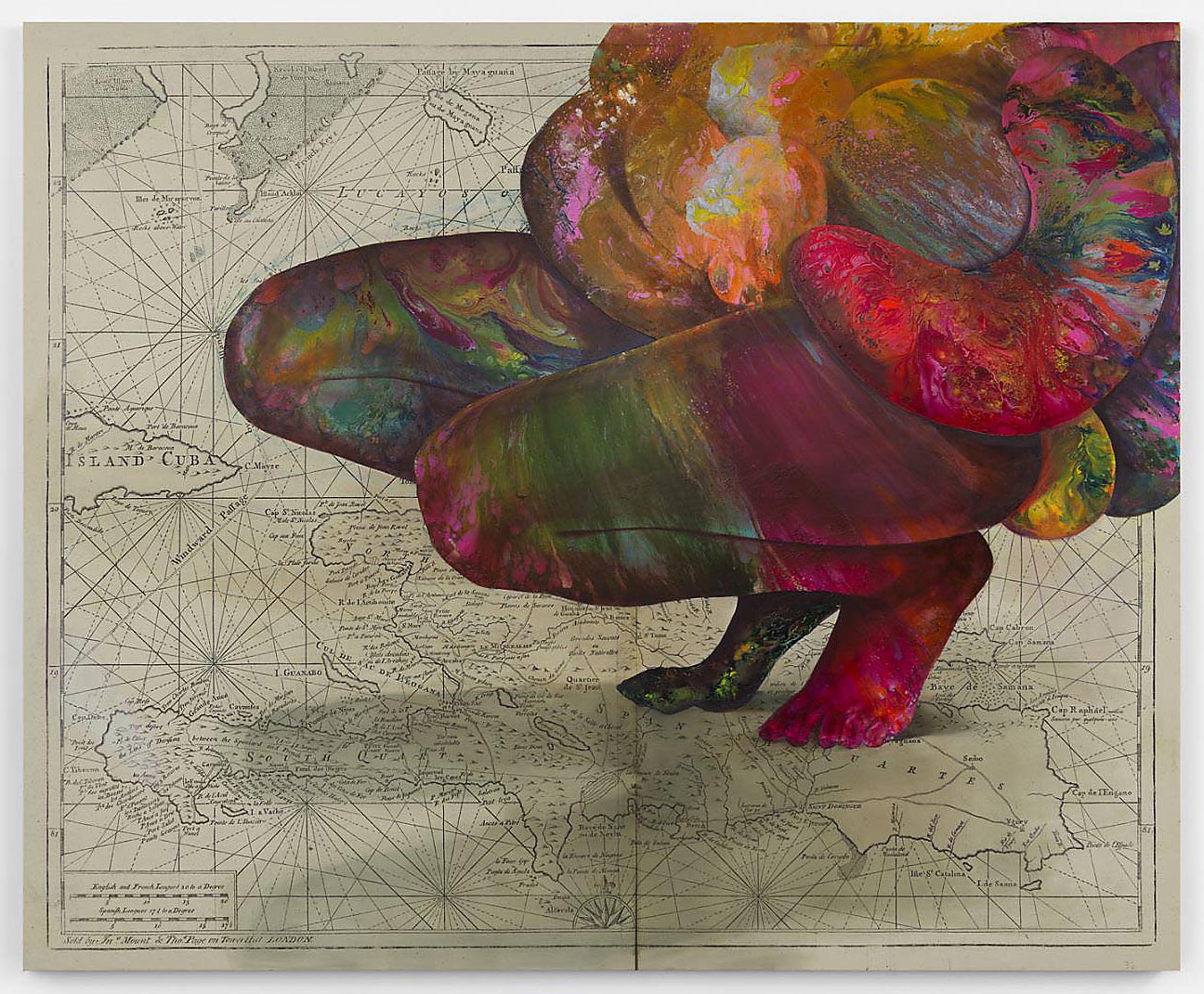 Firelei Baez. Untitled (A Corrected Chart of Hispaniola with the Windward Passage), 2020.
 by Leanne Ogasawara
 The barbarians have won.


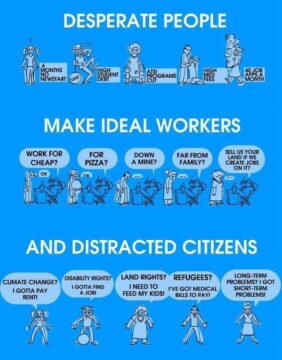 In the West, it feels like we have never lived
 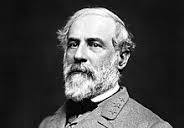 If 1840 outside of Richmond, say, had really been like that what would it have looked like? Warm, smiley, friendly no violence or anger or retribution. Freedom, wealth, and privilege burdens that black people were lucky to avoid. The only possibility of such a universe, I would imagine, might have involved some sort of depraved mass lobotomization or heavy doses of obliterating narcotics. This vision of the old South was as impossible as it was untrue.
 Flash forward to mid-fifties New York, Patricia Highsmith’s Ripley in the new Andrew Scott Netflix version is approached by a black man at a bar who says he has a job for him. There is no reference to their races as if black people approaching white people and offering them work was a regular occurrence at that time. In the Highsmith original, no such character exists. Deeply racist, Highsmith cast almost all non-white characters in her work as foolish and/or despicable.
 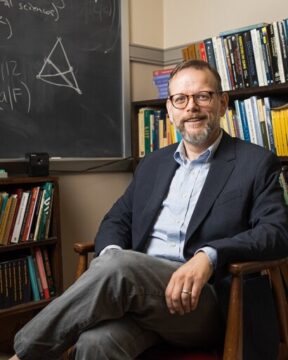 Joseph H. Shieber, April 7, 2024 of Wallingford, PA. Beloved husband of Lesa Shieber; proud father of Samuel and Noa; loving son of Benjamin and Eileen Shieber; devoted brother of William (Rebecca) Shieber and Jonathan (Kathleen) Shieber.