by Priya Malhotra
When I first met Liara (name changed to protect privacy), my fourteen-year-old daughter’s friend, she was snatching her iPhone from her mother’s hands and furiously typing my daughter’s number into it. Her backpack dangled off one shoulder, her wild hair tumbled to her waist, and she spoke so quickly that my middle-aged brain could barely keep up.
As we drove home from school, my daughter told me that Liara had spent the entire camp talking about thermodynamics and her dream of designing better ways to store solar energy for developing countries. I was only half-listening until she asked, almost hesitantly, “Mom, am I still going to be allowed to wash my hair on Thursdays?”
“What?” I said.
“Liara told me Hindus aren’t supposed to wash their hair on Thursdays. It’s some kind of tradition.”
I stared at her, dumbfounded. Liara — the aspiring energy engineer, the daughter of a chemistry teacher — believed in such a thing? Didn’t education, or even basic scientific reasoning, nullify such superstitions? Apparently not. And Liara and her family are far from unusual.
There’s the in-house nurse who tends to my ailing mother and forbids her niece from entering the kitchen while menstruating because she is considered “impure.” There’s Asha (name again changed to protect privacy), an entrepreneur I know, who refused to rent a perfectly located office because its bathroom was near the entrance as she’s a devout follower of Vaastu Shastra, the ancient Indian architectural system that warns such placement can “flush away prosperity.” And there’s that business executive who delayed his relocation to Europe for three months because astrologers advised that the stars were unfavorable. The risk of displeasing the planets, it seemed, outweighed the risk of losing his job.
Across India, such stories are not rare; they are routine. Read more »
 In earlier essays, I argued that beauty can orient our desires and help us thrive in an age of algorithmic manipulation (
 The full title of Charles Dickens’ 1843 classic is “A Christmas Carol in Prose: Being a Ghost Story for Christmas.” Inspired by a report on child labor, Dickens originally intended to write a pamphlet titled “An Appeal to the People of England on behalf of the Poor Man’s Child.” But this project took a life of its own and mutated into the classic story about Ebenezer Scrooge that virtually all of us think we know. It’s an exaggeration to say that Dickens invented Christmas, but no exaggeration to say that Dickens’ story has become in our culture an inseparable fixture of that holiday.








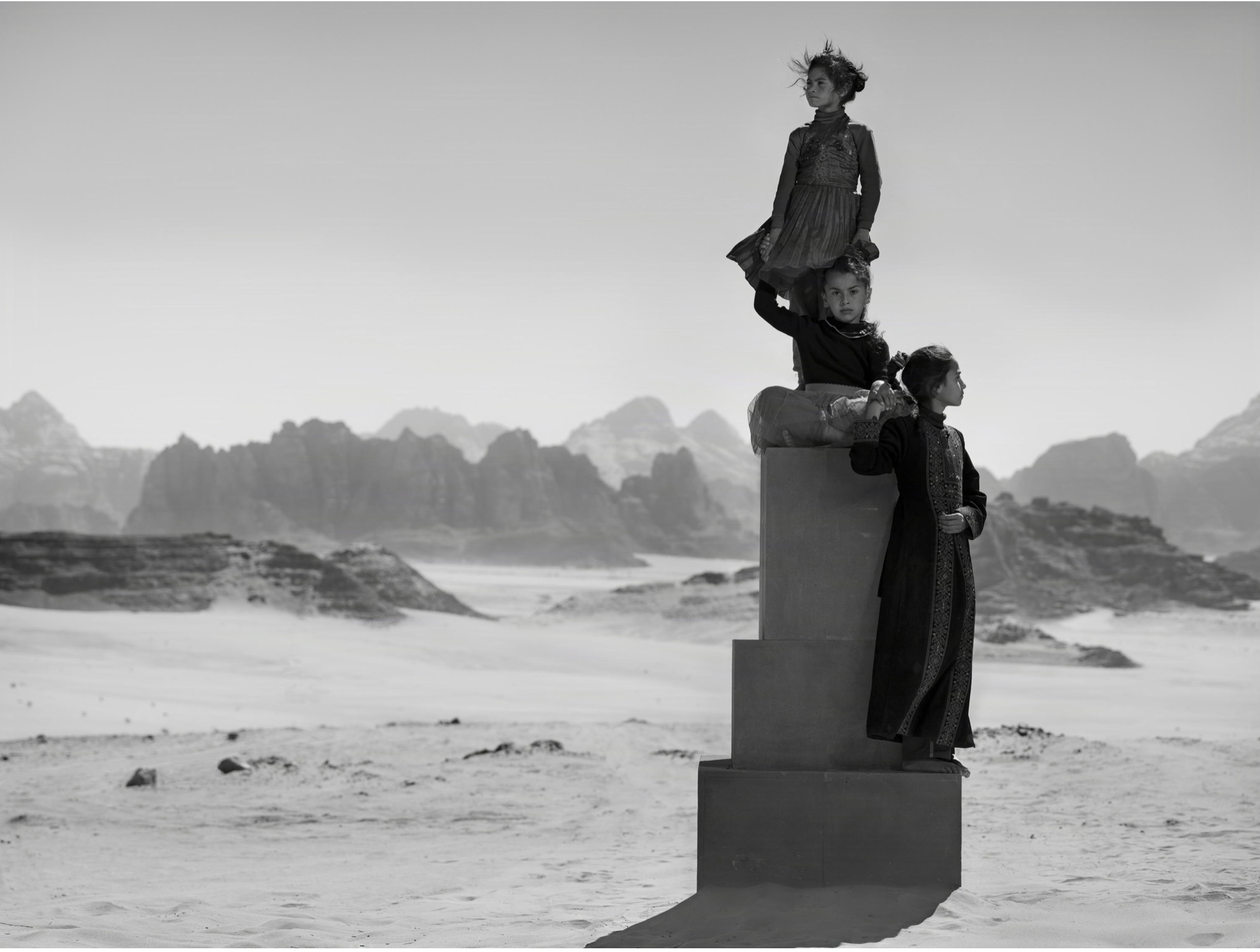 Nick Brandt. Zaina, Laila and Haroub, Jordan, 2024. From The Echo of Our Voices – The Day May Break.