by Mark Harvey
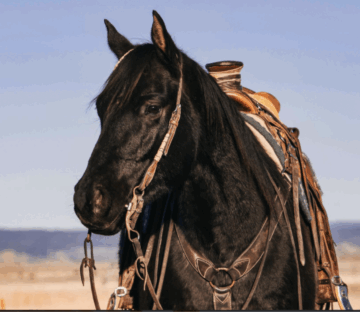
I have a horse named Mexico that tore one of his legs to shreds last week when he got caught in a wire fence. It was a bit of a fluke because we try to keep our fences tight and well-maintained. But one morning, a herd of 50 elk ran straight through the fence, leaving a twisted mess of wire. Mexico was grazing in that pasture and innocently stepped into the wire and then fought like hell to get out. He’s a horse with the sound temper of a saint, but any horse that gets a leg trapped will fight with all the force taught them through a million years of evolution. He was a mile from any trailer, and we had to limp him slowly off the meadow.
When we got him down to the barn, we loaded him up with three grams of phenylbutazone, better known as bute in the horse world, to ease the pain and give us a fighting chance of getting him in the trailer. Even with the bute running through his veins, he had a hard time bearing weight on the injured leg, and it took a long while to load him.
This is an animal with one instinct: to please. He is an ears-always-forward horse, seems to enjoy human company as much as the company of his hoofed friends, and rarely spooks at anything. He stands patiently when being shod, occasionally bending his neck as if to check on the quality of the farrier’s work.
He was sweating profusely through the pain and trauma, and it hurt all of us to watch him try to get into the trailer, even with the help of a ramp. Somehow, when animals get injured, we take it more personally than when human beings get hurt. At least I do. I joked to my ranch foreman that if it was him who had gotten cut up in the wire, I’m not sure I’d bother taking him to the vet—even if I could get him in the trailer. Read more »