
by Mark R. DeLong
Is successfully learning to drive a car an achievement of “mastery”? Is being able to pee in a public restroom also evidence of a certain form of “mastery”? I ask because in recent weeks, I’ve read two books that explore mastery—how you get to a level of achievement, what mastery “looks like,” and such. I bought the books because their subtitles—”On the Mystery of Mastery” and “The Making of a Craftsman”—suggested some sort of harmonious overlap, even though the subtitles shared no word to tie them much more than thematically. After all, we know more or less what mastery is, don’t we, and isn’t it near the center of craftsmanship?
Together, The Real Work: On the Mystery of Mastery (Liveright, 2023) by Adam Gopnik and Ingrained: The Making of a Craftsman (in USA & Canada: Ecco, 2024; in UK: Doubleday, 2024) by Callum Robinson present variants of mastery—both useful, though often profoundly opposed to each other in revealing ways. Reading them one after another (or nearly so) gave me a chance to compare them, and to see the differences that Gopnik and Robinson draw in their view of mastery.
Metaphorically, the differences come to this: Gopnik is satisfied to pull a knife safely from a drawer and slice bread or some vegetables with ease. Robinson sees the knife as an extension of his hand as he carves; his knife is a mode of expression. It is the difference of the happily common mastering of everyday tasks and a transformative and exceptional mastery. (Both, in their ways, “mysterious,” I should add.)
Everyday mastery
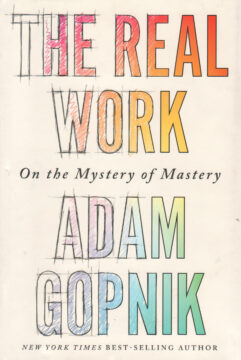
Adam Gopnik’s The Real Work explores seven “mysteries of mastery” mainly through the stories of Gopnik’s (mis)adventures when he puts himself under the tutelage of a master—a driving instructor, master of urban driving and an ambiguous hand wave;[1] an artist acquaintance with classical tastes of “new realism”; Gopnik’s mother, an irrepressible and talented baker; a social worker who specializes in paruresis (an inability to urinate in public places); magicians, both long-gone and contemporary; a dance instructor; a boxing coach. These are quite unexceptional performances, of course, with the exception of the social worker. (Gopnik tells his story of mastering peeing in public restrooms in a chapter simply called “Relieving,” which surely seems appropriate.)
Gopnik’s definition of mastery seems to circle matters of control or, more simply, being able to navigate in a world more or less successfully, accepting and facing risk and avoiding catastrophe in daily life. It is an attitude that turns the everyday into something more heroic, and in the process elevating the status of all who survive the wiles of the world. Mastery is common enough. Read more »
 On the one hand, nothing has changed since August 2020, when I wrote
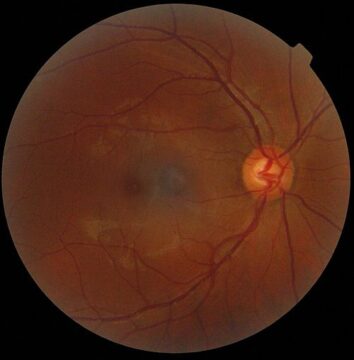 Anatomically, it’s the optic disc – the spot on each retina where neurons with news from all the light-sensitive rods and cones of the retina converge into the optic nerves. The optic disc itself,
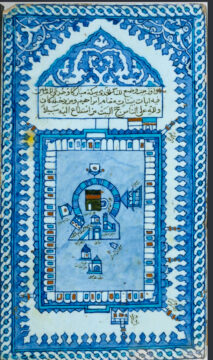
 Sughra Raza. Rorschach Landscape, Guilin, China, January 2020.

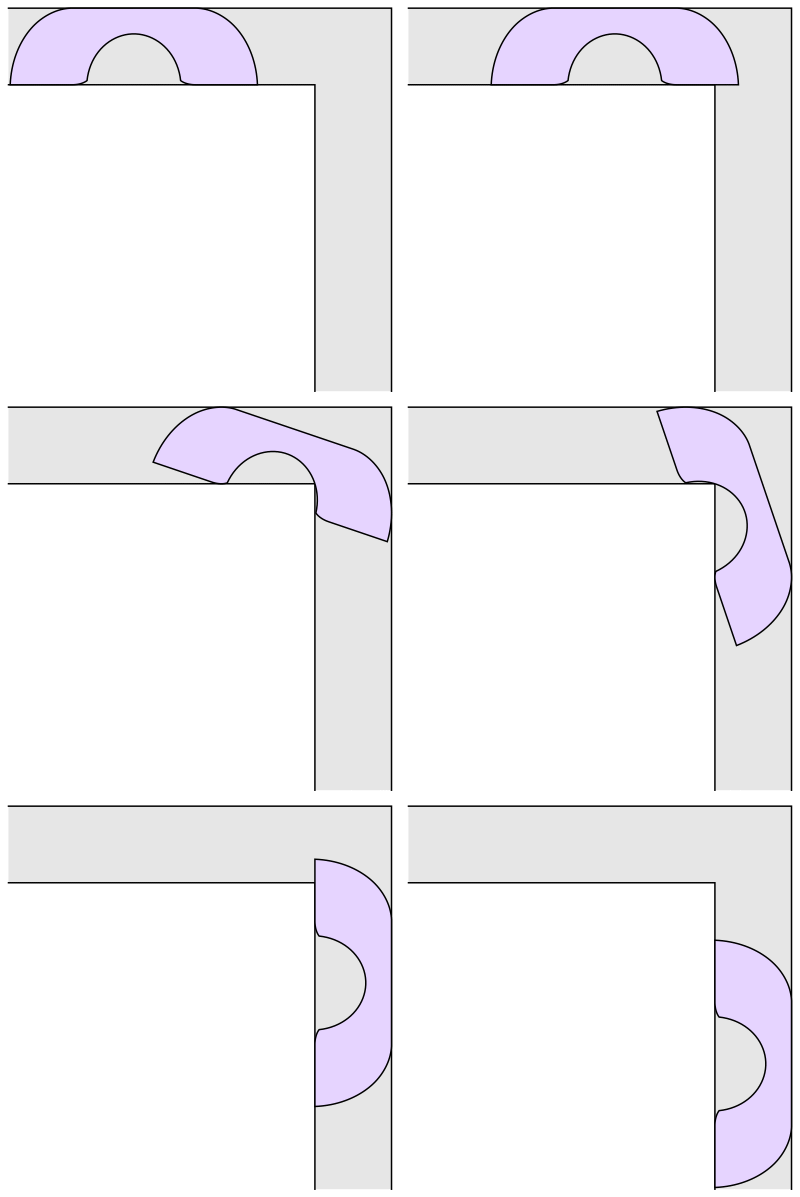
 Of course there was no guarantee that Gerver’s couch was the biggest possible. Dr. Gerver’s approach made no promises that it gave the best possible, after all. A little more convincing is the fact that in 30 years we haven’t been able to do any better. But mathematics is a game of centuries and millennia — a few decades is small potatoes. In 2018, Yoav Kallus and Dan Romik proved that the couch could be no larger than 2.37 square meters. But the gap in size between Gerver’s couch and the Kallus-Romik upper bound is an order of magnitude larger than that between the couches of Gerver and Hammersley.

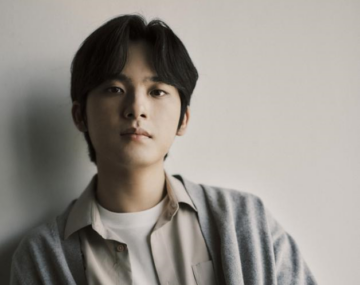 Someone else who understands the power of a single note is pianist Yunchan Lim, winner of the 2022 Van Cliburn competition at age 18, who electrified the classical music community with his performances of Rachmaninoff’s Concerto No. 3 and Liszt’s Transcendental Études and has since sold out concerts around the world. His reputation for virtuoso barrages of perfect notes at dizzying speeds belies a deep engagement in the sound he can extract from the piano with a single note—a process he demonstrated in
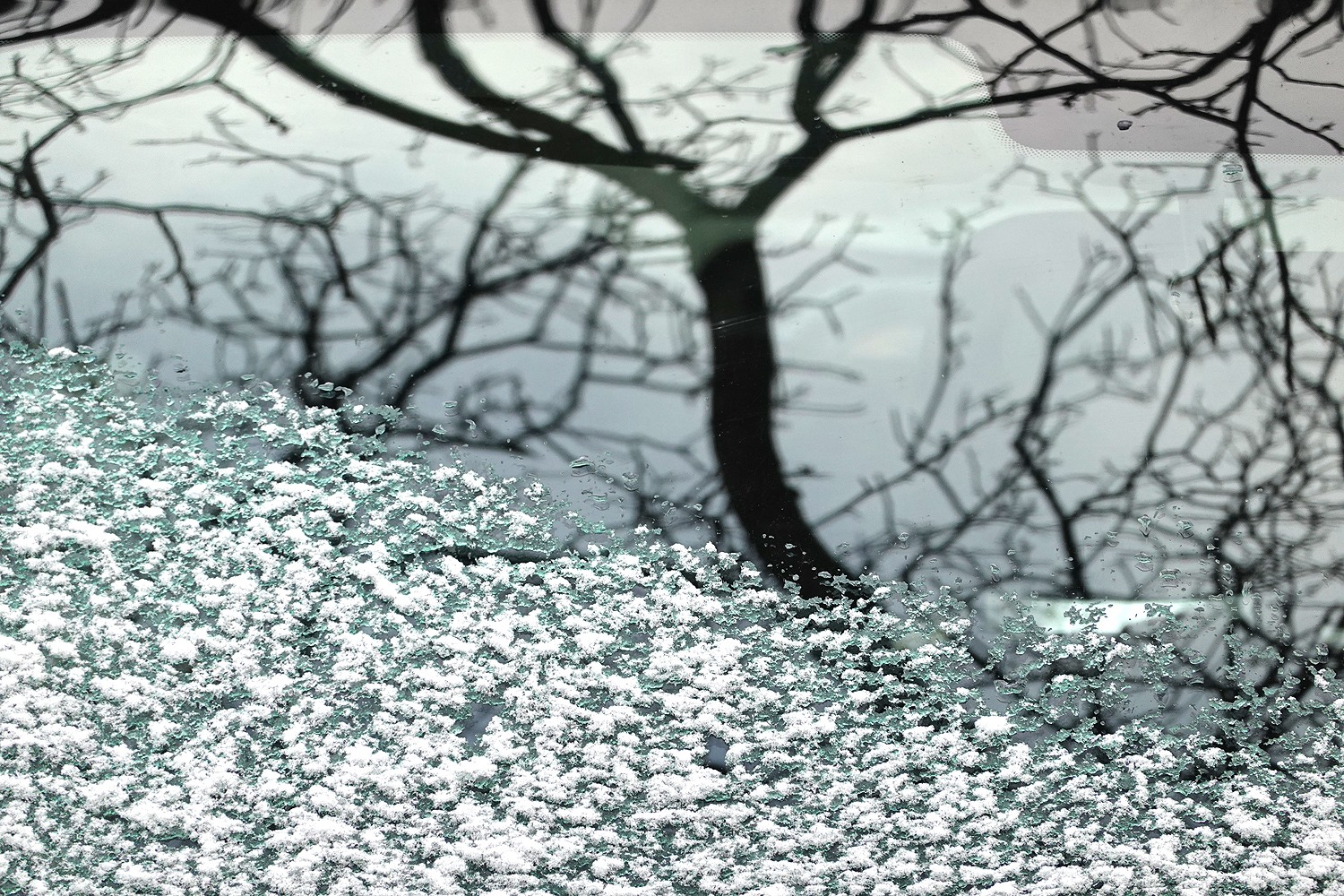
 Sughra Raza. Cambridge In The Charles, December, 2024.
 I will be in Strasbourg, France during Christmas this year, spending time with my 96 year old father who talks about his mother, my mother, and his cousins, all gone now, but seemingly alive to him.