by Rachel Robison-Greene
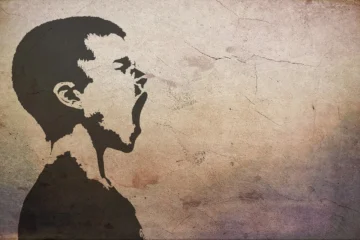
These days, there is a common unpleasant routine in the lives of well-informed, civic-minded individuals. They wake up in the morning, check the news, and are immediately bombarded with stories about events in the world that elicit strong negative emotions such as grief, fear, helplessness, and anger. In such disturbing times, it seems as if a person’s mental health cannot be maintained under the trauma assault to which they are subjected daily. It is unreasonable to suggest that we all simply feel different emotions than those that we feel—what we feel in a given moment is not something that can be consciously controlled. That said, though we may not be able to change the emotions themselves, it might be possible for us to change the emotional climate we occupy; we could feel fewer negative emotions simply by consuming less news. Is this something a responsible citizen can do? Is it a defensible form of anger management? Is anger an appropriate response to injustice, or ought we to try to banish it from our emotional repertoire?
The ancient Stoics maintained that anger is a destructive emotion that gets in the way of the thing that is actually important and, in a meaningful way, up to us: the cultivation of virtue. In his treatise, On Anger, Seneca writes,
Some of the wisest of men have in consequence of this called anger a short madness: for it is equally devoid of self-control, regardless of decorum, forgetful of kinship, obstinately engrossed in whatever it begins to do, deaf to reason and advice, excited by trifling causes, awkward at perceiving what is true and just, and very like a falling rock which breaks itself to pieces upon the very thing which it crushes.
In her book Anger and Forgiveness, the philosopher Martha Nussbaum also advises that we ought to avoid anger. She argues that anger is almost always normatively incoherent. She sees it as backward-looking insofar as it encourages the person who lingers in it to focus on some past perceived harm. She argues further that anger frequently involves a payback wish—a strong desire for the person who has done wrong to compensate for the harm they’ve done. Read more »
 Sughra Raza. Found “Imaginary Being” (after Jorge Luis Borges). March 2025.

 This year marks the 80th anniversary of the end of the Third Reich, and thus of the industrialized mass murder known as the Holocaust, or Shoah—although 1945 was not the end, according to Timothy Snyder, of World War Two. That conflict, the historian maintains, was pursued by the otherwise victorious imperial powers in their respective independence-minded colonies, and only concluded with those powers’ defeat and withdrawal, or with the substitution of some variety of “post-colonial” economic system (The Commonwealth, La francophonie) for classic empire. To say nothing of the “











 Sughra Raza. Self portrait with Shutter and Tree, Merida, March 2025.