
by Joan Harvey

I no longer remember how or when I stumbled on Concertzender.nl, an internet radio station located in Utrecht, but it has been with me through changes in location, partners, through raising a son: it has been with me from before they had an English translation on the website and before people from overseas could make donations, before they had an app. According to the website, “Thirty-four years ago, a group of music lovers shared the strongly felt urgency to create a sanctuary where everything revolves around music, music and musicians having the highest word, music in (almost) all its facets can be listened to as it is intended, no boundaries are drawn between genres and styles, almost every music lover comes into their own and no concessions have to be made to non-musical secondary goals.”
Max Roach. Contemporary Korean music. Electronic female artists from around the globe. Artie Shaw. Italian “infernal industrial” band Satanismo. Schnittke and Ustvolskaya. “Theremin genius” Dr. Samuel J. Hoffman. Bach. Abbey Lincoln. Gregorian Chant. Songs by Kurt Weill. Music for the oboe family. Chanson. Motets. Makossa, the popular urban music movement originally from Cameroon. Mudhoney. Hummel. Liszt. Psychic TV. Frank Bridge. The Swans. Songs about refugees. Gogol Bordello. Bollywood Bhangra Disco Masala.
The is just a tiny fraction of the variety of music to be found on Concertzender. One click opens up a vast musical world. Read more »


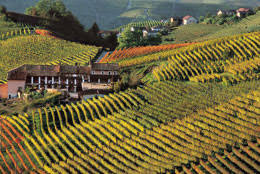 Discussions of the factors that go into wine production tend to circulate around two poles. In recent years, the focus has been on grapes and their growing conditions—weather, climate, and soil—as the main inputs to wine quality. The reigning ideology of artisanal wine production has winemakers copping to only a modest role as caretaker of the grapes, making sure they don’t do anything in the winery to screw up what nature has worked so hard to achieve. To a degree, this is a misleading ideology. After all, those healthy, vibrant grapes with distinctive flavors and aromas have to be grown. A “hands off” approach in the winey just transfers the action to the vineyard where care must be taken to preserve vineyard conditions, adjust to changes in weather, plant and prune effectively and strategically, adjust the canopy and trellising methods when necessary, watch for disease, and pick at the right time.
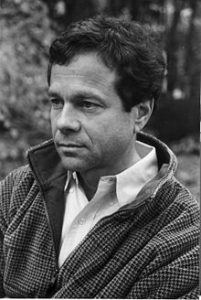
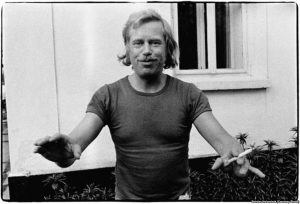 On the morning of August 20, 1968, the Czech playwright Vaclav Havel had a serious hangover. He was at his country home in Liberec after a night of boozing it up with his actor friend
  by Leanne Ogasawara
 My wife and I took a peek into the interior of Papua New Guinea twenty years ago.



 “I’m on a roadside perch,” writes Ghalib in a letter, “lounging on a takht, enjoying the sunshine, writing this letter. The weather is cold…,” he continues, as he does in most letters, with a ticklish observation or a humble admission ending on a philosophical note, a comment tinged with great sadness or a remark of wild irreverence fastened to a mystic moment. These are fragments recognized in Urdu as literary gems because they were penned by a genius, but to those of us hungry for the short-lived world that shaped classical Urdu, those distanced from that world in time and place, Ghalib’s letters chronicle what is arguably the height of Urdu’s efflorescence as well as its most critical transitions as an elite culture that found itself wedged between empires (the Mughal and the British), and eventually, many decades after Ghalib’s death, between two countries (Pakistan and India).