by Dwight Furrow
 Although frequently lampooned as over-the-top, there is a history of describing wines as if they expressed personality traits or emotions, despite the fact that wine is not a psychological agent and could not literally have these characteristics—wines are described as aggressive, sensual, fierce, languorous, angry, dignified, brooding, joyful, bombastic, tense or calm, etc. Is there a foundation to these descriptions or are they just arbitrary flights of fancy?
Last month on this blog I argued that recent work in psychology that employs “vitality forms” helps us understand how music expresses emotion. Will vitality forms help us understand how wine could express feeling states or personality characteristics?
Vitality forms are “the flow pattern” of human experience, “the subjectively experienced shifts in the internal states” that characterize sensations, thoughts, actions, emotions, and other feeling states. Discovered by Daniel Stern and described in his 2010 book Forms of Vitality: Exploring Dynamic Experience in Psychology, the Arts, Psychotherapy, and Development, vitality forms constitute the temporal structure of experience, the duration, acceleration and intensity of an experience. Importantly, vitality forms are not tied to a specific sense modality. All five senses as well as thoughts and feelings exhibit vitality forms. “A thought can rush onto the mental stage and swell, or it can quietly just appear and then fade”, as Stern notes. So can sounds, visual experiences, tactile impressions or emotions—anger can explode or emerge as a slow burn. In short, a vitality form is how any conscious experience emerges and changes over time. Read more »
 He flew so fast and so close to the sun that it took an entire lifetime to fall back to Earth.
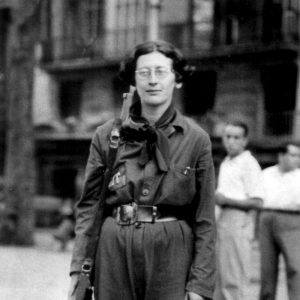 I recently read Simone Weil for the first time after having come across numerous references to her over the past year. I broke down and bought Waiting for God despite the intimidating and frankly confusing title. I was not disappointed. One of her essays in particular, “Reflections on the Right Use of School Studies in View of the Love of God,” has opened and focused my thinking on education and learning in general, whether for children or later in life for the rest of us.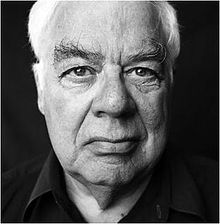

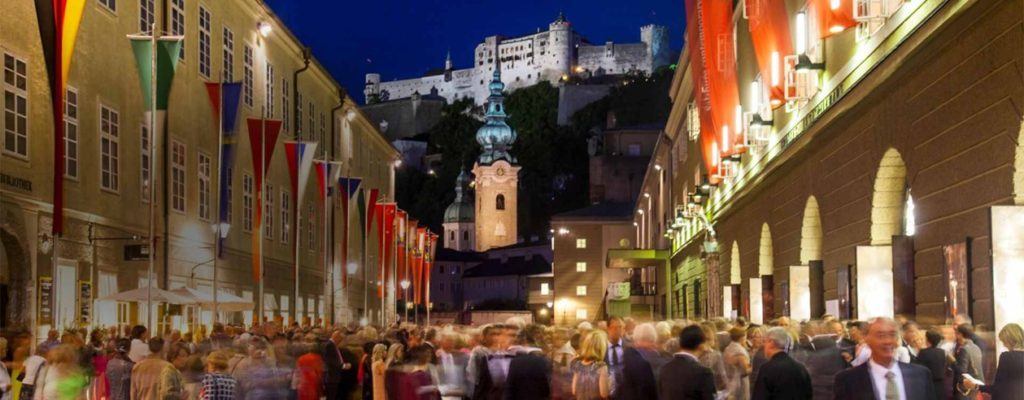
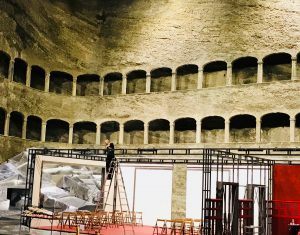 Opera as resistance? Music as re-enchantment?
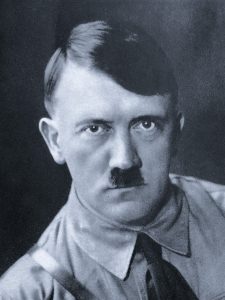 When it comes to evil, nobody beats Hitler. He committed the biggest mass murder of innocent humans in all of history.
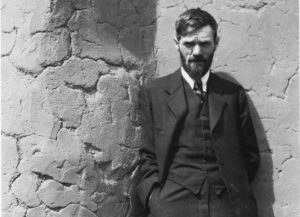
 Many years ago in 1991, in my first job out of college, I worked for a small investment bank. By 1994, I was working in its IT department. One of my tasks was PC support and I had a modem attached to my computer so that I could connect to Compuserve for research on technical issues. Yes, this was the heydey of Compuserve, the year that the first web browser came out and a time when most people had very little idea, if any, what this Internet thing was.
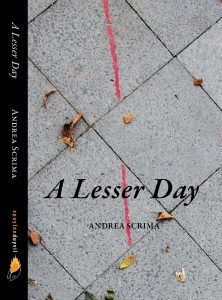 Novels set in New York and Berlin of the 1980s and 1990s, in other words, just as subculture was at its apogee and the first major gentrification waves in various neighborhoods of the two cities were underway—particularly when they also try to tell the coming-of-age story of a young art student maturing into an artist—these novels run the risk of digressing into art scene cameos and excursions on drug excess. In her novel A Lesser Day (Spuyten Duyvil, second edition 2018), Andrea Scrima purposely avoids effects of this kind. Instead, she concentrates on quietly capturing moments that illuminate her narrator’s ties to the locations she’s lived in and the lives she’s lived there.
 Little Miracles 2: