
by Mark Harvey
Every civilization sees itself as the center of the world and writes its history as the central drama of human history. ―Samuel P. Huntington, The Clash of Civilizations and the Remaking of World Order
 Watching Israel and Iran lob bombs at each other these last few weeks makes me tired. Just when the world seemed completely destabilized and clinically looney, two countries who both trace their religions back to Abraham or Ibrahim decide to make things worse. I know you’re supposed to reach for the most recent issue of Foreign Affairs or parse treaties on nuclear non-proliferation to make sense of this missile orgy, but this latest war might make you reach for your earplugs and blindfold instead.
It’s easy to come up with reasons why one of these fanatical leaders–Ali Kamenei or Benjamin Netanyahu— is right and the other is wrong, back it up with obscure historical data and tables of fissionable materials, but there might be a simpler explanation: a good portion of mankind lives in the reptilian and limbic parts of the human brain, is soaked in the desire for revenge, and is completely lacking in reason and forbearance.
In the few days since I began writing this, the United States has cast our lot into the mess with bombing sorties over Iran as well. This is all red meat for the pundits of every stripe. Along with the hypersonic missiles flying back and forth over the Zagros Mountains and the Syrian Desert, you can bet there will be a barrage of hyperbolic opinion pieces either extolling or condemning the war.
My college degree was in International Studies and I used to try to find some real logic in foreign affairs. There were a few writers and theorists like the late George Kennan and Samuel Huntington who actually did a pretty good job of breaking down international affairs into some sort of mechanics or predictable psychology. Huntington believed that the modern conflicts were determined by the clash of cultures and religions, not economics. Read more »



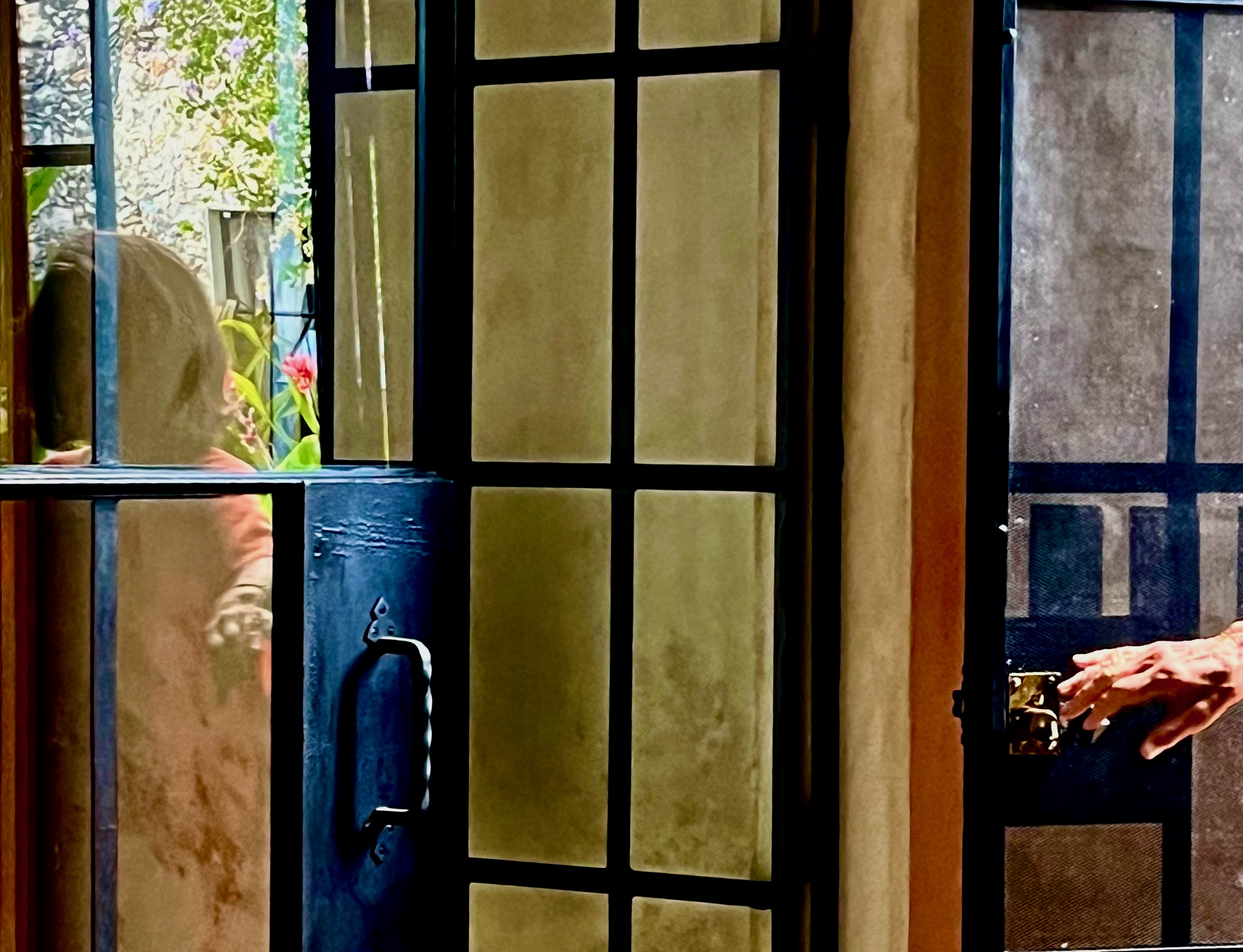 Sughra Raza. The Visitor. Mexico, March 2025.


 At a Christmas market in Germany, I told my German girlfriend’s mother that I masturbate with my family every December.
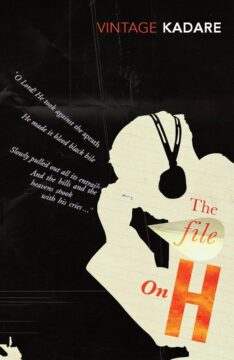 The File on H is a novel written in 1981 by the Albanian author Ismail Kadare. When a reader finishes the Vintage Classics edition, they turn the page to find a “Translator’s Note” mentioning a five-minute meeting between Kadare and Albert Lord, the researcher and scholar responsible, along with Milman Parry, for settling “The Homeric Question” and proving that The Iliad and The Odyssey are oral poems rather than textual creations. As The File on H retells a fictionalized version of Parry and Lord’s trips to the Balkans to record oral poets in the 1930’s, this meeting from 1979 is characterized as the genesis of the novel, the spark of inspiration that led Kadare to reimagine their journey, replacing primarily Serbo-Croatian singing poets in Yugoslavia with Albanian bards in the mountains of Albania.

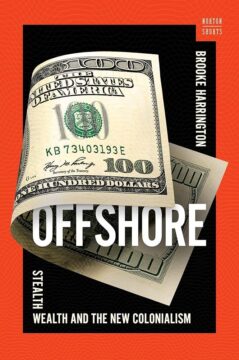 The Paradise, Pandora and Panama Papers, exposing secret offshore accounts in global tax havens, will be familiar to many. They are central to the work of economic sociology professor, Brooke Harrington. She has spent many years researching the ultra-wealthy and several books on the subject have been the result. Her latest book Offshore: Stealth Wealth and the New Colonialism is a continuation of her research; it focuses on ‘the system’, the professional enablers who support and advise the ultra-wealthy and make it possible for them to store and conceal their phenomenal fortunes in secret offshore accounts.

 Sughra Raza. Light Tricks, Seattle, March, 2022.