
by Pranab Bardhan
All of the articles in this series can be found here.
 In connection with our research and meetings in the MacArthur network we did a considerable amount of international travel. Let me now turn to a whole series of my travel-related stories, some in connection with this network but mostly outside it and in different periods of my itinerant life.
When I start thinking of my travels the first thing that comes to mind, as it does with many others from India, is a whole series of anecdotes relating to authorities in western countries trying to block or hinder our travel in various ways. Let me unburden here some of them. Many decades back, before I got the much-coveted ‘green card’ (it actually looks rather pink, not green) for permanent residency in the US, I was standing in the long line for American visa one early morning in New Delhi. The line started forming even before daylight, hours before the Embassy doors opened, and it soon snaked around the Embassy building, under the scorching sun. When I finally reached near the counter in the air-conditioned interior, in front of me there was one other person, a woman of probably 27 or 28 years of age. She had told me that she had been admitted in a graduate school in the US with a fellowship, and we discussed her prospective area of research. But when she reached the counter the surly visa officer looked at the file, examined all her documents, then for a minute or two looked at her, and suddenly closed the file with a thump, and said, “You don’t look like a student to me (he probably meant that she was a few years older than the usual graduate student), No Visa for you! …..Next!” Standing there she started silently weeping, and I was next. I reached the counter and said, “Is this how you decide on visa, by looks of people?” The man growled at me and said, “Do you want your visa or not?” Things may have improved since then but at least those days it entirely depended on the arbitrary decision of one visa officer, and there was hardly any scope for appeal. While in the line I had already overheard some students discussing that the visa officer at the American consulate in Chennai was rumored to be a bit kinder than officers on duty elsewhere in India at that time, and many Indian students were making a special trip to Chennai to try their luck there. Read more »


 As forced migration in the wake of war and climate change continues, and various administrations attempt to additionally restrict the movement of people while further “freeing” the flow of capital, national borders, nativism, and a sense of cultural rootedness have re-emerged as acceptable topics in a globalized order that had until recently believed itself post-national. In the German-speaking world, where refugees have been met with varying degrees of enthusiasm depending on their provenance, national pride, long taboo following the Second World War, at least in Germany, is enjoying a comeback. As the last generation of perpetrators and victims dies and a newly self-confident, unproblematically nationalist generation comes to consciousness, it is again becoming possible to use a romantic, symbolically charged term like Heimat.
 Sughra Raza. Don’t Step On The Jewels, 2014.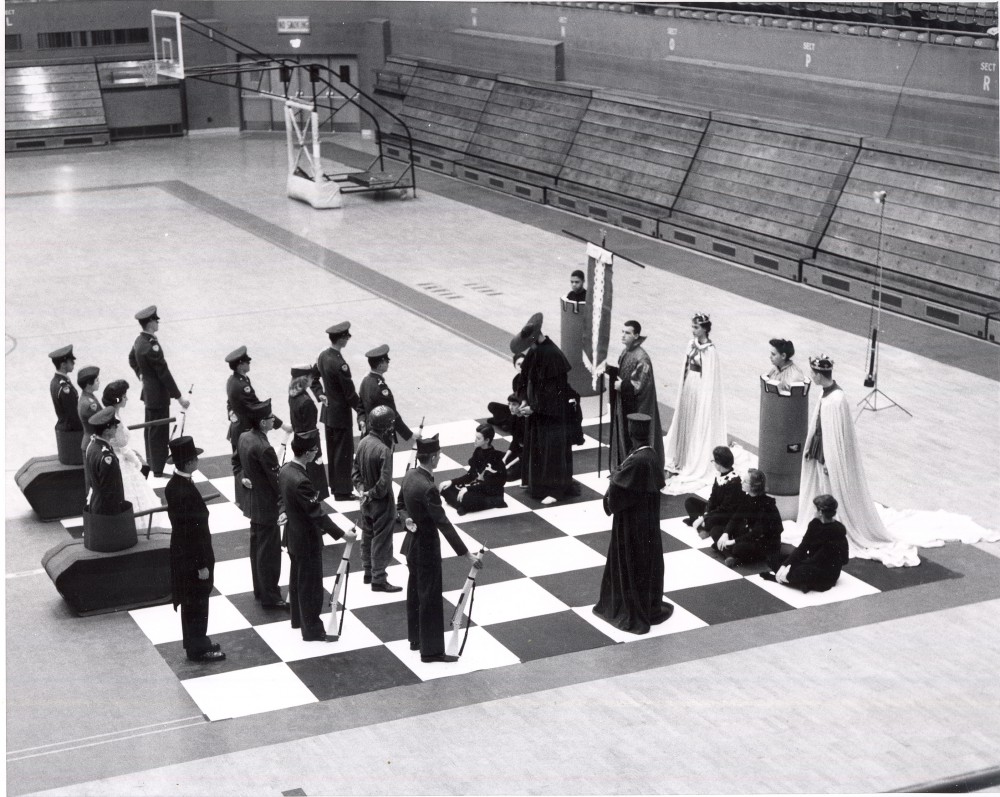
 technology will somehow amplify itself into a superintelligence and proceed to eliminate the human race, either inadvertently – as a side effect of some other project, such as creating paper clips (a standard example), or deliberately.

 About eight years ago, I was in downtown Manhattan and went into a Warby Parker store, an eyewear retailer. I didn’t post anything on social media about it, but I did have location services enabled on Facebook. Later that day, Facebook started showing me ads for eyewear (something it had never done before.) How and why it did that wasn’t a giant leap of understanding, and I immediately turned location services off for Facebook. But of course, this was sticking one thumb in the crumbling dam that is my data privacy. I own an Alexa, and I have an iPhone, an Apple watch, and an iPad. And that’s just for starters. I use Google all day long, subscribe to multiple online publications, use Amazon regularly, have used Instacart in the past, and the list goes on.





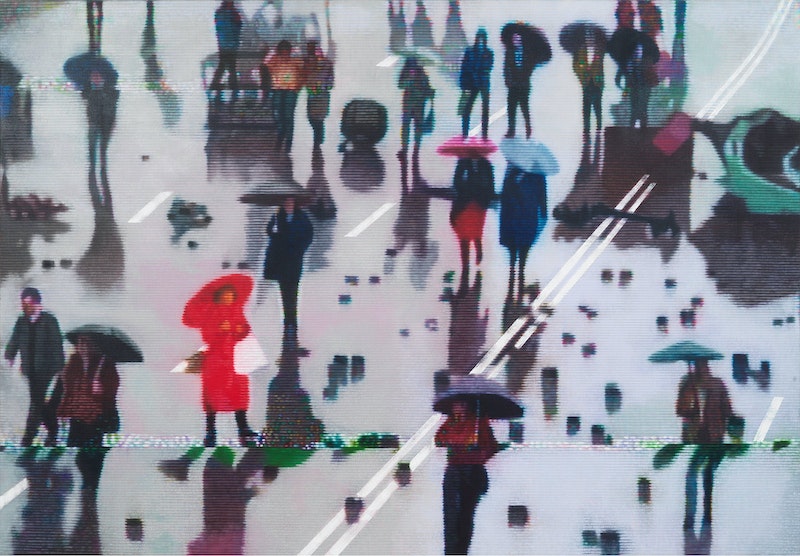 Kon Trubkovich. The Antepenultimate End, 2019.
 It seems we’re always tinkering with those eternities, not just to cherish their value or find their meaning, but to transform them into something else. Maybe that’s what creative writing ultimately is—momentary eternities arranged so that they somehow move the reader the way a perfect arrangement of musical notes might do. Reading is a compelling pastime for millions because words function as artfully selected indicators of events and images that readers will complete in their own minds, as they follow verbal guideposts for the imagination to begin to do its work.