by Ethan Seavey
 There was a period in my life when I believed that all humans came from one man. This included his wife Eve. After that followed a period when I believed nothing and I thought that was enough.
I never negated the information that I loved as a child. In Catholic school they’ll teach you that Adam and Eve were factual human beings, and then a few years later, they’ll teach you that Adam and Eve didn’t exist, sure, but it’s an allegory. In fact, as if to dispel any rumors that their story had any basis in fact, they show you that the Bible has two different creation myths: the one with Adam and Eve, and the one where God takes a big nap after making the universe and an abundance of humans. So it doesn’t really matter that it’s a creation myth; that’s not the point. If you pay attention in religion class, you’d know that it means that humans are all connected to one another. If you speak to a stranger and trace your family trees back far enough, you’ll find a shared grandmother who gave birth to both of your families. And her name was Eve.
No, I didn’t believe Adam and Eve were the origin to humanity anymore. I did think the story had the power to bridge gaps between humans who look different from one another (of course, then, I did not know that historically it has had the inverse effect). And I suppose I figured that somewhere along the timeline, a monkey named Eve who must have had a uniquely enormous brain must have reproduced with a monkey named Adam who liked to walk on two feet. Read more »
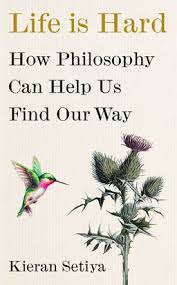 Does philosophy have anything to tell us about problems we face in everyday life? Many ancient philosophers thought so. To them, philosophy was not merely an academic discipline but a way of life that provided distinctive reasons and motivations for living well. Some contemporary philosophers have been inspired by these ancient sources giving new life to this question about philosophy’s practical import.
 Wendy Red Star. Winter – The Four Seasons Series, 2006.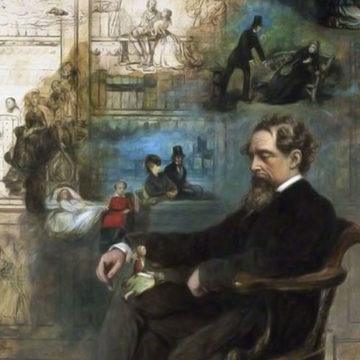

 Soon after the pandemic commenced its
  There was a time when Google replied with images of and information about a world-class jockey, an Englishman born the same year Mark Twain published
  This year marks the 42nd anniversary of the American release of The Hitchhikers’ Guide to the Galaxy. Douglas Adams’ “five-book trilogy,” of which Hitchhiker’s was the first installment, led readers through a melancholy universe in which bureaucracy is the ultimate source of evil and shallow, self-serving incompetents are the galaxy’s greatest villains. The best-selling series helped shape the worldview of Generation X, capturing the nihilistic cynicism of the Thatcher/Reagan 1980s.
 Senhor Soares goes on to explain that in his job as assistant bookkeeper in the city of Lisbon, when he finds himself “between two ledger entries,” he has visions of escaping, visiting the grand promenades of impossible parks, meeting resplendent kings, and traveling over non-existent landscapes. He doesn’t mind his monotonous job, so long as he has the occasional moment to indulge in his daydreams. And the value for him in these daydreams is that they are
 Sughra Raza. Chughtai In Shabnam’s Living Room, November, 2022.
 I moved to Berlin in 1984, but have rarely written about my experiences living in a foreign country; now that I think about it, it occurs to me that I lived here as though in exile those first few years, or rather as though I’d been banished, as though it hadn’t been my own free will to leave New York. It’s difficult to speak of the time before the Wall fell without falling into cliché—difficult to talk about the perception non-Germans had of the city, for decades, because in spite of the fascination Berlin inspired, it was steeped in the memory of industrialized murder and lingering fear and provoked a loathing that was, for some, quite visceral. Most of my earliest friends were foreigners, like myself; our fathers had served in World War II and were uncomfortable that their children had wound up in former enemy territory, but my Israeli and other Jewish friends had done the unthinkable: they’d moved to the land that had nearly extinguished them, learned to speak in the harsh consonants of the dreaded language, and betrayed their family and its unspeakable sufferings, or so their parents claimed. We were drawn to the stark reality of a walled-in, heavily guarded political enclave, long before the reunited German capital became an international magnet for start-ups and so-called creatives. We were the generation that had to justify itself for being here. It was hard not to be haunted by the city’s past, not to wonder how much of the human insanity that had taken place here was somehow imbedded in the soil—or if place is a thing entirely indifferent to us, the Earth entirely indifferent to the blood spilled on its battlegrounds.
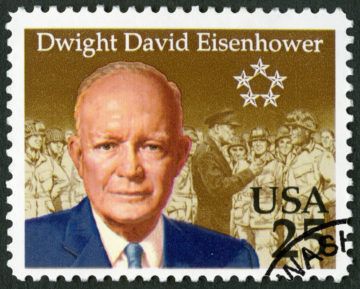 A Republican used to be someone like Dwight Eisenhower, a moderate who worked well with the opposing party, even meeting weekly with their leadership in the Senate and House. Eisenhower expanded social security benefits and, against the more right-wing elements of his party, appointed Earl Warren to be the Chief Justice of the Supreme Court. Warren, you’ll remember, wrote the majority opinion of Brown v Board of Education, Miranda v Arizona, and Loving v Virginia. If Dwight Eisenhower were alive today, he would be branded a RINO and a communist by his own party. I suspect he would become registered as unaffiliated.