by Kevin Lively
One often used metric by which the ‘complexity’ of societies is judged, is the level of logistic sophistication with which they self-propagate. While the engineering and logistical nuances of how modern society sustains itself are the fodder for endless analysis; equally complex is the almost-unconscious cultural framework within which this takes place.
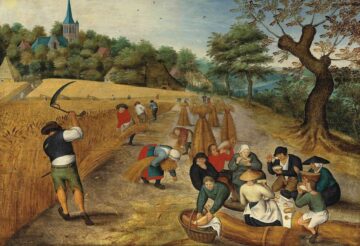
One primary foundation of our cultural framework is how we perceive and construct The Commons; that is, lands or resources whose usufruct are held in some degree of common ownership. Historical examples include who may, and may not, take fish from the streams and oceans; who may, and may not, take firewood and game from the forest; who may, and may not, access pastureland for grazing animals, and so on.
For a modern city dweller, these examples are functionally abstractions. More pertinent would be, for example, the quality of air and water, access to public libraries, public transportation and medical care, or food banks and homeless shelters. These are of course common-pool resources as everyone has both rights to their access and responsibilities for their upkeep. The structure of our societies is such that when you’re wealthy, availability of The Commons is of negligible benefit. However, when your private command over resources is limited, i.e. you’re broke, the “cultural-infrastructure” determining which level of access to which resources is permissible, may set the entire course of your life. More than that, the ramifications of socially mediated access of individuals to natural resources, multiplied out across entire societies, can drive the evolution of entire cultures. Read more »