by Jochen Szangolies

The previous column left us with the tantalizing possibility of connecting Gödelian undecidability to quantum mechanical indeterminacy. At this point, however, we need to step back a little.
Gödel’s result inhabits the rarefied realm of mathematical logic, with its crisply stated axioms and crystalline, immutable truths. It is not at all clear whether it should have any counterpart in the world of physics, where ultimately, experiment trumps pure reason.
However, there is a broad correspondence between physical and mathematical systems: in each case, we start with some information—the axioms or the initial state—apply a certain transformation—drawing inferences or evolving the system in time—and end up with new information—the theorem to be proved, or the system’s final state. An analogy to undecidability then would be an endpoint that can’t be reached—a theorem that can’t be proven, or a cat whose fate remains uncertain.
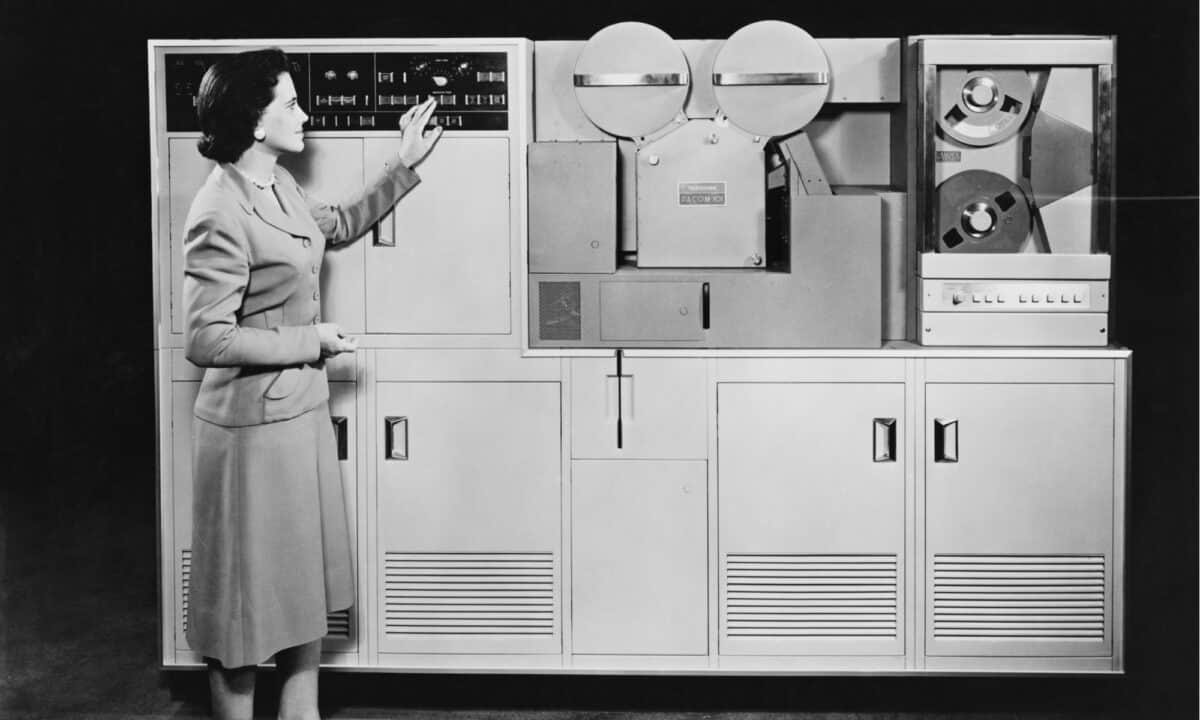
Perhaps this way of putting it looks familiar: there is another class of systems that obeys this general structure, and which were indeed the first point of contact of undecidability with the real world—namely, computers. A computer takes initial data (an input), performs a transformation (executes a program), and produces a result (the output). Moreover, computers are physical devices: concrete machines carrying out computations. And as it turns out, there exists questions about these devices that are undecidable. Read more »


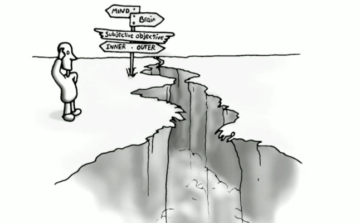
 A few months ago, I wrote about Karl Ove Knausgaard’s Spring and how his focus in this book is the examination of two worlds: the physical world that exists apart from us (the outside world), and the world of meaning and significance that is overlaid on top of this world through language and consciousness (the inner world). Knausgaard’s main goal seems to be to shock us out of our habitual, unreflective existence, and to bring about an awareness with which we can experience our lives in a different way.
 A couple months back, I wrote
 Freud got some things right, and this isn’t a post to slam him. But he understood the whole concept of the unconscious mind upside-down. It’s a lot like Aristotle’s science, with the cause and effect going in the wrong direction. It’s still pretty impressive how far they got as they laid the foundations for entirely new fields of study. I assimilated most of what’s below from neuropsychologist
 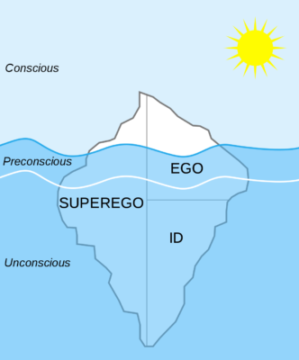 So Freud got the placement wrong. But even more important is which
  Ntozake Shange, right, with Janet League in her play “For Colored Girls Who Have Considered Suicide/When the Rainbow Is Enuf,” 1976. Bettmann/Getty Images

 obscure, often extraordinary abilities of animals and plants. Today, let’s look at a few more:
 reading “GPT for Dummies” articles. Some were more useful than others, but none of them gave me what I wanted. So I started poking around in the technical literature. I picked up a thing or two, enough to issue a working paper,
  Google the phrase “is it time to care about the metaverse?” and there are a wealth of articles, mostly claiming that the answer is yes! Are they right?
  Like most people, I have been baffled, mystified, unimpressed and fascinated by