
by Akim Reinhardt
 Not 7,500 miles this time. Nor a mad dash from one coast to another. Rather, a wiry triangle: the first leg from Baltimore to New Orleans; the second, up the Mississippi and Missouri Rivers to South Dakota; the hypotenuse, back to Maryland.
Abingdon, VA. I’m vaxed and boosted, but a bout of Covid has delayed the bon voyage. No time to stop in North Carolina for long overdue visits with family and friends. Instead, it’s straight down I-81, still a bit weary and taking it as far as I can. I support small businesses and try to avoid chains, which is not always easy out on the road, but I find a delightful independent motel called the Alpine Inn. It’s clean, it’s cheap, and it’s the best paid lodging I’ll have during my twenty-two night sojourn. I get dinner at a Mexican restaurant the cheerful motel owner recommends, assuring me they’ll do spicy if I ask for it. It’s close enough to walk. I sit outside. Every other customer is inside, and I have the patio to myself. I order a cerveza. I assume it will be a pint. It’s a quart. We’re off and running.
Nashville, TN. It should be only a five hour drive. But thirty miles outside of town, along a very rural stretch of I-40, I hit a flaccid snarl of traffic. It takes two hours to move six miles. I’m ninety minutes late, but still manage lunch with friends. Then it’s off to the airport where I pick up a compadre whose flown in from NYC; he’s a good sport, having agreed to hang out in the terminal and read a book for an hour so I can keep my belated lunch date. He hops in, we find a hummin’ community radio station, and are off. Next stop: Purgatory
Madison, AL. It’s only about seven hours to New Orleans, and we have two days to get there. My friend has scouted out minor league baseball possibilities. The Biloxi Shuckers, with their lurid Oyster mascot, are appealing, but we opt for the Rocket City Trash Pandas. Madison is just outside Huntsville, which has a NASA center, ergo the city’s nickname. And the minor leagues specialize in catchy marketing, thus the Raccoon mascot’s nickname. We roll into town the evening before the game, and I espy another independent lodging, the Madison Motel. What dark incomprehensiblities await us? Read more »
 Death was already about me. I’d recently written two death songs. Not mournful, but peaceful and welcoming. No reason. They just seeped out of me. Then came the Covid infection. It must’ve found me in upstate New York while vacationing with friends.
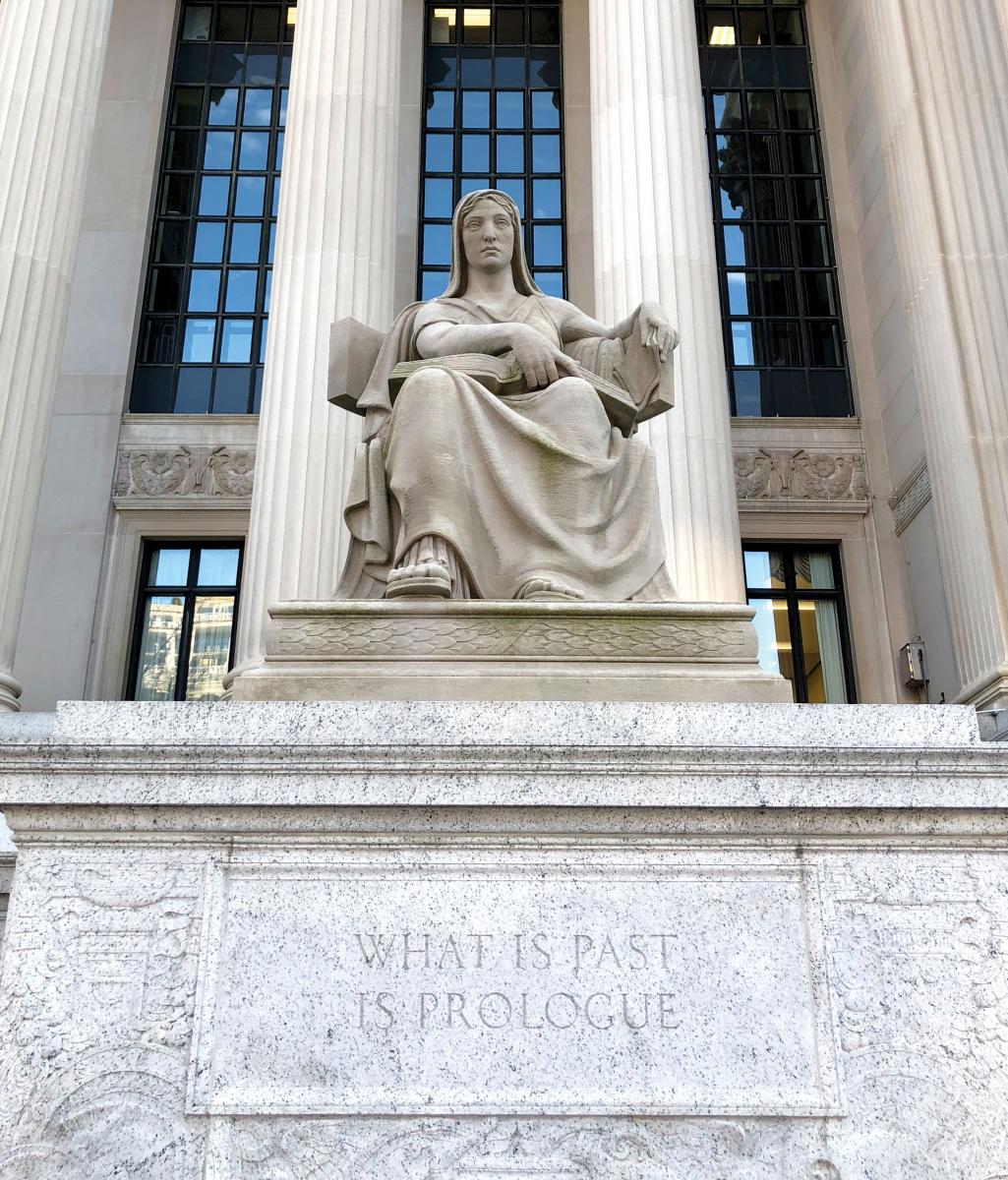 Is the Past Prolog? I’m not convinced. I say this as a professional historian.
 The United States has always faced a fundamental tension. On one side are those who champion, enforce, and/or profit from hierarchies of power: white supremacist racism, sexist patriarchy, Christian fundamentalism, and capital concentrations chief among them. Arrayed against these hierarchies of power are people who promote and work for racial equality, gender and sexual equality, cultural tolerance, the amelioration of poverty, and genuine freedom both for and from religious beliefs and practices.
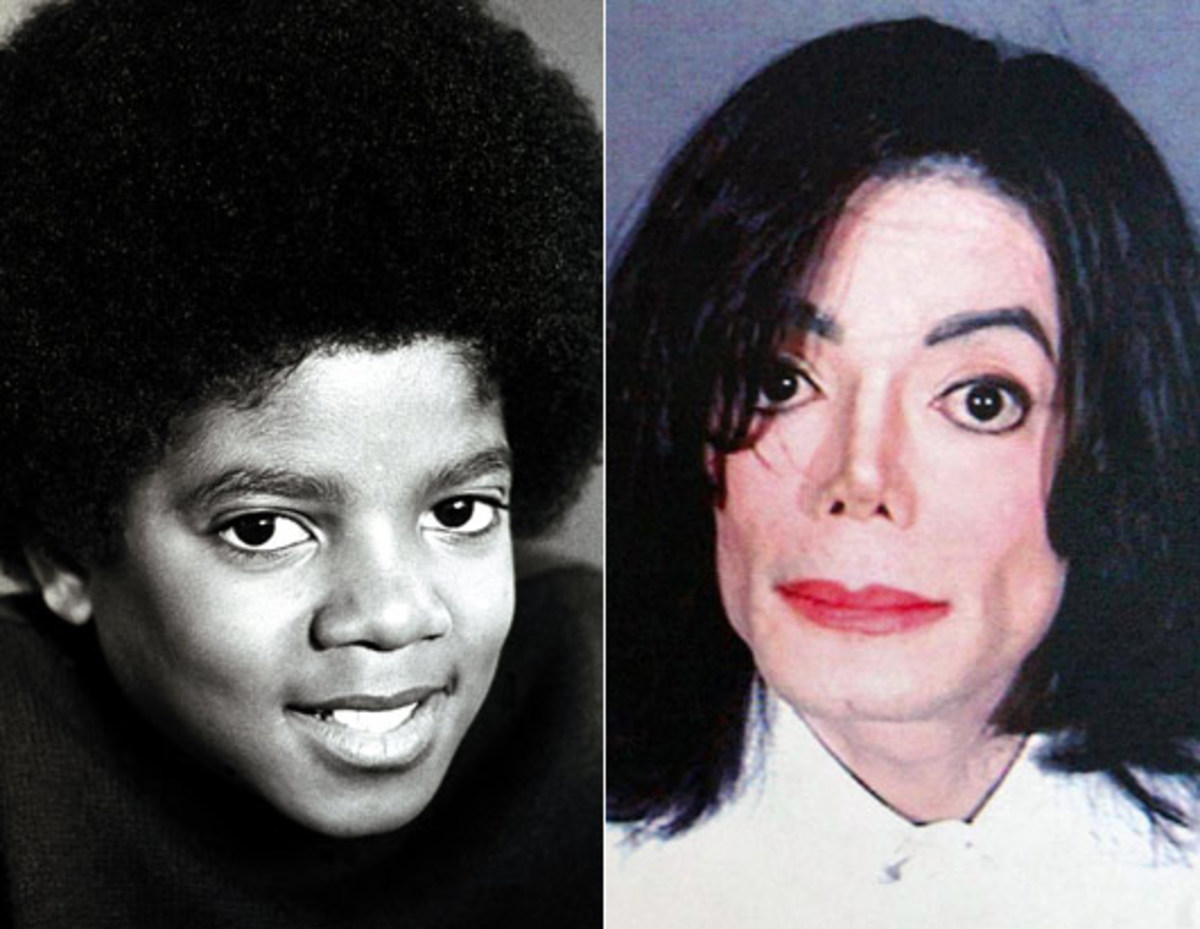 Over the course of more than a decade, Michael Jackson transformed from a handsome young man with typical African American features into a ghostly apparition of a human being. Some of the changes were casual and common, such as straightening his hair. Others were the product of sophisticated surgical and medical procedures; his skin became several shades paler, and his face underwent major reconstruction.
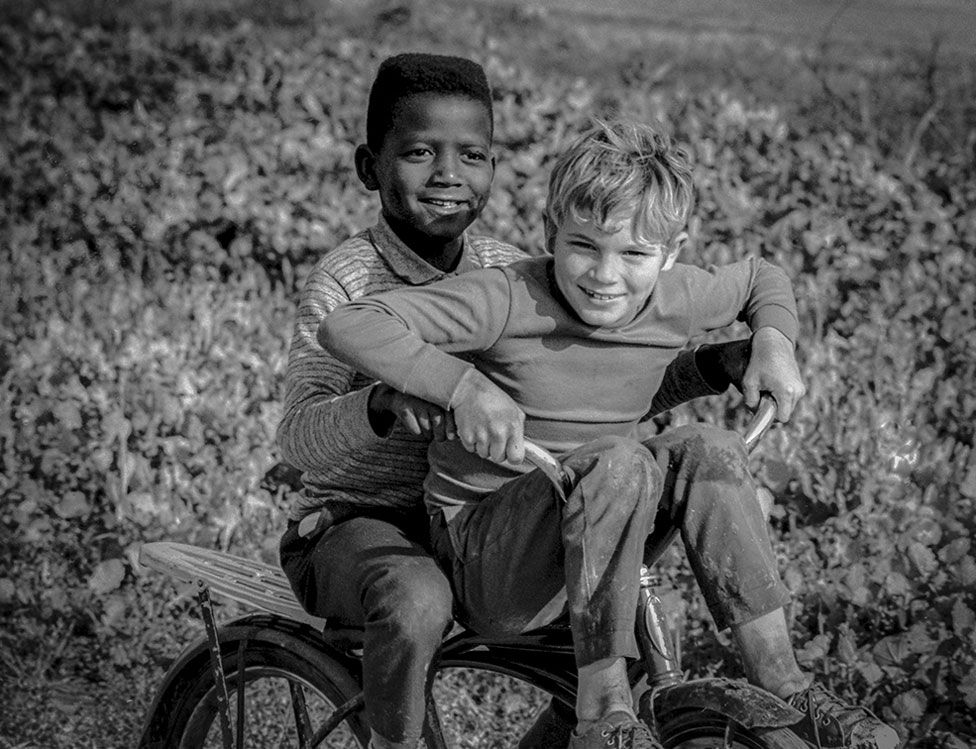 Three things we know about #BLM, two obvious, one a bit more subtle.
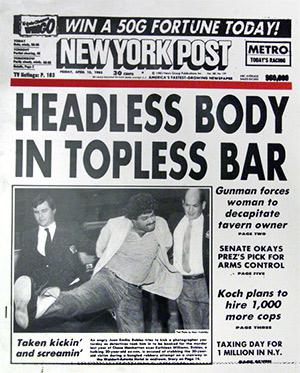 When I was growing up during the 1970s, America still had a vibrant and thriving newspaper culture. My hometown New York City boasted a half-dozen dailies to choose from, plus countless neighborhood newspapers. Me and other kids started reading newspapers in about the 5th grade. Sports sections, comics, and movie listings mostly, but still. By middle school, newspapers were all over the place, and not because teachers foisted them upon us, but because kids picked them up on the way to school and read them.
 There’s a lot we can learn about today’s America by observing the Mormon Church.
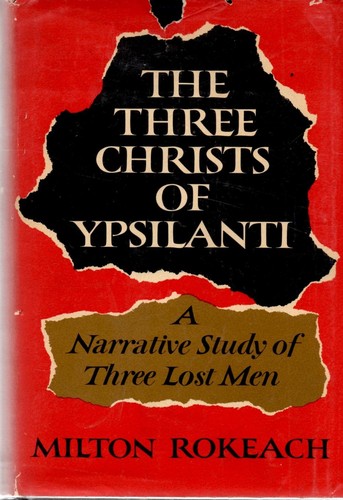 As an undergraduate History major, I reluctantly dug up a halfway natural science class to fulfill my college’s general education requirement. It was called Psychology as a Natural Science. However, the massive textbook assigned to us turned out to be chock full of interesting tidbits ranging from optical illusions to odd tales. One of the oddest was the story of Leon, Joseph, and Clyde: three men who each fervently believed he was Jesus Christ. The three originally did not know each other, but a social psychologist named Milton Rokeach brought them together for two years in an Ypsilanti, Michigan mental hospital to experiment on them. He later wrote a book titled The Three Christs of Ypsilanti.
 Two profound horrors have plagued the world in recent times: the Covid-19 pandemic and the Trump presidency. And after years of dread, their recent decline has brought me a brief respite of peace.
 White Americans get a lot of things wrong about race. And not just the relatively small number of blatant white supremacists, or the many millions (
 My Jewish maternal grandparents came to America just ahead of WWII. Nearly all of my grandmother’s extended family were wiped out in the Holocaust. Much of my grandfather’s extended family had previously emigrated to Palestine.
 People are basically good.
 Is there anything more clichéd than some spoiled, petulant celebrity publicly threatening to move to Canada if the candidate they most despise wins an election? These tantrums have at least four problems:
 There is a minor American myth about shame and regret. It goes like this.
 During the 1990s, the impossibility of a black president was so ingrained in American culture that some people, including many African Americans, jokingly referred to President Bill Clinton as the first “black president.” The threshold Clinton had passed to achieve this honorary moniker? He seemed comfortable around black people. That’s all it took.