I Don’t Remember His Name, But He Was Tall and Had a Large Adam’s Apple

by Akim Reinhardt

Mr. Sabatini? I think that was his name. It’s hard to remember.

The Man Who Wasn't There Maybe it was a plumb position awarded to him because he had buttered up the right school official. Maybe he was owed a favor by a union representative. But for whatever reason, he was not among us very often. There were a few days early in the year, and after that he reappeared now and again, but for the most part, he wasn’t there.

At that particular stage in my life, however, Mr. Sabatini?’s irregular presence did not distress me. It was the 10th grade, and I too was irregular. I was rounding out my last growth spurt, going from being one of the shortest kids in the class to the tall side of average, at least by New York City standards, where the average male is, well, very average. It’s certainly not Minnesota. There were also the requisite signs of a burgeoning adolescence: pimples, a deeper voice, mysterious frustrations about girls. Or were they now women?

Adding to the irregularity, it was also my first year in high school. Our junior high school had gone through ninth grade. Here I was, amid 6,000 students who circulated through a massive building in a new neighborhood. So to have an irregularly appearing teacher? Sure. It seemed perfectly reasonable at that point. Why ask why?

For whatever reason, Mr. Sabatini? was scarcely seen. Instead, we had a student teacher. Our student teacher was the kind of person you wish you could invent if he didn’t really exist, though you probably couldn’t. Soft-spoken, mid-twenties, and already balding, he had a boyish charm, ready smile, quiet joy, and inner calm that I would later come to associate with the Midwest. He was also a marine (or was it the army?) who specialized in skiing. Down the slopes with a machine gun, like James Bond. And he was also given to wearing pink shirts. This was 1982. Not a lot of men were wearing pink shirts. Especially not ex-Marines.

Read more »

Monday, April 11, 2011

America’s Shifting Tides

by Akim Reinhardt

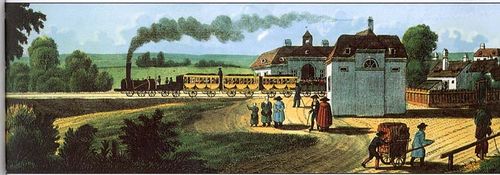
At its founding, the United States was an overwhelmingly rural nation. The inaugural census of 1790 showed that 95% of all Americans either lived in isolated rural areas, on farms, or in tiny towns with fewer than 2,500 people. However, a steady national trend towards urbanization began immediately thereafter.

Small town train

The rise of American cities during the 19th century was spurred on by the Industrial Revolution, which created a high demand for labor. Cities became population magnets, drawing workers from around the country and eventually around the world. One generation after another, people left the American countryside behind and headed for the nation’s new and growing cities. The scales slowly but inexorably tipped in the opposite direction, and today's census numbers are practically reversed from those of 1790.

Industrial-revolution For most of American history though, rural populations did not falter. Rather, they continued to grow side by side with cities. While they were not able to keep pace with rapacious urban expansion, the sheer volume of rural America nonetheless rose at a substantial rate. Two factors largely explained the ongoing growth of rural populations despite the urban syphon: natural increase and immigration.

Agricultural families typically had a higher birth rate than urban families because children provided valuable labor on the farm from an early age. At the same time, rural America received its fair share of foreign immigrants. While stereotypes of 19th and early 20th century immigration often focus on Irish, Italians, and Jews making new homes in American cities, waves of Germans, Scandinavians, Slavs, British, and many others passed right through those cities and continued on to the heartland.

Read more »

Monday, March 14, 2011

A Flowering of Freedom: Reconsidering Iraq amid Revolutions in the Middle East

by Akim Reinhardt

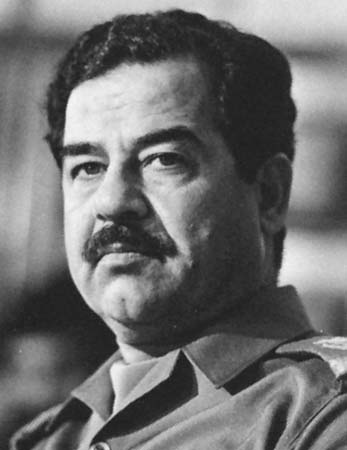
Hussein 1983 I opposed the second Iraq War from the start. My stance was simple. I did not believe the reasons for war being served up by the hawks. There was no evidence that Saddam Hussein had been involved in the September 11th attack. And I was very skeptical about the claim that he still had weapons of mass destruction.

Was he happy about the attack? Probably. Did he want WMDs. Undoubtedly. But did he have direct connections to 9-11 or caches of nuclear, chemical, and/or biological weapons? It seemed very unlikely, and of course we now know better.

Yet those who lined up behind the war believed. Some of them believed the 9-11 connection, which was dubious even back then. And most of them believed that there were WMDs buried in the dessert, waiting to be exposed once the mighty wind of American military might blew away the sand that covered them.

I was vocal in my opposition, but I also was honest. Once it was clear we were going to war regardless, I said I would admit I was wrong if the WMDs were found. After all, if Hussein really did have an advanced nuclear weapons program despite all the inspections and embargoes, then it would probably be a wise move to take him out. If I am wrong, I will admit it.

Read more »