by Laurence Peterson

The Nobel Prize for Peace was awarded a few days ago. The prizes for peace, economics and sometimes literature have become so discredited in my lifetime–to the point of inspiring anti-Nobel prizes–that my response to their bestowal every year has usually consisted of a bemused scoffing, rather like when one continues to watch a movie to see how bad it can get. But my reaction to this year’s award was more like what I think I would feel if I witnessed someone run off the road right in front of me; there was a not insubstantial personal sense of violation attached to it, even though it didn’t directly affect me, of course. In terms of the recipient, as well as the circumstances surrounding the affair, I was so struck by an idea of the rottenness of traditional international institutions collapsing under the accelerating moral and intellectual decay of Trump and his aligned political movements that I decided I could justifiably waste one of my humble columns on it.
Most people are aware that Donald Trump has been, for an interminable amount of time, asserting that he deserves the peace prize for a number of things, especially the 7 or 8 wars he claims to have “solved”, including conflicts between states that do not, and never have existed, and involving countries even on different sides of the world that never had, in any case, much to do with each other. The pertinent fact here is that Trump was inaugurated a mere eleven days after nominations for the 2025 prize were closed, so his nomination was always going to be an exceptionally long shot, much as Trump’s jealousy of the pre-inauguration award to President Obama might inspire endless preposterous protestations. But they have made an award to him increasingly likely in 2026 (especially with the mid-term elections taking place a mere weeks after the Peace prize announcement in early-October). Norway is reported to be preparing to respond to tariffs and other measures Trump might impose in response to the Norwegian-based Nobel Peace Committee’s (a non-governmental organization, mind) giving the prize to someone other than himself, which testifies to the potential room for meddling, intrusion and influence-peddling in the seemingly independent deliberations of important and influential organizations operating in a traditional international system that happens to be crumbling. The fact that Norway is now an increasingly important member of NATO, whose ex-president and current finance minister, Jens Stoltenberg, led the organization, serves to increase this likelihood. Stoltenberg has had an extremely complex and sensitive relation, to put it mildly, with Trump, whose views on NATO (and I do not say this as a fan of NATO, or of Stoltenberg’s), as in so many other things, range from erratic to incomprehensible.
But all this is only a small part of the story. The prize was ultimately bestowed upon Maria Corina Machado of Venezuela for keeping, in the words of the Nobel Committee, “the flame of democracy burning” in that country. Machado has been an opposition leader in Venezuela for a very long time, and when I say opposition leader, I am speaking of someone whose notion of opposition extends to active participation in and support for US-supported coups, that go back to the days of the government of Hugo Chavez from 1999 on, and continues under President Nicholas Maduro, including one as recently in 2018, under Trump himself. Read more »


 A recent news story about the fate of Ernest Shackleton’s ship



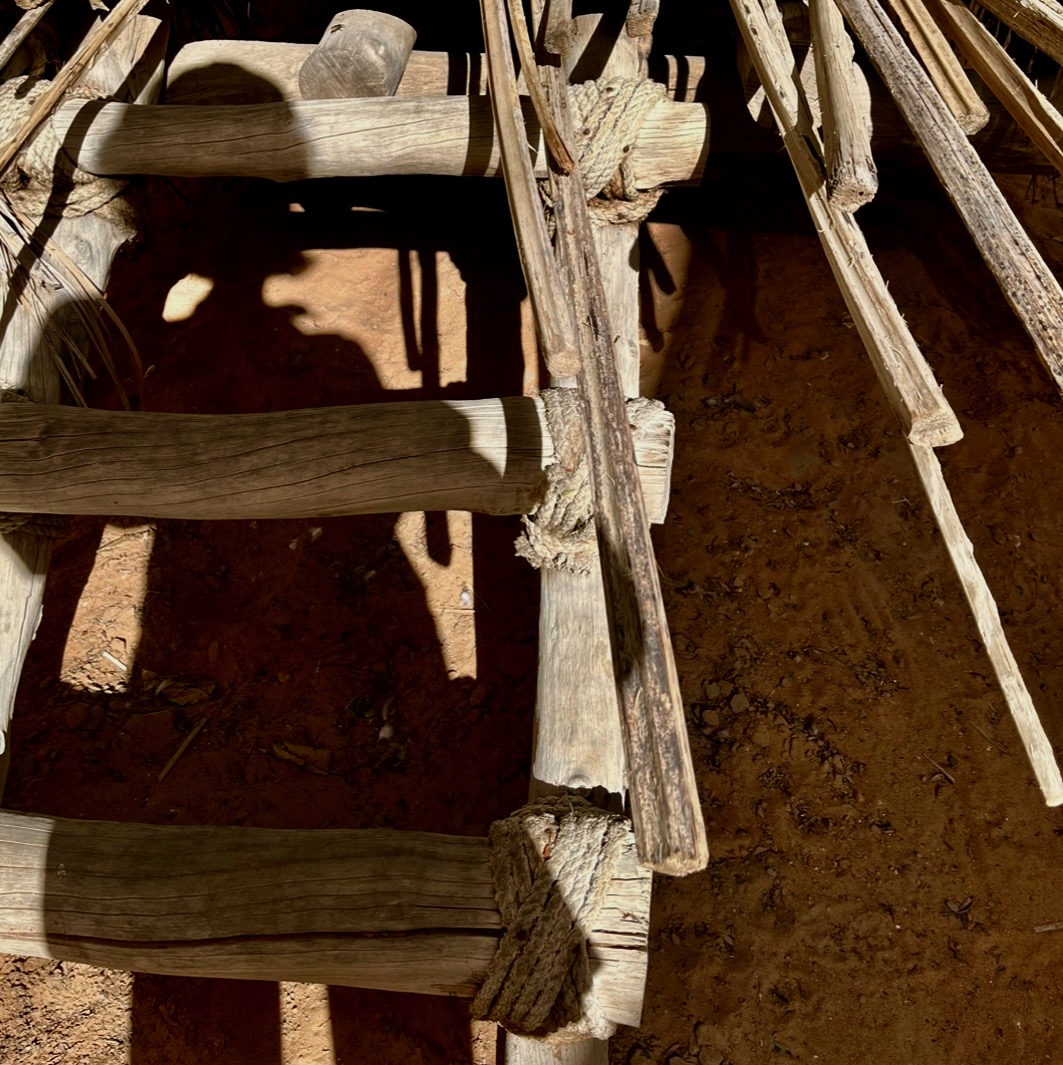 Sughra Raza. Under Construction. December 2023.
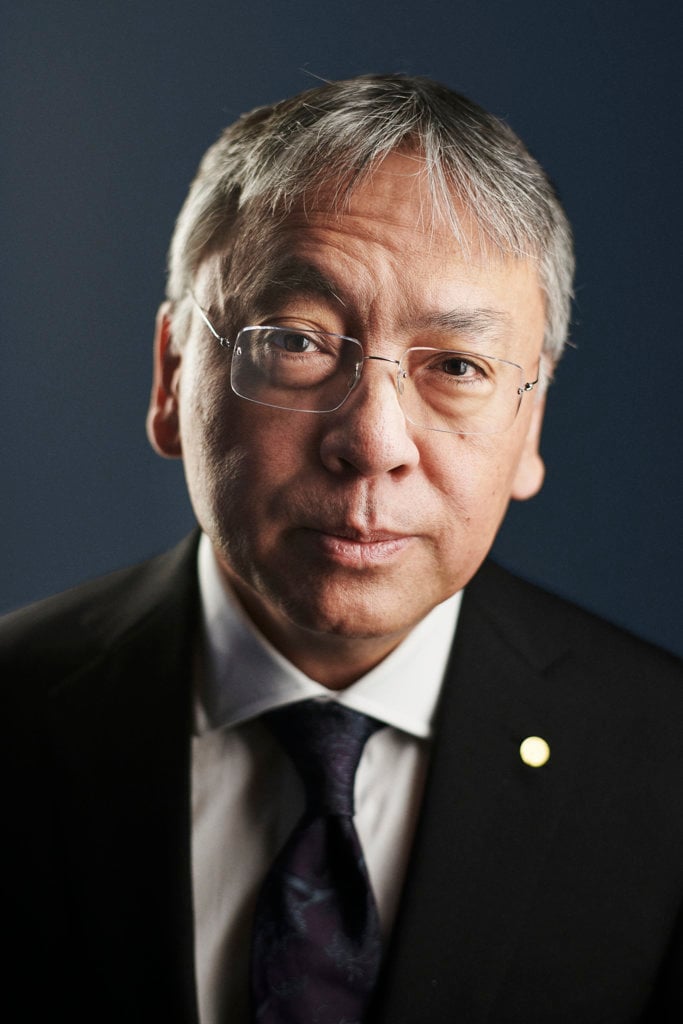 Kazuo Ishiguro often talks about a scene from Charlotte Brontë’s Jane Eyre that has influenced his writing. In an interview
  While teaching English at a Yeshiva in the Bronx, I was surprised one day to become part of a theological thought experiment so creative and meaningful that it has stayed with me ever since. After recently learning that the universe may “die” much sooner than previously thought, I recalled that moment as it offered metaphorical depth and poignancy to a scientific truth.
 On Yom Kippur this year, I went to church.
 It feels like I understand the idea that all suffering comes from expectation in a way I didn’t used to. Now it seems so